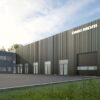

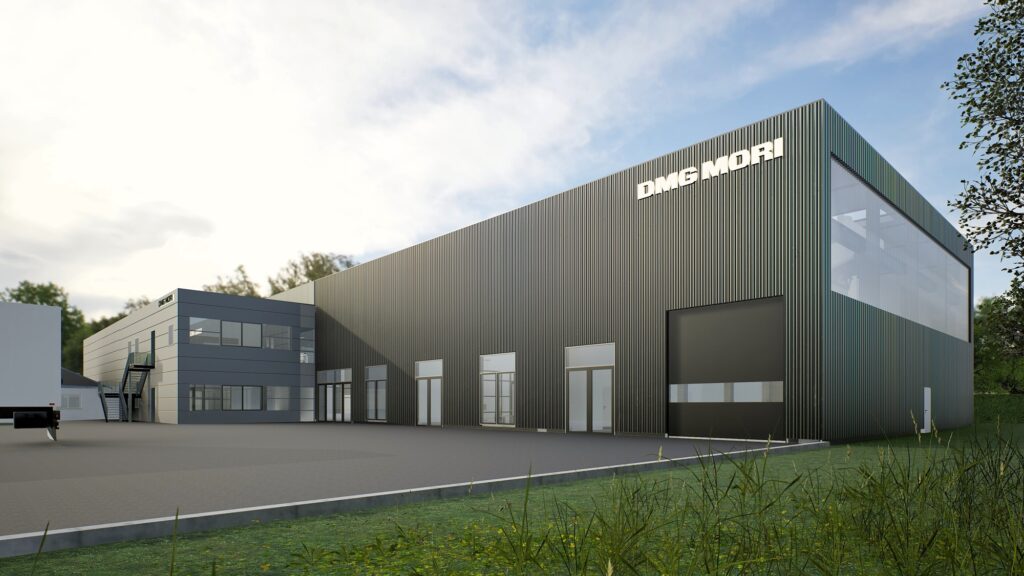
DMG MORI has expanded its Stipshausen facility with 1,400 square meters of additional space for production, logistics, research and development. The investment strengthens the site’s role in ultrasonic-assisted machining, a technology used for hard, brittle and difficult-to-machine materials in sectors such as semiconductor, optics, medical and aerospace manufacturing.
The opening of the expanded DMG MORI Ultrasonic Lasertec facility took place on June 10, 2026, together with the start of the ULTRASONIC Technology Days. The event runs until June 12 and focuses on applications for ultrasonic-assisted machining. Customers, partners, management representatives and local political representatives attended the opening ceremony.
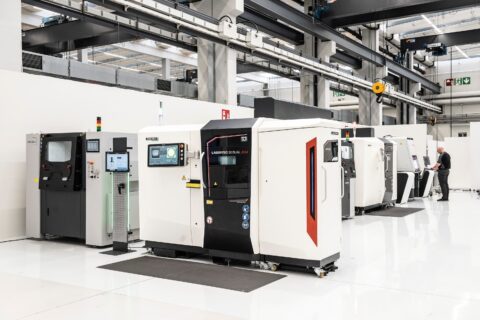
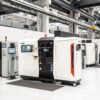
Stipshausen has been associated with ultrasonic machining within DMG MORI for decades. The site manufactures 5-axis machining centers equipped with ULTRASONIC technology. These machines are aimed at applications where conventional machining of hard and brittle materials can be difficult due to process forces, tool wear or the complexity of the required geometries. The expansion adds capacity not only for manufacturing and logistics, but also for development work, training and employee facilities.
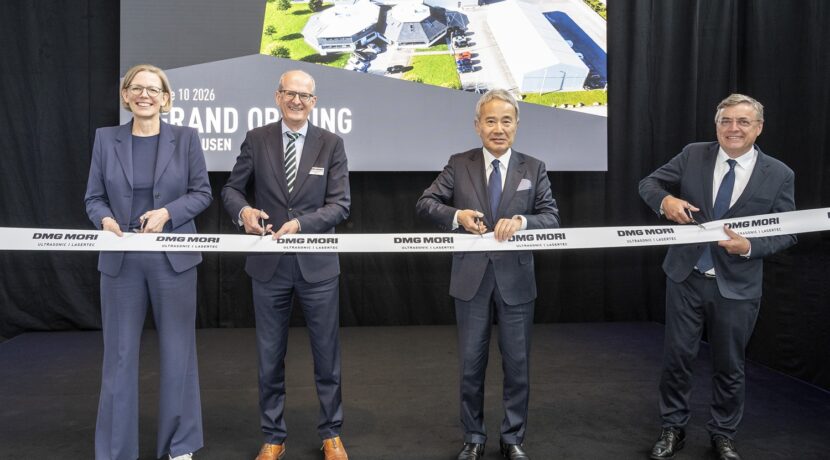
are officially opening the new spaces.(pictures: DMG MORI)
More capacity for ultrasonic development
The additional 1,400 square meters give the Stipshausen site more room to support production and development activities around ultrasonic machining. For machine tool builders, this kind of expansion is not only about floor space. It also creates the conditions to bring production, logistics, application development and training closer together.
That is relevant for users because ultrasonic-assisted machining is often applied in demanding processes. Components in semiconductor, optics, medical and aerospace applications can involve hard, brittle or difficult-to-machine materials, along with complex geometries. Therefore, the connection between machine design, process knowledge and application support becomes important.
DMG MORI states that the enlarged facility is intended to strengthen research and development and help advance manufacturing technologies for demanding machining tasks. The new training facilities are also significant in practice. When processes combine 5-axis movement, ultrasonic assistance and automation, operator knowledge and application support play a direct role in process stability and reliable implementation on the shopfloor.
Lower process forces for hard and brittle materials
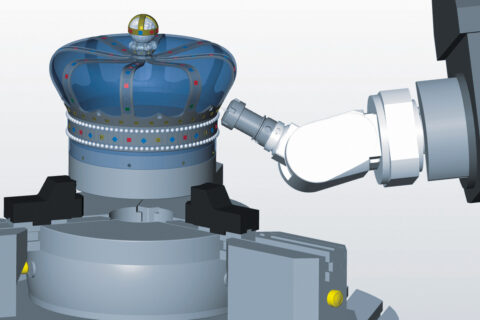
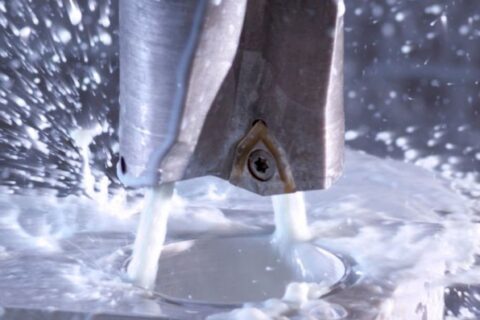
The technical basis of the Stipshausen activities is the superimposition of high-frequency ultrasonic vibrations onto the rotational movement of the tool. According to DMG MORI, this allows hard-brittle materials to be machined reliably and accurately, while reducing process forces.
For manufacturers, lower process forces can be important when machining delicate geometries or materials that are prone to damage. The technology is used where intricate shapes have to be produced in materials that are otherwise difficult to machine efficiently. The press release names semiconductor and optics as primary application areas, with medical and aerospace also listed as relevant sectors.
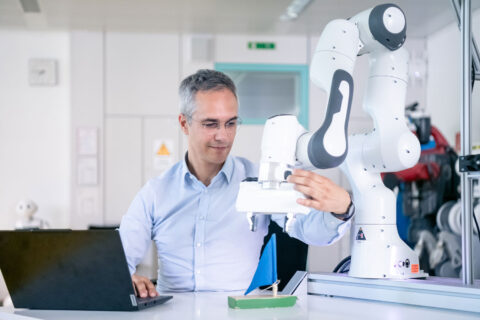
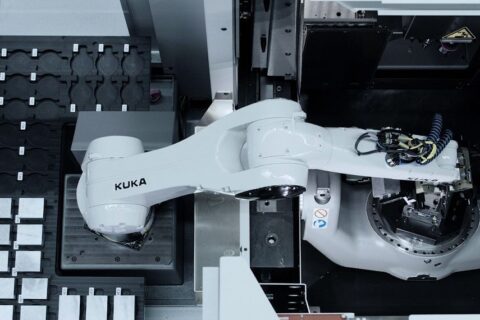
The site also focuses on process integration and flexible automation solutions. In practice, this means that complex manufacturing processes can be implemented with fewer separate steps and greater adaptability. For users working with demanding materials, combining machining capability with automation can support shorter process chains and more consistent production, especially when parts require accurate geometry and stable handling between operations.
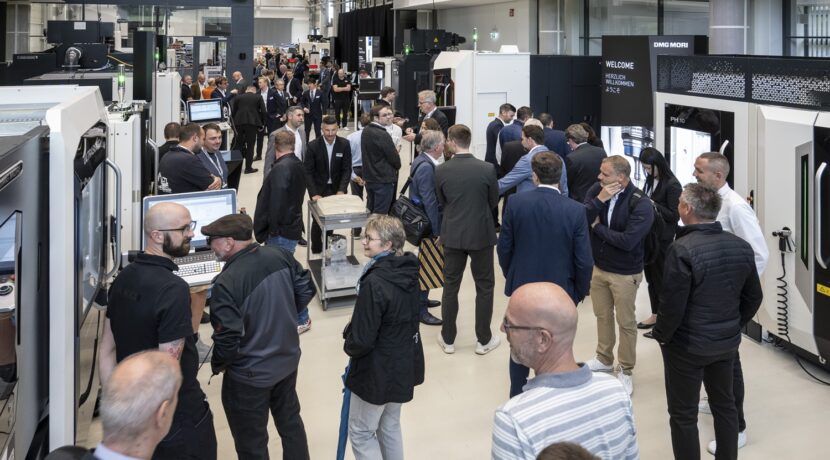
Stipshausen by 1.400 square meters.
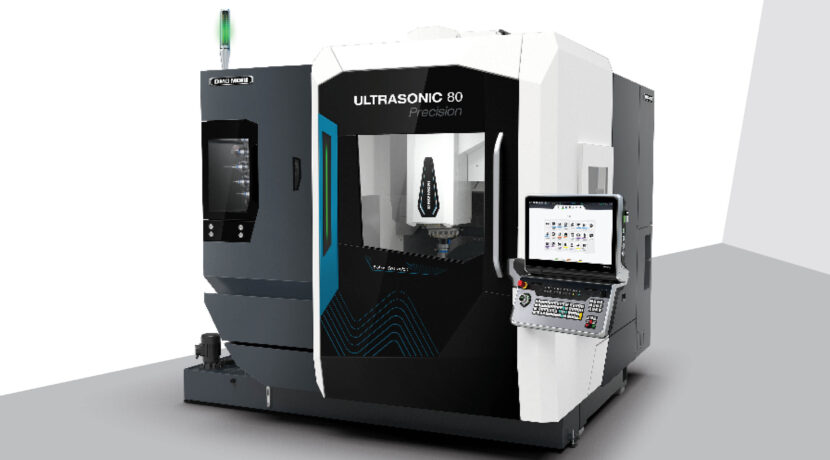
New ULTRASONIC 80 shown in Stipshausen
The expansion opening also marked the world premiere of the new ULTRASONIC 80 during the ULTRASONIC Technology Days. DMG MORI presented the machine alongside four other machines, with keynote contributions from customers and institutions including ASML, the Ernst Abbe University of Applied Sciences in Jena and Herbert Stephan KG.
The ULTRASONIC 80 applies high-frequency vibration to the rotating tool movement and is designed for machining hard-brittle materials with reduced process forces. DMG MORI states that the machine achieves a positioning accuracy of up to 5 μm. This is supported by a highly rigid design and an intelligent cooling concept, both of which are relevant for thermal and mechanical stability during demanding machining operations.
A notable feature is the combination of 5-axis milling and cylindrical grinding in a single machine. This fits DMG MORI’s broader focus on process integration under its Machining Transformation approach. For production environments, combining these operations can reduce the need for separate machines and additional handling steps, while supporting more flexible process planning for complex parts.