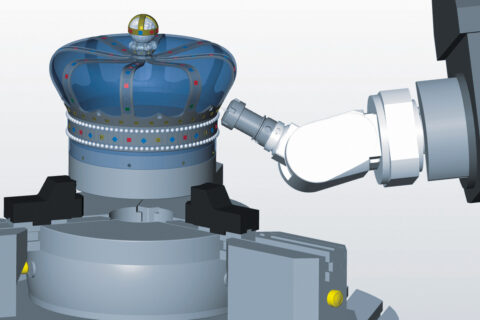

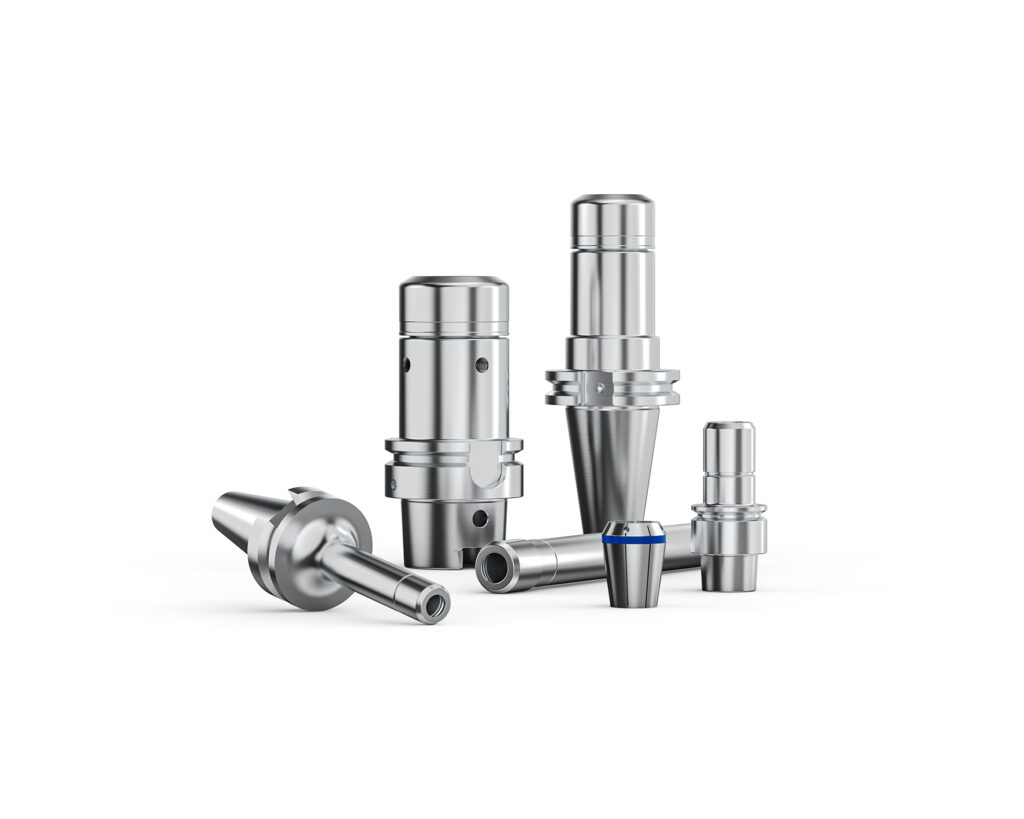
Seco has enhanced its ER HP Collet Chuck range for high speed milling and 5-axis machining. The updated toolholder focuses on stable clamping, run-out accuracy and easier setup. These factors directly affect surface finish, tool life and process reliability in demanding machining operations.
Toolholding is often a limiting factor when milling conditions become more demanding. In high speed machining, vibration, tool movement and inconsistent clamping can quickly show up in the finished part, in tool wear or in unplanned stops. Seco positions the updated ER HP Collet Chuck as a response to those practical issues. It uses a rigid and symmetrical design intended to support more stable cutting conditions.
The range is designed for applications where secure tool retention is important, including heavy-duty operations. By combining high clamping force with fine balancing, the chuck is intended to reduce the risk of tool slippage and vibration during machining. For production teams, that can mean fewer interruptions, more consistent results and better use of cutting tools. The system also uses a roller key for installation. As a result, changeovers are intended to be faster and safer without requiring a complex setup procedure.
Stable clamping for demanding milling
The main technical focus of the ER HP Collet Chuck is process security. In demanding milling, even small changes in tool position or balance can affect the cut. Seco highlights exceptional run-out accuracy, high clamping force and a robust, symmetrical construction as key elements in the updated design. Together, these characteristics are intended to help maintain consistent tool engagement during high speed milling and 5-axis machining.
For manufacturers, this is relevant because unstable clamping can lead to several connected problems. Vibration can reduce surface quality, accelerate tool wear and increase the risk of scrap. Tool slippage can stop production and damage material or components. Therefore, a toolholder with stronger and more reliable grip helps reduce these risks, especially where cutting conditions place higher loads on the tool.
The updated chuck is also aimed at improving the economics of machining. More stable toolholding can support longer tool life and reduced tooling costs, while reliable clamping can help maintain faster cycle times without compromising process stability. In this context, the toolholder is not just a supporting component, but part of the overall machining strategy.
Simpler setup with a roller key system
Ease of implementation is another part of the updated ER HP range. Seco states that the chuck uses an intuitive roller key system for installation. The aim is to make setup quick, safe and accessible to operators without the need for specialized training or complex handling procedures.
That matters in daily production, where tool changes and setup routines influence machine availability. A toolholder system that is difficult to install can add time to changeovers and increase the chance of errors. By using a simpler installation method, the ER HP Collet Chuck is intended to reduce downtime and make tool changes more consistent across different team members.
The practical benefit is not only speed. A straightforward setup process can also support safer handling and more repeatable clamping. In shops working with high speed milling or 5-axis machining, where tool stability is closely linked to part quality, reducing variability during setup can help keep the process under control. Seco’s update therefore addresses both sides of toolholding, performance during cutting and usability at the machine.