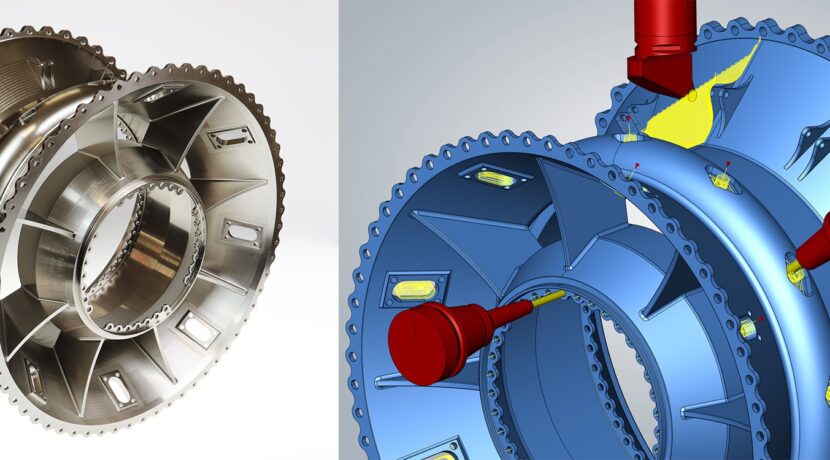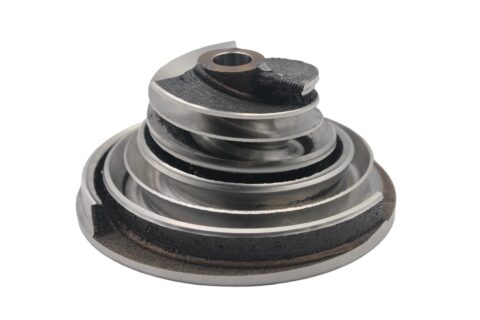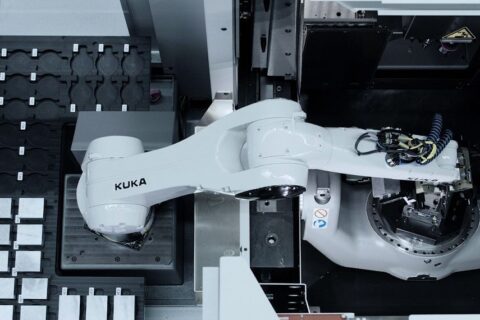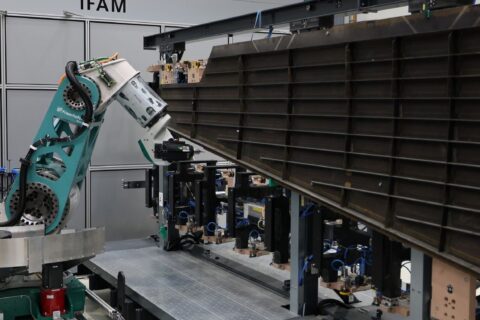

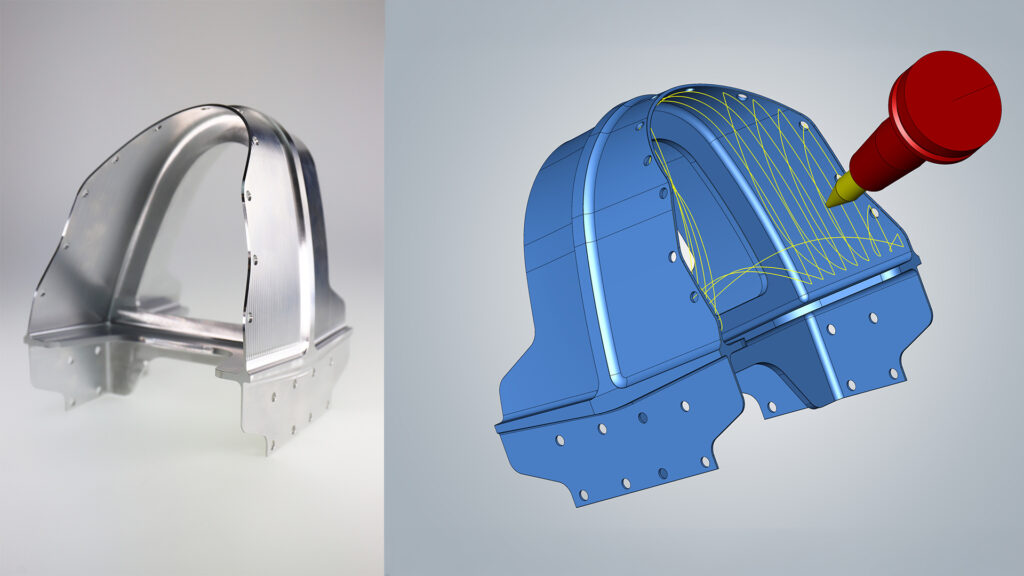
OPEN MIND Technologies AG will exhibit at ILA 2026 in Berlin for the first time, presenting its hyperMILL CAD/CAM suite for aerospace manufacturing. The focus is on programming complex components efficiently and accurately while supporting secure, documented processes. At Booth 411 in Hall A, visitors will see examples including a shrouded impeller and a propeller hub.
Aerospace machining combines demanding geometries, difficult materials, tight quality requirements, and extensive documentation. The range of parts is broad, from engine and landing gear components to structural parts, eVTOL components, and rocket construction elements such as thrust frames, connecting elements, tank parts, and structural parts. For manufacturers, the challenge is not only producing these components, but doing so in a controlled and repeatable process.
At ILA, OPEN MIND will show how hyperMILL supports this type of work with 5-axis strategies, turning and milling functions, and dedicated solution packages for blisks and impellers. The company will also address applications involving additive and hybrid manufacturing. These areas are becoming relevant where conventional machining is combined with other production methods. As a result, programming, verification, and process control place additional demands on the workflow.
Programming complex aerospace parts
Many aerospace components are difficult to machine because of their geometry and functional requirements. Blisks, impellers, engine parts, landing gear parts, and structural components often require multi-axis machining paths that maintain access, avoid collisions, and support stable cutting conditions. In this context, CAD/CAM software is not only a programming tool, but part of the overall manufacturing strategy.
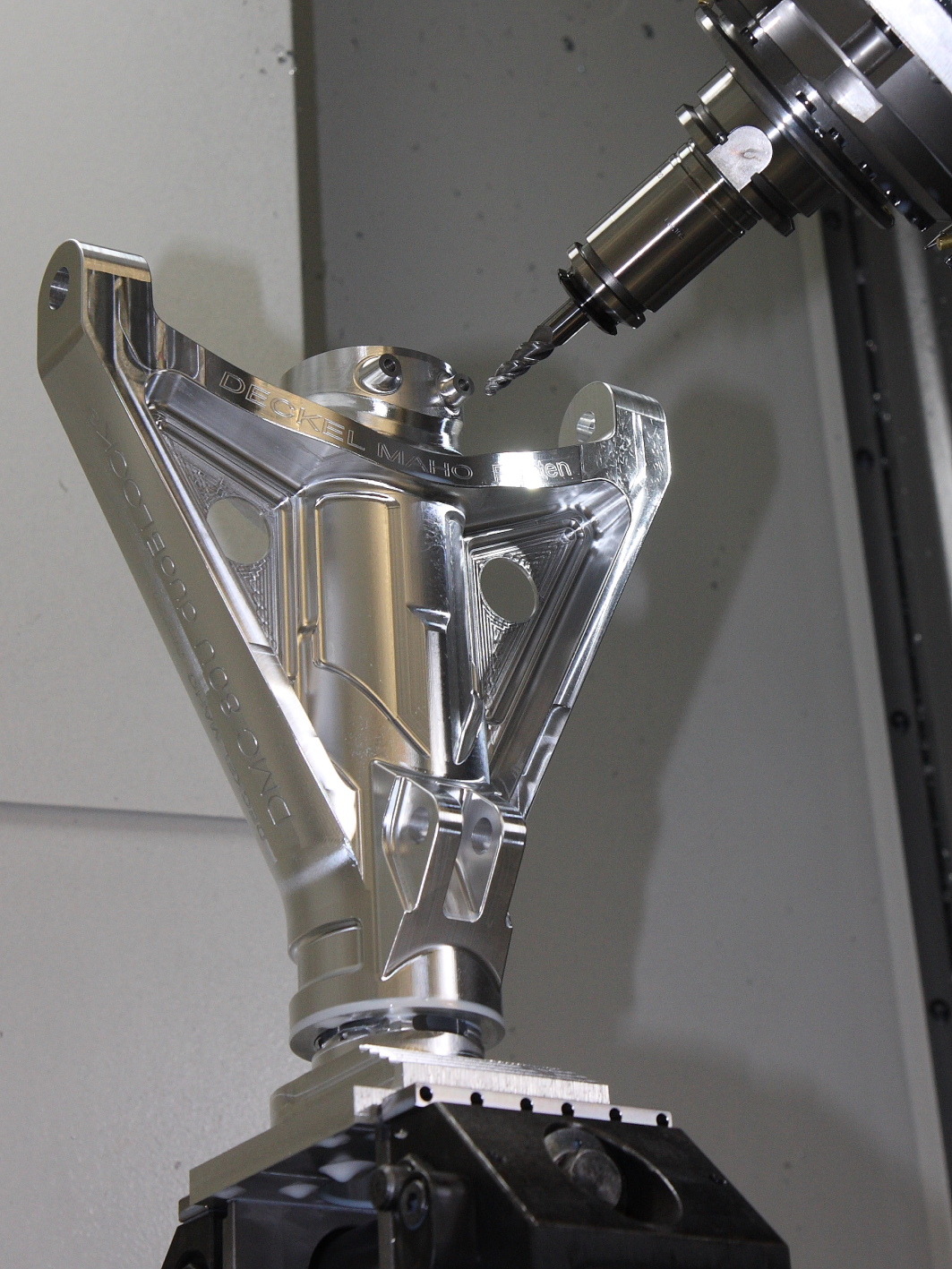
OPEN MIND will present hyperMILL as a system for programming demanding components with 5-axis machining, turning, and milling strategies. Dedicated packages for blisks and impellers are aimed at parts where complex blade geometry and accessibility place high demands on toolpath generation. The displayed shrouded impeller and propeller hub provide practical examples of the type of component where software capability, machine movement, tooling, and process verification must work together.
For shops working in aerospace, this has direct practical relevance. Efficient programming reduces preparation time, while controlled toolpaths support machining reliability and consistent part quality. Where components are safety-critical or have high value, avoiding unnecessary trial cuts and improving process confidence can be as important as reducing cycle time.
Managing difficult materials and tool wear
The aerospace sector often uses materials that are demanding to cut, including titanium, Inconel, superalloys, and fiber-reinforced composites. These materials place high loads on tools and machining systems, and process instability can quickly lead to increased tool wear or quality issues. OPEN MIND will therefore highlight optimized high-performance cutting strategies in hyperMILL that are intended to reduce tool wear when machining such materials.
The practical value lies in the connection between toolpath strategy and process stability. High-performance cutting is not only about removing material faster. In difficult materials, it is also about controlling engagement, managing loads on the cutting edge, and maintaining a machining process that remains predictable. For aerospace suppliers, where part costs and quality requirements are high, this can influence both reliability and manufacturing efficiency.
The same applies to hybrid and additive-related tasks. Parts produced through additive or hybrid methods may require finishing operations that differ from conventional billet or casting workflows. According to OPEN MIND, hyperMILL can address these challenges as part of its CAD/CAM environment, supporting manufacturers that need to integrate different production approaches into controlled machining processes.
Secure processes and documented machining
Aerospace production is defined not only by component complexity, but also by strict safety and documentation requirements. Dirk Lehmann, Team Leader Sales North at OPEN MIND Technologies AG, points to this aspect as a particular challenge for companies entering the sector. “With hyperMILL, we address many typical technical challenges in the industry, but companies new to the sector are also confronted with the extremely high safety and documentation standards of the aerospace industry. hyperMILL is perfectly suited for this. It can be seamlessly integrated into AS9100/EN9100-compliant processes,” he says.
One element of quality management highlighted by the company is NC code-based pre-simulation using hyperMILL VIRTUAL Machining. This allows machining processes to be checked on the basis of NC code before they reach the machine. For production environments where downtime, collisions, or undocumented process changes carry significant risk, simulation can play an important role in verification.
OPEN MIND also points to its links with aerospace research institutes and partnerships with machine and cutting tool manufacturers. These relationships are intended to align machining strategies with the material, tool, and machine. The company states that hyperMILL is already used by aerospace companies in safety-critical manufacturing environments, including for components used in communication satellites.