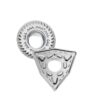

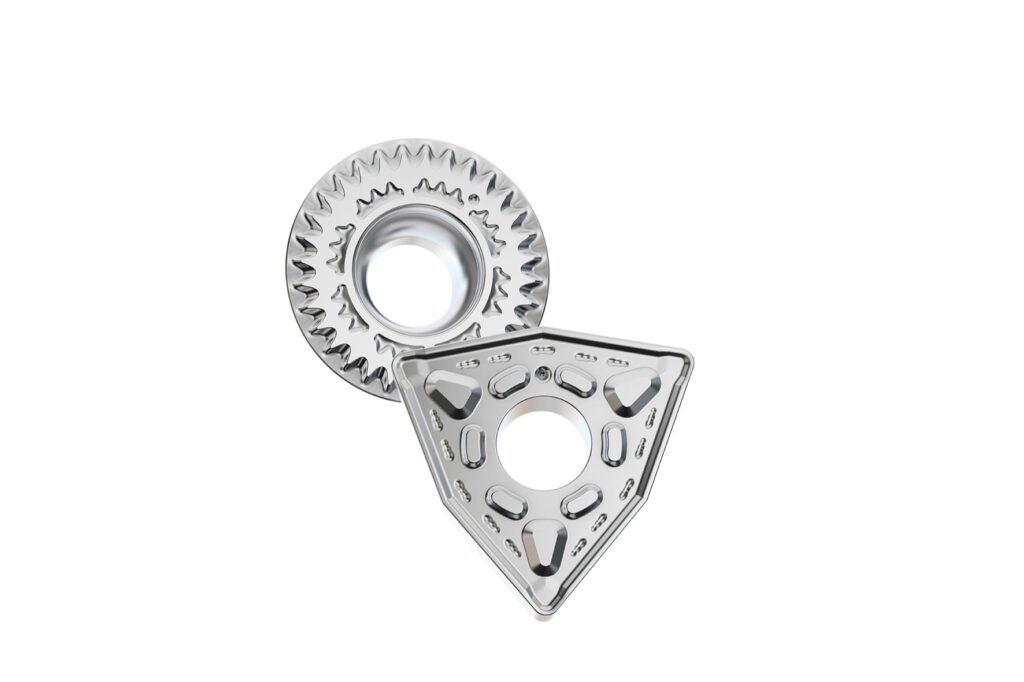
Seco has introduced TP3502, a CVD-coated Duratomic turning grade for ISO P steel machining. The P35 insert grade is designed for applications with interrupted cuts, changing material hardness and complex geometries. These conditions can make tool life difficult to predict. Its updated coating and edge preparation are intended to provide controlled wear. As a result, manufacturers can use higher cutting data while maintaining stable machining processes.
Steel turning rarely takes place under fully uniform conditions. Workpieces can combine interrupted surfaces, variable engagement and different material properties. These factors place conflicting demands on an insert. It must resist wear at higher cutting speeds. At the same time, it must retain sufficient toughness to withstand changing loads. TP3502 has been developed as a general-purpose grade for this balance. It is intended for a broad range of steel-turning operations.
Developed for varying cutting conditions
TP3502 is positioned as a versatile ISO P35 grade for general steel turning. It covers low-alloy and high-alloy steels. It can also be used for selected stainless steels, ductile irons and powder-metal components. These materials and component types can produce fluctuating cutting forces. This is especially common when holes, shoulders or uneven surfaces create interrupted engagement. The grade combines an updated CVD coating with revised edge preparation. According to Seco, these changes are intended to create a more controlled wear pattern than earlier generations. Predictable wear can make insert changes easier to plan. It can also reduce the risk of unexpected edge failure during a production cycle.
The objective is not solely longer tool life. The grade is also intended to support higher cutting speeds without compromising process stability or component quality. This is particularly relevant when manufacturers need to increase output. However, they must also avoid unstable machining conditions that can affect surface finish, dimensional accuracy or insert consumption.
Balancing wear resistance and toughness
The central design requirement for TP3502 is to combine wear resistance with toughness. In continuous steel turning, wear resistance is often the main requirement. This is especially true at higher cutting speeds. However, interrupted machining adds impact loading. It also places greater emphasis on an insert’s ability to withstand repeated changes in cutting force. Seco describes TP3502 as a grade for mixed cutting conditions. In these applications, neither wear resistance nor toughness can be considered in isolation. This makes the grade suitable for operations that cannot be easily divided into separate roughing and finishing processes.
A single general-purpose grade may simplify tooling selection when workpieces and cutting conditions vary across production. Mikael Lindholm, Global Product Manager General ISO Turning at Seco, says the development focuses on process reliability in everyday steel turning. The grade’s stability is intended to help manufacturers use higher cutting data and simplify production planning. This is particularly relevant where consistent tool life is more important than achieving the highest possible performance under ideal cutting conditions.
Edge use and traceability features
Alongside its cutting-edge design, TP3502 incorporates features for edge management and digital tracking. Chrome-based edge detection is intended to help operators use each cutting edge fully. This can support more consistent insert utilisation. It may be particularly useful in environments involving multiple operators or shifts. Each insert also carries a Data Matrix Code for traceability and digital tracking. The code can support insert identification within production and tooling-management processes. Seco links these features to broader digitalisation initiatives. For example, data on tooling use and consumption can be incorporated into manufacturing planning. TP3502 is produced using recycled powders. It is also included in Seco’s buy-back recycling programme. The company positions these measures as support for waste reduction and sustainability reporting.