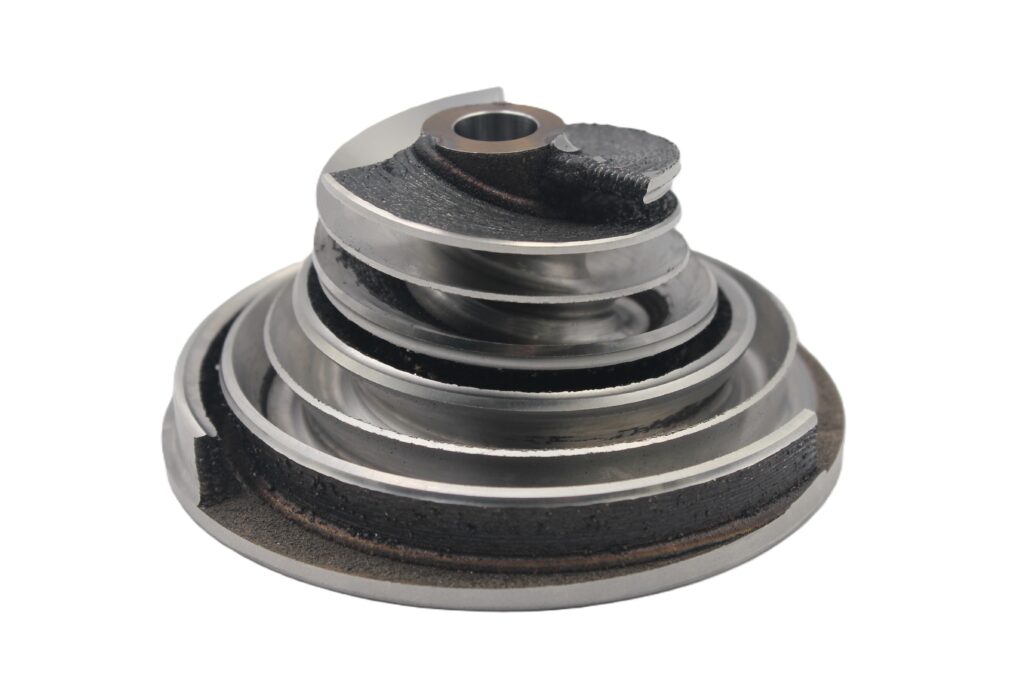
At Formnext 2026, OPEN MIND will present how its hyperMILL CAD/CAM system supports metal deposition and subsequent machining. The system integrates both processes within one workflow. The focus extends beyond hybrid machine tools. With the BEST FIT function, OPEN MIND addresses a key challenge in multi-machine production. The function aligns additively manufactured parts for reliable subtractive post-processing.
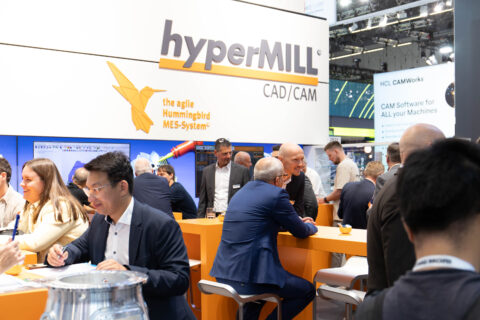
From November 17 to 20, OPEN MIND will exhibit at Booth A18 in Hall 12.0. The presentation will cover directed energy deposition and wire arc additive manufacturing. It will also address the machining operations required after deposition.
Additive manufacturing can produce components close to their final geometry. However, finishing operations often remain necessary for functional surfaces and required dimensions. Therefore, toolpath planning, machine simulation and part alignment must meet demanding requirements. In additive processes, toolpaths must maintain a constant velocity. This supports uniform material deposition. Subtractive machining, by contrast, focuses mainly on controlling tool position and orientation. These different requirements must be managed within one programming environment. This is particularly important for complex 5-axis simultaneous operations.
Integrated programming for deposition and finishing
The hyperMILL ADDITIVE Manufacturing module generates NC programs for metal deposition within the hyperMILL environment. According to OPEN MIND, the module is fully integrated with the CAD/CAM system. It can support hybrid machining processes that combine deposition and cutting on one machine. Hybrid machines can be useful for maintenance work, prototyping and small-batch production. They allow material deposition and machining without transferring the component between separate systems. For these applications, the software must support additive and subtractive strategies. It must also manage complex 5-axis movements.
OPEN MIND also highlights hyperMILL VIRTUAL Machining for NC-code-based simulation. The system uses a digital twin of the machine to simulate movements. It can identify potential collisions before production. This is relevant to additive and hybrid machining. Deposition heads, cutting tools and workpiece geometry can create complex spatial conditions. These conditions change throughout the process. Simulation based on the actual NC code links programming more directly to the movements executed on the machine.
Part alignment across multiple machines
For larger production runs, separate additive and subtractive machines can be more cost-effective than a hybrid machine. However, this approach introduces a practical challenge. After transferring a 3D-printed component to a machine tool, its actual position and orientation must be identified. Accurate finishing can then begin. Printed parts are already close to their final dimensions. As a result, manual alignment can be costly and susceptible to errors. OPEN MIND’s BEST FIT function is intended to automate this step. Instead of relying on manual workpiece alignment, the function adapts the NC code and machine simulation to the part’s actual position and orientation.
This approach is relevant when additive manufacturing is followed by machining of critical areas. OPEN MIND cites conformal cooling channels for mould manufacturing, material combinations, customised medical implants and lightweight aerospace structural components. Across these applications, the process chain can extend from CAD and CAM programming to production. It covers additive and subtractive operations, NC-code-based simulation and machine integration through hyperMILL CONNECTED Machining. Production planning and control can also be managed with Hummingbird-MES.