
Sandvik Coromant has introduced CoroMill MR20, an indexable milling concept for profile and face milling in demanding materials. The single-sided, round insert system targets process stability where component value, difficult materials and complex geometries make unplanned tool failure costly. Its main application areas include aerospace, oil and gas, mould and die production, and pump and valve machining.
The cutter is designed for ISO M, ISO S and ISO P materials. These include titanium and heat-resistant superalloys used for cavities and complex aerospace profiles. The system also targets mould and die work in steel. For stainless steel applications, Sandvik Coromant positions the tool for heavy-duty machining of pump and valve components. The concept supports roughing and semi-finishing operations. In these applications, predictable cutting behaviour is as important as material removal rate. According to Alvaro Ruiz, Global Product Application Specialist at Sandvik Coromant, process security guided the development. This is particularly relevant when manufacturers produce high-value parts. Instability, insert movement or irregular wear can interrupt machining and increase scrap risk. CoroMill MR20 combines an updated insert seat, internal coolant delivery and a robust six-edge insert to address these factors.
Stable insert support for demanding cuts
A central feature of CoroMill MR20 is its insert seat design. Sandvik Coromant states that the large contact area between the round insert and cutter body reduces micro-movements during milling. Limiting this movement is important in profile machining. Changing engagement conditions can place varying loads on the cutting edge and tool body. The cutter body is also designed to resist metal fatigue and deformation during extended service. This supports repeatability in long machining cycles and difficult-to-machine materials. The design provides a stable platform for cavities and complex profiles. These operations can involve interrupted cuts and changing radial engagement.
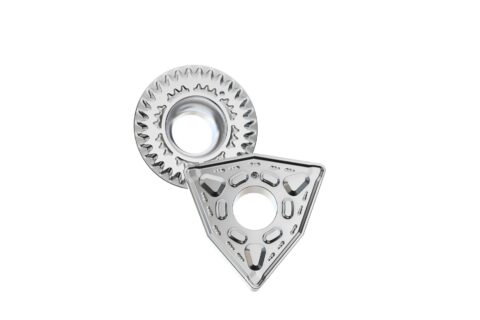
The insert has six cutting edges and a thick body. Together, these features support bulk strength and cutting-edge security. Tight manufacturing tolerances are specified to support gradual, predictable wear. For automated or unmanned machining, controlled wear can help manufacturers plan insert changes. It can also help avoid unexpected interruptions. Moreover, predictable wear reduces the likelihood of premature insert replacement. This is useful when the remaining edge condition is difficult to assess.
Coolant and feed capacity affect productivity
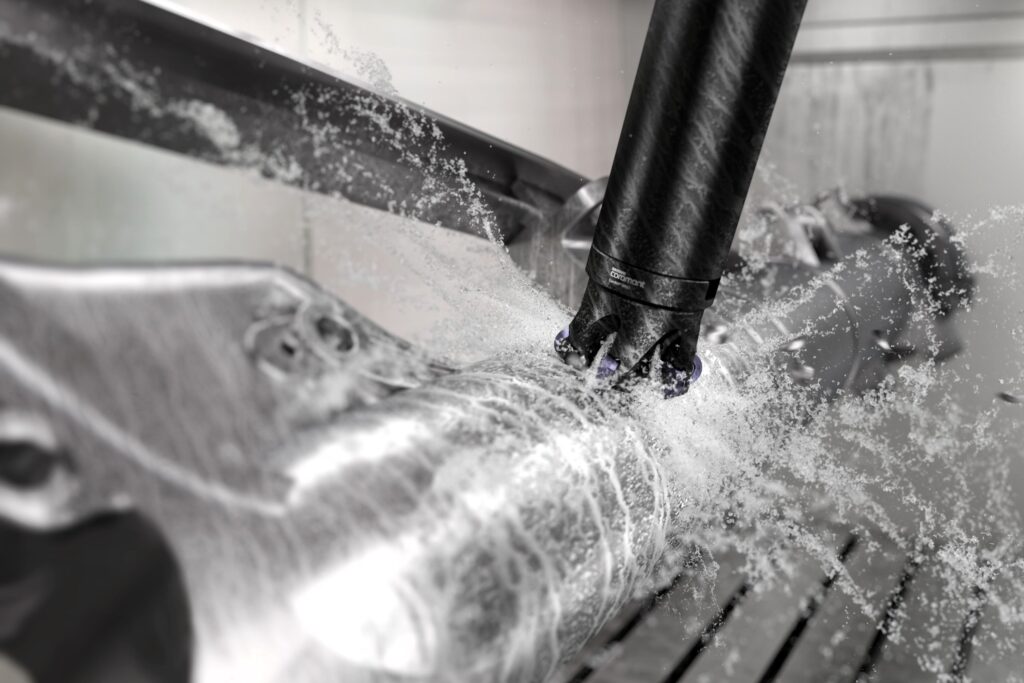
CoroMill MR20 incorporates an integrated under-coolant system. The system was developed particularly for long-chipping and difficult materials. Coolant delivery at the cutting zone can support chip control and maintain cutting conditions. This is relevant when machining titanium and heat-resistant superalloys. These materials are associated with demanding milling conditions. The challenges increase when machining deep cavities or intricate component features. Therefore, effective coolant delivery can support process control in these operations. Sandvik Coromant also highlights the cutter’s capacity for higher feed per tooth. Higher feed rates can increase output when machine capability, workpiece stability and the operation allow it. The company states that increased feed capacity can reduce the energy required for machining. It does so by shortening cutting time.
Tool life is another part of the stated sustainability case. A longer-lasting cutter body and durable inserts can reduce insert consumption. Predictable wear may also help limit scrap caused by sudden cutting-edge failure. The company links these effects to lower resource use and a reduced CO₂ footprint per production process. For manufacturers, the practical relevance is the combination of material removal capability and process control. This applies especially to difficult materials and high-value components.