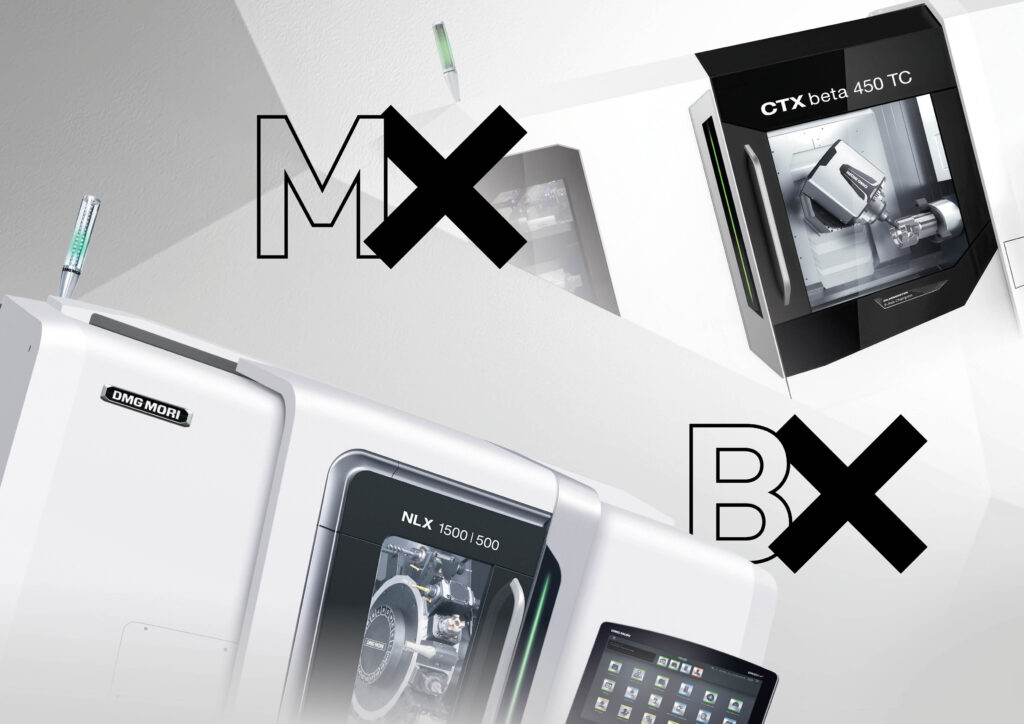
Not every machining task requires a machine with maximum functionality. For recurring turning and milling operations, a machine configured for specific requirements can be more economical, while complex components often benefit from greater process integration. With its Best fit Portfolio (BX), DMG MORI is expanding its machine range within the Machining Transformation (MX) initiative. The aim is to help manufacturers match machine capabilities more closely to their component mix, production requirements and available capacity.
The principle behind Best fit is straightforward: machine capabilities should reflect the tasks they are expected to perform. A machine primarily used for recurring operations does not necessarily need the most extensive range of technologies. For complex workpieces, high product variety or production processes involving several machining operations, however, advanced MX machines can offer significant advantages.
The economic assessment goes beyond the performance of an individual machine. A purpose-configured machine may manufacture standard components at a lower cost, while an integrated turn-mill machine can combine multiple operations in a single setup. This can eliminate additional clamping operations, machine transfers and intermediate handling. The decisive factor is therefore the value a machine adds to the overall manufacturing process.
“Machining Transformation means providing exactly the machine capabilities for each task that are technically necessary and economically viable,” says Dr Harald Neun, Managing Director of DMG MORI EMEA Holding GmbH. “With Best fit, we’re expanding our range of solutions to include efficient capacities for standardized processes. BX and MX go hand in hand: they enable our customers to tailor their machine fleet to their mix of parts, process requirements and production organization.”
Automation, digital integration and sustainability remain key elements of DMG MORI’s Machining Transformation strategy. The company identifies Digital Transformation (DX) and Green Transformation (GX) as important pillars of this approach. Depending on the machine model and production requirements, BX machines can already incorporate some of these capabilities, while the broader MX portfolio offers further possibilities for process integration and automation.
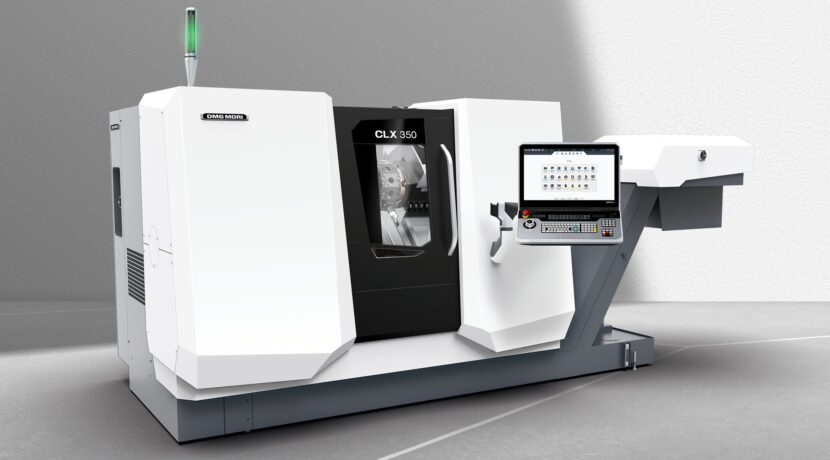
in the Best fit portfolio. With features tailored to specific needs, they provide productive capacity for
standardized and recurring turning operations. (Picture: DMG MORI)
Machines for Different Production Requirements
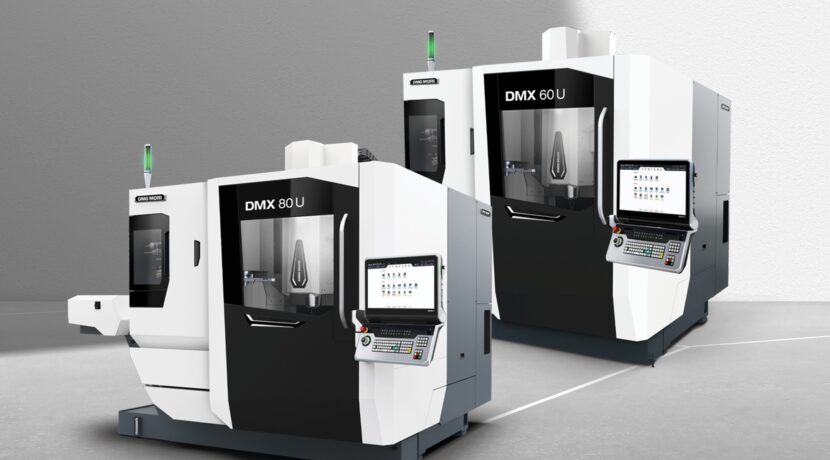
The Best fit Portfolio covers universal turning, turn-mill machining, vertical and horizontal milling, and 5-axis machining. It includes models from the CLX, NLX, ALX and CLX TC series for turning and combined turning and milling operations. The milling range includes machines from the CMX V, NVX, DMV, NHC, NHX and DMX series.
According to DMG MORI, these machines combine application-oriented basic configurations with a manageable number of variants, high reliability and short commissioning times. By matching the machine configuration to its intended tasks, the manufacturer aims to avoid unnecessary investment in technologies that may see little use in everyday production.
Best fit is not aimed exclusively at smaller manufacturers or specific industries. Even companies operating highly sophisticated production facilities regularly manufacture standard components with predictable machining sequences alongside more complex workpieces. For these recurring tasks, a BX machine can provide additional, cost-effective capacity, leaving more advanced machines available for operations where their technological capabilities deliver greater benefits.
Distributing work in this way can also improve overall machine utilization. When relatively straightforward components are manufactured on appropriately equipped machines, the capacity of more advanced equipment remains available for work that genuinely requires its additional functionality.
Automation Where It Adds Value
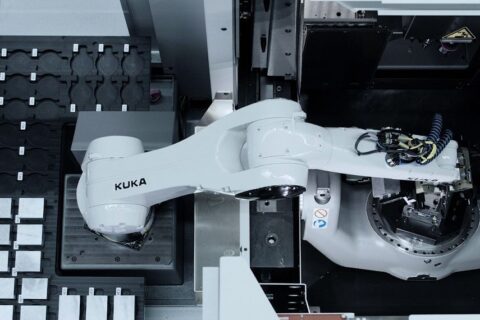
BX machines can operate as stand-alone units or form part of automated manufacturing solutions. For example, the CLX 450 TC can be combined with the Robo2Go system for automated workpiece handling. The DMV 60 vertical machining center can be equipped with the PH Cell for automated pallet handling, while the CPP and LPP systems provide automation options for the NHC 6300 horizontal machining center.
DMG MORI emphasizes that the decision to automate should depend on the characteristics of the components and the production process. Longer periods of unmanned operation, more consistent workpiece flow and higher machine utilization can justify the investment. For frequently changing products, small batches or processes involving extensive manual intervention, the economic considerations may be different. Automation is therefore not necessarily part of every BX configuration, but an option that should deliver measurable benefits in the intended application.
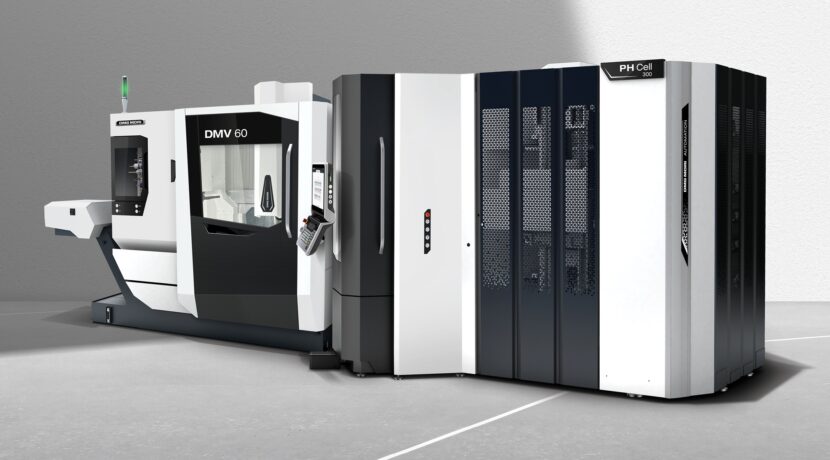
Automated pallet handling allows for longer operating intervals and can increase the machine’s
productive capacity. (Picture: DMG MORI)
Expanding Production Capabilities Step by Step
With Best fit, DMG MORI also wants to give manufacturers greater flexibility to develop their production capabilities over time. The company describes this approach as Easy Start, Grow and Scale. Manufacturers can begin with a configuration tailored to their current machining requirements and gradually expand it as their component mix, capacity needs or production organization evolve.
Selected BX machines are therefore offered as ‘CELOS X Prepared’. This means they are prepared for future integration with the CELOS X platform, although the full range of functions is not necessarily available from the outset. Depending on the machine model and configuration, CELOS X, connectivity and machine monitoring functions can be added later. Additional technology cycles, peripheral equipment and automation systems provide further opportunities for expansion.
Such developments are not limited to newly purchased equipment. With Automation Retrofit, DMG MORI also offers the possibility of adding automation to technically compatible existing machines. This can help manufacturers make better use of installed capacity without immediately investing in another machine tool. The feasibility and economic value of retrofitting depend on the specific machine, its configuration and the intended manufacturing application.
DMG MORI illustrates these development paths through several machine families. With the CLX 450 TC, manufacturers can expand functionality by adding technology cycles, CELOS X and Robo2Go automation. As requirements for machine performance, process integration and automation increase, the CTX beta 450 TC offers further possibilities, including automation with MATRIS.
Similar development options are available in milling. Manufacturers may move from a DMV 60 to a DMU 50 when their machining requirements become more demanding. In horizontal milling, the NHC 6300 provides a starting point, while the INH 63 offers further opportunities for integrated manufacturing processes. Moving to a more advanced machine is not necessarily the next step, however. The decision depends on whether the additional capabilities are technically necessary and economically justified.
“Our mission is to provide our customers with a broad, well-coordinated portfolio of machines and solutions, ranging from cost-effective standard production to highly integrated manufacturing,” says Neun. “With Best fit, we’re expanding our ability to implement our Machining Transformation in line with our customers’ requirements. What matters most is not maximum machine performance, but rather the economic contribution the technology makes to the specific manufacturing task and to overall production.”
An automated BX machine may therefore remain the most suitable solution over the long term. Alternatively, it can complement existing MX equipment or machines added at a later stage. The appropriate combination ultimately depends on how the component mix, batch sizes, capacity requirements and production organization develop.