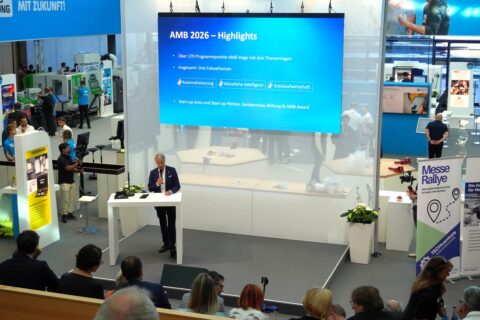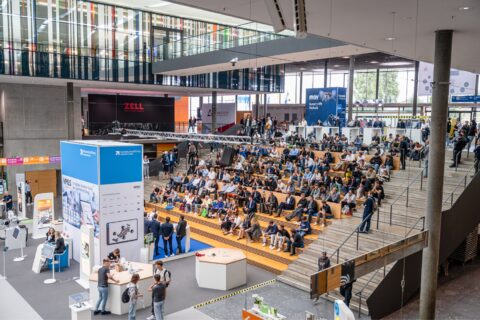

There was a noticeable sense of momentum at AMB 2026 in Stuttgart. Across ten exhibition halls, machines were running, automation systems were operating live and suppliers presented developments in tooling, software and production technology. The overall impression was one of an industry preparing for the next phase of investment. That confidence comes at a time when the German manufacturing landscape is changing. Automotive remains important, although its dominant position is becoming less certain. At the same time, sectors such as semiconductors, aerospace, energy, medical technology and defence are gaining relevance. This shift is also influencing the type of production technology manufacturers are looking for.
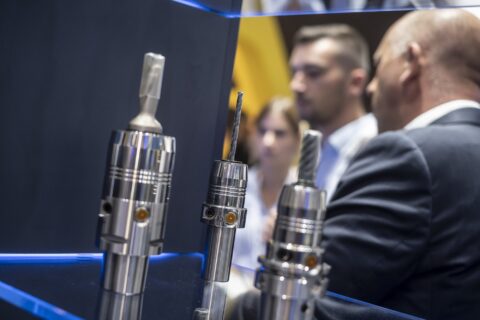
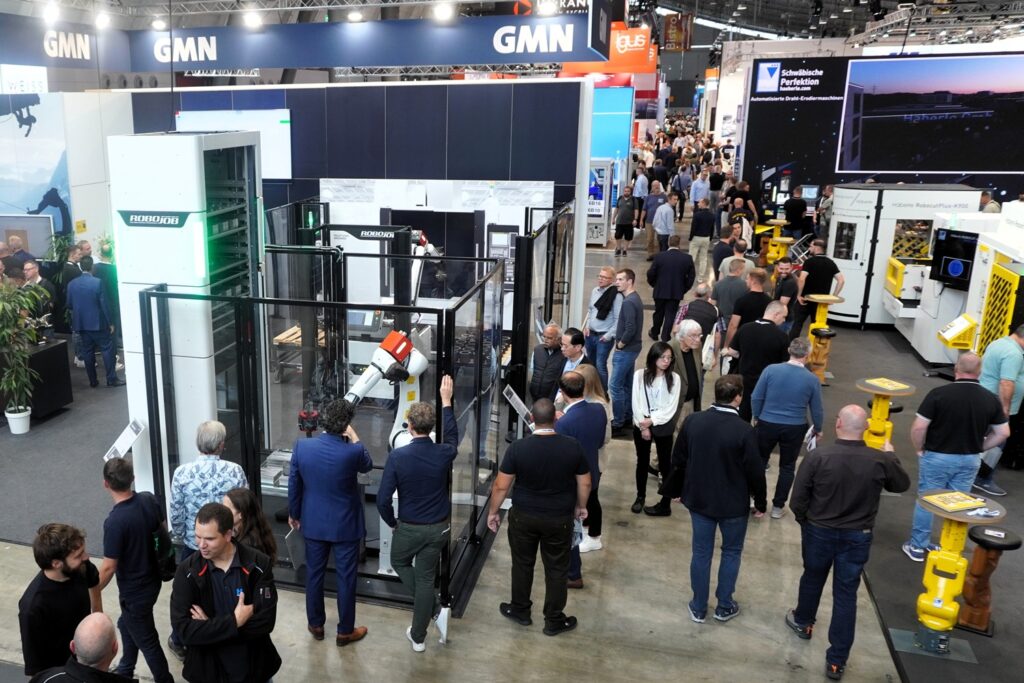
With 1,195 exhibitors from 34 countries, AMB once again offered a broad overview of developments in metalworking and machining. Some stands were more compact than at previous editions, yet the show itself felt substantial. Technology was demonstrated rather than simply displayed. Machines were cutting, automation cells were producing and visitors could see complete manufacturing processes in operation. Much of what was shown represented further refinement of existing technology. Improvements focused on accuracy, productivity, ease of use, connectivity and automation. Alongside these developments, several solutions pointed towards a broader change in how machining systems are being designed and used.
German manufacturers broaden their focus
For Germany’s machine tool sector, the changing automotive market remains one of the most important developments. Automotive production has traditionally generated large volumes and long-running series, making it a key customer segment for machine builders and suppliers. Growing competition from China and structural changes within the automotive sector are altering that relationship. At AMB, this was reflected in the discussions around new applications and alternative growth markets.
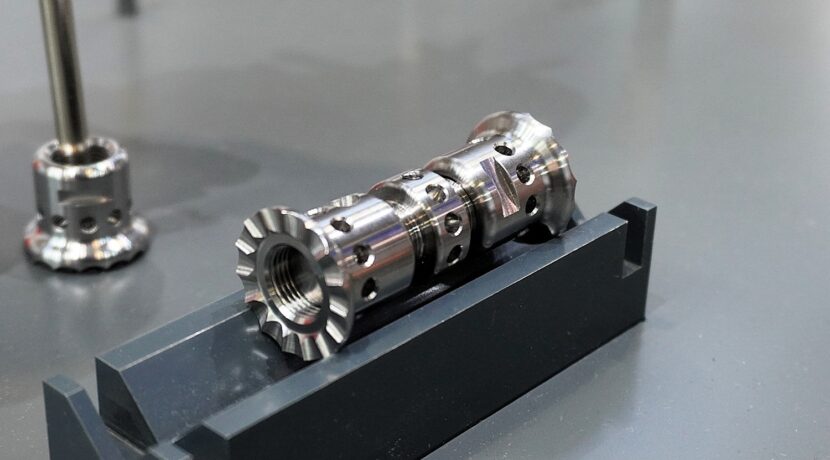
Semiconductor manufacturing featured prominently, while aerospace, energy and medical technology also received considerable attention. Defence was another sector that appeared more frequently than in previous years, both in conversations and in the applications presented on stands. This broader market focus has technical consequences. Manufacturers serving these industries often deal with lower volumes, greater product variation and increasingly complex components. Production systems therefore need to offer more flexibility. Fast changeovers, adaptable automation and efficient handling of different workpieces are becoming more important than production concepts optimised around a single high-volume part.
Automation becomes more flexible
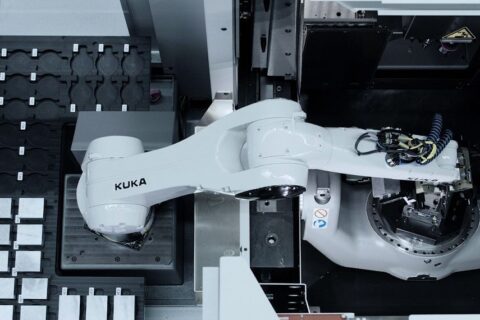
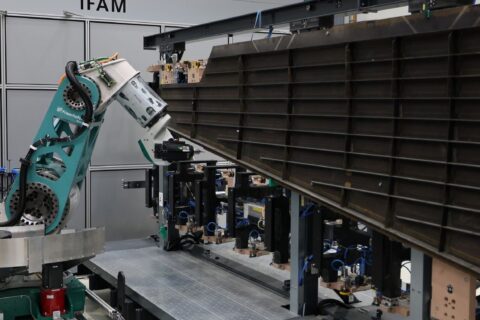
Automation was present throughout AMB 2026. Robot loading, pallet systems, tool management and autonomous production concepts were a familiar sight across the halls. The main development lies in the way these technologies are being combined. A robot next to a machine is no longer enough to define an automated production cell. Increasing attention is being given to the entire process around the machine. Modern systems are expected to identify workpieces, select the correct program, manage fixtures and tools and adapt to different production jobs with minimal operator input. Vision systems, digital twins and more advanced software are becoming increasingly important in achieving that flexibility.
This is especially relevant for manufacturers working with small batches and changing product mixes. The ability to switch quickly between different parts can be more valuable than optimising a cell around one fixed product. Automation is therefore becoming less rigid and more closely linked to production planning, software and data.
AI is becoming practical, although its impact remains limited
Artificial intelligence had been positioned as one of the major topics ahead of AMB 2026. On the show floor, AI was certainly present, although its role was more evolutionary than disruptive. Applications included image recognition, process monitoring, programming support and the analysis of production data. AI was also linked to digital twins and robot control, where software can help systems react more intelligently to changing production conditions.
These developments show clear potential, particularly where large amounts of process data are available. AI can help detect deviations, support decision-making and reduce manual analysis. At the same time, most applications seen at AMB were extensions of existing production technologies rather than entirely new manufacturing concepts. For machining companies, the immediate value of AI therefore lies mainly in optimisation, monitoring and easier operation. A fundamental change in the way machining is carried out is still some distance away.
Industry looks ahead again
Perhaps the clearest message from Stuttgart was the atmosphere itself. German industry continues to face challenges ranging from energy costs and labour shortages to geopolitical uncertainty and pressure on traditional markets. Those concerns remain part of the background. At AMB, however, discussions centred strongly on investment, productivity, automation and new business opportunities. That gave the exhibition a more forward-looking character than might have been expected after several difficult years for German manufacturing.
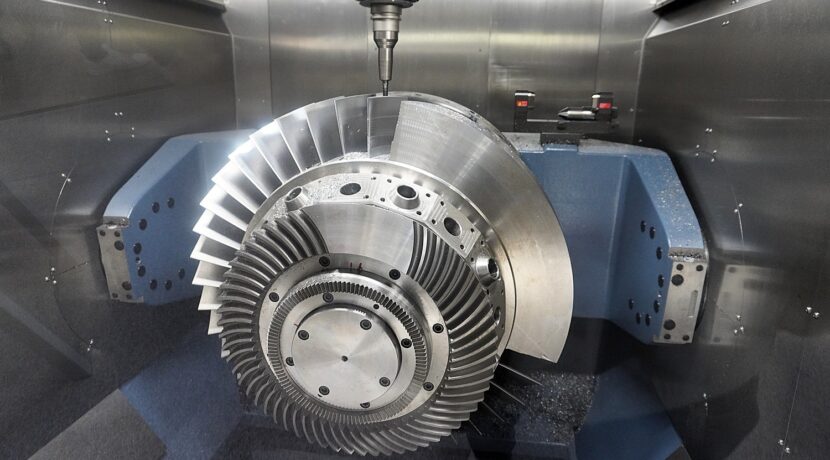
The format of the show also continues to play an important role. Visitors can see machines cutting real components, automation systems operating under realistic conditions and complete production concepts in action. For a technical audience, that practical element remains one of AMB’s strongest features. AMB 2026 therefore showed an industry in transition. Automotive is becoming less dominant, new markets are gaining importance and production requirements are becoming more varied. In response, machine builders and technology suppliers are placing greater emphasis on flexibility, automation and software. The technologies themselves are evolving step by step, while the market around them is changing more fundamentally.