
AI returns to AMB 2026 with a more practical focus than two years ago. Instead of presenting AI as a universal answer to production bottlenecks, companies are assessing measurable benefits. For metalworking businesses, the key questions concern data quality, integration and operational value. They are examining whether applications improve process stability, machine availability or decision-making. At AMB 2024, AI was widely associated with ambitious promises. The technology was expected to optimise processes, predict downtime and help employees manage complex production decisions. However, many applications remained at the experimental stage. Companies ran pilot projects and tested individual software functions. They retained human oversight because the results were not yet trusted for autonomous use.
The discussion at AMB 2026 is expected to be more differentiated. AI remains high on the strategic agenda. However, attention is shifting towards practical applicability and demonstrable returns. Companies are asking which processes provide enough usable data. They are also assessing where time savings can be measured. In addition, they want to know how AI can be integrated without adding complexity. This issue is particularly important in metalworking. Production environments often combine machines of different ages, software systems and established working methods.
AI use expands beyond pilot projects
A VDMA survey conducted at the beginning of 2026 indicates that AI has gained importance in mechanical engineering. More than 80 percent of companies consider the technology more important than before. Around one-third already use AI applications in operational environments. According to Guido Reimann, Deputy CEO of VDMA Software and Digitalisation, the sector is moving beyond its initial experimental phase. Reimann also coordinates the VDMA Artificial Intelligence Competence Network. AI is increasingly becoming part of everyday applications. At the same time, pilot projects continue to explore where it can create genuine value. For now, many operational uses are found outside the machine tool itself. AI is being applied in software development, engineering, design, IT and business operations. It is also used in marketing, communications, sales and product-related services. Examples include systems that prepare technical documentation and analyse service enquiries. They can also help engineers locate relevant product and process information more quickly.
The relevance for manufacturing increases when these applications move closer to production. AI can process large quantities of machine and process data. It can identify deviations and support decisions about maintenance, planning and process parameters. The value of AI does not lie in producing a convincing answer. Instead, AI should support more stable processes, shorter lead times and better use of expensive production assets.
Digital foundations determine AI value
The potential savings associated with AI are attractive. This is particularly true where unplanned downtime affects capacity and delivery performance. Reimann sees opportunities to improve efficiency throughout the value chain. In technical documentation and manuals, AI can reduce preparation costs. In procurement, it can help identify identical or similar parts. Companies can therefore consolidate volumes and negotiate improved terms. In the machine tool sector, AI also offers potential for reducing unplanned downtime. “AI solutions can deliver cost savings of 10 to 20 percent in this area,” says Reimann. However, such results depend on the digital foundation beneath the application.
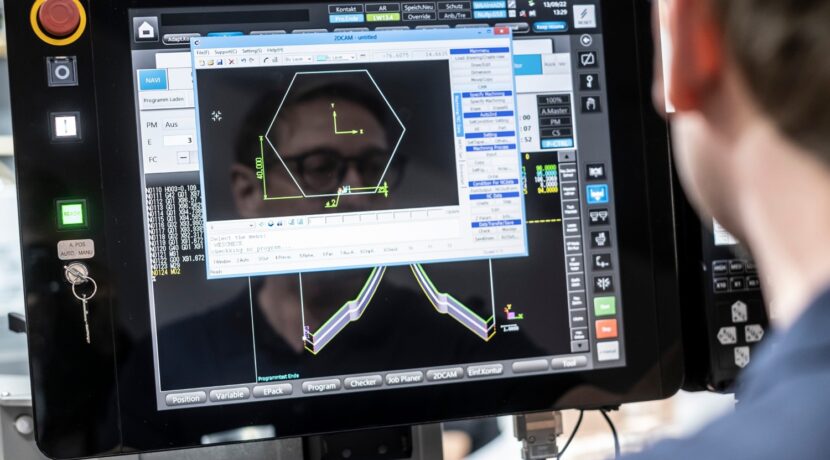
Algorithms cannot provide reliable support when data is fragmented. The same applies when systems are outdated or machines provide little usable information. Before introducing AI, companies therefore need to establish what information they collect. They must also assess whether the data is reliable. In addition, companies need to understand how machines, software packages and business processes exchange data. AI is not a substitute for digitalisation. It is an additional layer built on consistent and accessible data streams. This is a significant issue for metalworking companies. Production facilities have often been expanded incrementally. As a result, machine generations, control systems and software environments operate alongside one another. The challenge is therefore not limited to selecting an algorithm. Interfaces, data models and process knowledge are equally important. User-friendly operation is also essential for turning AI output into practical action on the shop floor.
Practical AI examples take centre stage at AMB
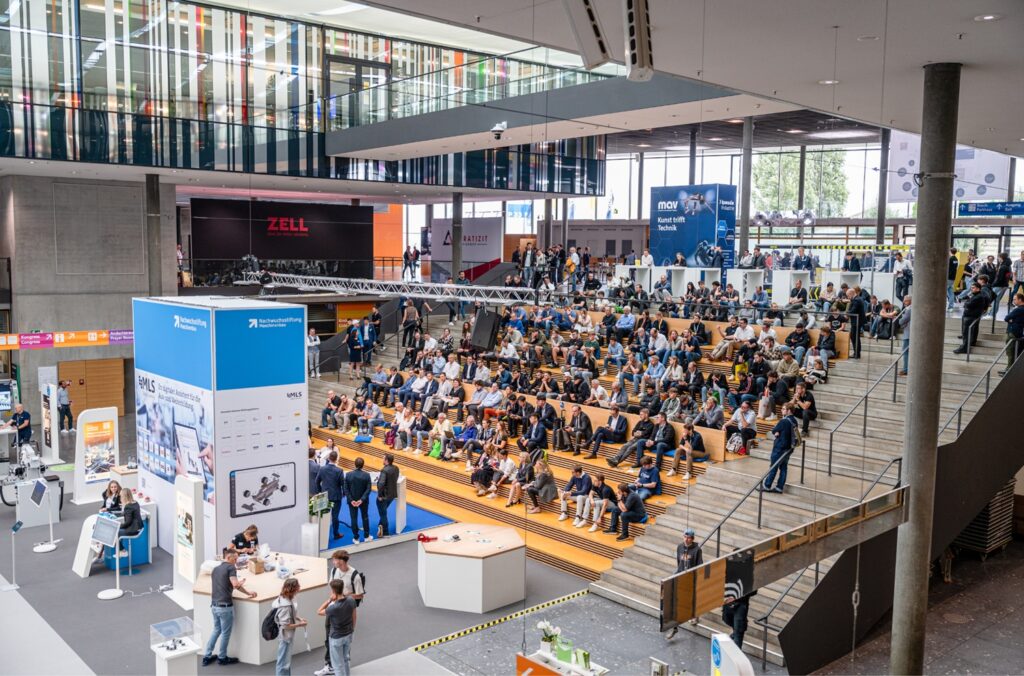
Artificial intelligence will be a prominent topic at AMB in Stuttgart from 15 to 19 September. Software developers are expected to present applications for product development, design and programming. More machine builders are also integrating AI into machines and associated services. The range extends from production software and digital assistants to condition monitoring and process optimisation. It also includes machine data-based services. This reflects the broadening role of AI in manufacturing. Rather than appearing as a separate technology project, AI is increasingly being incorporated into existing software, service processes and machine functions.
On Wednesday, 16 September, VDMA Software and Digitalisation will organise a panel discussion at the AMB Stage. The stage is located in the atrium near the eastern entrance. The session, Artificial Intelligence in Manufacturing: Practical Examples, runs from 12:00 to 13:30. It is followed at 14:00 by the expert session AI in Production: From Hype to Added Value. Representatives from industry and academia will address concrete applications and current developments. They will also discuss unresolved questions from industrial practice. The discussions will show how far AI has progressed since AMB 2024. They will also examine where expectations are becoming applications that can be assessed through process performance, availability and operational benefit.