
Fraunhofer IST and its partners, Rohloff AG and Tantec A/S, have transferred the COAD plasma process into series production for bicycle components. The process addresses a practical manufacturing problem. It improves the adhesion of liquid sealants on metallic surfaces, where conventional sealing solutions cannot be used because of limited installation space.
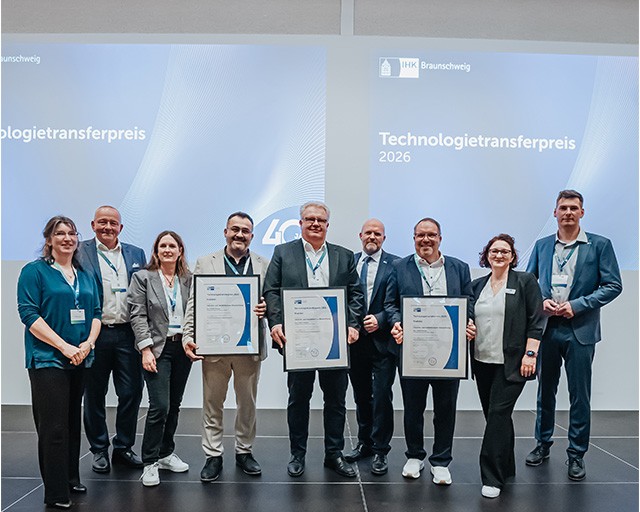
The project was among the finalists for the 2026 Technology Transfer Award of the Braunschweig Chamber of Industry and Commerce, presented on May 20, 2026. The nomination recognized the industrial transfer of COAD technology and its relevance for more sustainable and efficient production methods.
The application was developed for Rohloff, where the design of highly compact bicycle components created a sealing challenge around a ball bearing. A conventional seal was not feasible within the available space. An alternative liquid seal offered a possible route, however, its adhesion to the metallic surface was initially not sufficient for the application.
Fraunhofer IST adapted the COAD process to solve this issue. COAD stands for COntrolled ADhesion and uses plasma treatment to adjust the adhesion behavior of a surface in a controlled way. The result is a process that can be applied reproducibly in industrial production, without solvents, and with a focus on stable bonding between the metal component and the sealant.
Adhesion control on metallic surfaces
The core of the COAD process is the targeted preparation of the metal surface before the sealant is applied. In the first step, the surface is specifically cleaned and functionalized by plasma treatment. A nanometer-thin functional coating is then created on the surface. This coating changes the adhesion properties in a controlled manner, making the surface more suitable for the liquid sealant.
For the Rohloff application, this was important because the sealing task had to be solved within a very compact design. The process did not rely on additional installation space for a mechanical sealing element. Instead, it improved the interaction between the existing metallic surface and the liquid sealing material.
The practical relevance lies in the combination of reproducibility and compatibility with series production. Adhesion that is insufficient or inconsistent can affect process stability and component quality. By using a defined plasma process, the surface condition can be adjusted in a controlled way before sealing. According to the project partners, this enables permanent improvement of sealant adhesion without the use of solvents.
Integration into industrial production
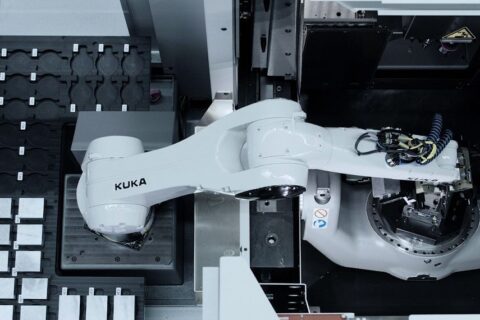
Transferring the COAD process from development into production required more than proving the surface effect. The process had to be integrated into an industrial plasma system and fitted into Rohloff’s manufacturing environment. This was carried out in cooperation with Tantec A/S, the equipment manufacturer involved in the project.
The technology is now used in series production at Rohloff AG, where it supports the manufacture of more than 200 components per day. For a production environment, this is a central part of the achievement. A surface treatment process must deliver consistent results under daily operating conditions, not only under laboratory conditions. In this case, the COAD process was implemented as part of a stable production route for high-quality bicycle components.
Tantec A/S has licensed the process from Fraunhofer IST and markets the technology worldwide under the name VacuTEC+. The partners see potential applications beyond bicycle components, including mobility, medical technology and pharmaceutical technology. Prof. Dr. Michael Thomas, Head of the Circular Products and Processes Department at Fraunhofer IST, said that reaching the finals demonstrated the potential of the technology and underlined the relevance of transferring research into industrial application.