
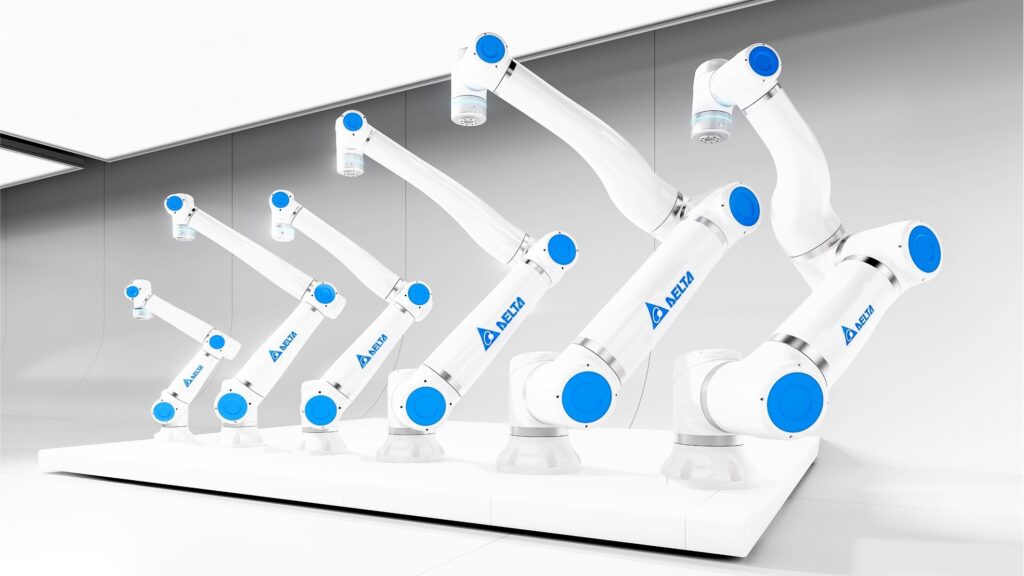
Delta’s D-Bot series of collaborative robots has received the BIG SEE Product Design Award 2026. The award recognizes the robot design’s combination of function, safety and efficiency. For manufacturing companies assessing collaborative automation, the recognition highlights the role of industrial design. It brings these requirements together within a single robot platform.
The BIG SEE Awards recognize creative achievements in architecture, product design and industrial design. Although the program was originally established to promote work from Southeast Europe, it has since developed into an international platform. It focuses on innovation and sustainability.
The 2026 product design award places the D-Bot series within this broader design context. Rather than treating appearance, functionality and industrial use as separate subjects, the recognition highlights their combination in the overall design. Delta identifies function, safety and efficiency as the central elements of this approach.
The announcement does not provide technical specifications or performance data for the D-Bot models. Therefore, it gives no details about payload, reach, speed, repeatability or control architecture. Its focus is specifically on the design of the robot series. It also addresses how several operational priorities have been incorporated into one concept.
Function and safety in collaborative robot design
For collaborative robots, design has a direct relationship with how the system is used. Delta’s award submission emphasizes the combination of functional design and safety. It does not present either element in isolation. This is relevant because a robot’s physical design affects how users interact with the equipment. It also affects how they integrate it into production processes.
The award also recognizes efficiency as part of the same design approach. In this context, the D-Bot series is presented as a collaborative robot platform. Function, safety and efficiency have been considered together. However, the available information does not explain how these characteristics are implemented technically. No assessment can therefore be made of specific safety functions, operating modes or productivity gains.
Even so, the award indicates that the overall product concept was a central consideration in the development process. For industrial users, this places the emphasis on design as a practical engineering discipline. A collaborative robot must not only perform its intended function. It must also combine the requirements that shape its use in a manufacturing environment.
Research and development support product design
Delta links the D-Bot development to its wider research and development strategy. The company states that it consistently invests more than eight percent of its annual revenue in research and development. Innovation is positioned as a core part of its corporate strategy. As a result, the award provides a visible outcome of that investment within its collaborative robot portfolio.
Design is particularly relevant where hardware, functionality and user interaction meet. Moreover, the BIG SEE recognition suggests that these elements were considered at product level in the D-Bot series. They were not added as separate features after the main engineering work.
The international scope of the awards also gives the D-Bot series exposure beyond BIG SEE’s original Southeast European base. The program now covers product and industrial design globally. Therefore, the 2026 award places Delta’s collaborative robot design within an international field of entries. These entries focus on innovation and sustainability.
No further information has been provided about the individual D-Bot models or the evaluation behind the award. The announcement is therefore primarily a recognition of the series’ design direction. It centers on integrating function, safety and efficiency into the collaborative robot concept.