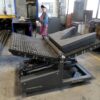

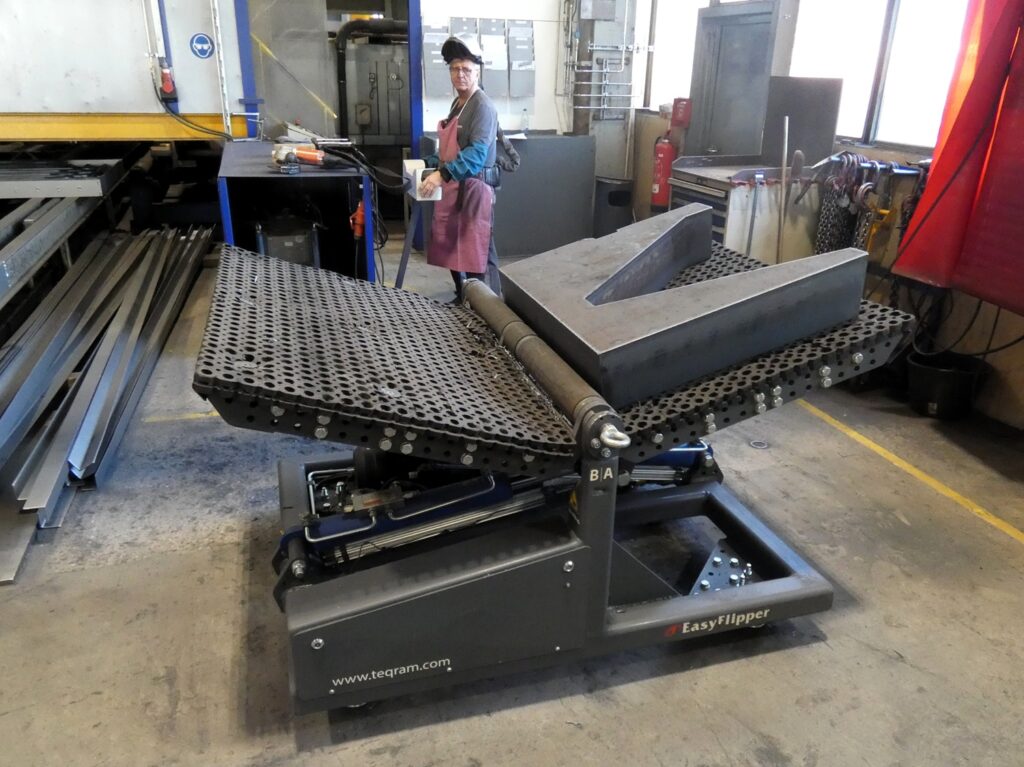
Liebherr-Werk Biberach uses a hydraulic EasyFlipper from Teqram to turn heavy flame-cut components during crane production. The equipment handles workpieces weighing up to 5,000 kilograms. It reduces the need for extensive lifting and securing operations. Employees therefore use less physical effort and gain a more controlled way to handle irregularly shaped parts. Producing tower cranes and mobile construction cranes involves moving, machining and turning large steel components. Many are flame-cut parts that must be turned several times during production. Their weight, complex shapes and offset centres of gravity can make handling difficult.
Before introducing the EasyFlipper, Liebherr used cranes and lifting equipment for this work. Depending on the component, securing and turning it could take considerable time. It also required close attention. Employees manually turned some medium-weight parts or used physically demanding support procedures. Liebherr sought a way to handle different flame-cut parts with less physical strain. The company also wanted to reduce time-consuming operations. It selected the hydraulic version of Teqram’s EasyFlipper for its Biberach site. Liebherr has developed and manufactured cranes there since 1954.
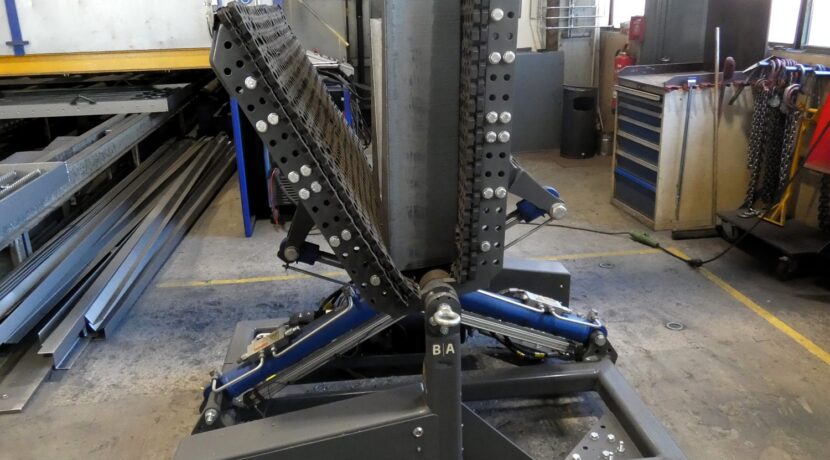
Controlled handling of heavy workpieces
The EasyFlipper uses two tilting tables to turn components in a controlled, repeatable process. An employee places the workpiece on one table. The machine then carries out the turning operation. The hydraulic model at Biberach has a capacity of up to 5,000 kilograms. Teqram also offers a pneumatic version for workpieces weighing up to 750 kilograms. This approach reduces the need to secure, lift and turn each component with conventional lifting equipment. It is particularly relevant for irregular parts with challenging centres of gravity. Moreover, the process is less dependent on individual working methods. Robert Piesche, production technology engineer at Liebherr-Werk Biberach, says the automation has removed a physically demanding task for employees. “In addition, we have been able to significantly improve safety on the shop floor,” he says.
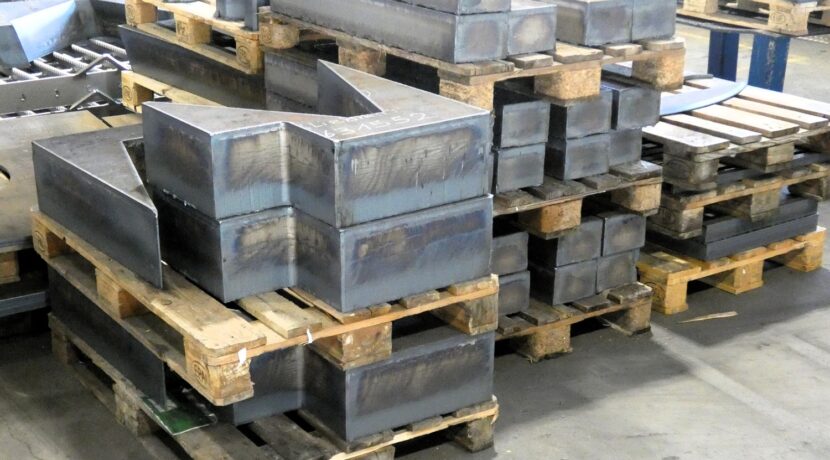
Less handling and preparation time
The equipment also reduces the effort needed to position components for the next production step. Employees previously had to turn or support some parts manually. The EasyFlipper now performs most of that task. The change affects production time as well as ergonomics. Fewer manual operations and less preparation allow components to be turned more quickly and predictably. Employees therefore have more time for other work. The time saved on an individual component may be limited. However, it can accumulate when large quantities of parts are processed. For Liebherr, the benefit comes from improving a recurring handling operation. It does not change the cutting or machining process itself. The same controlled turning method can be applied to various flame-cut parts. The hydraulic machine also provides capacity for components weighing several tonnes.