
Crytur’s detector units for electron microscopes are built around demanding requirements for dimensional and shape accuracy. As the Czech manufacturer has expanded from crystal production into integrated optoelectronic and optomechanical assemblies, metrology has become a central part of the process, not only for part inspection, but also for assembly verification and process stability.
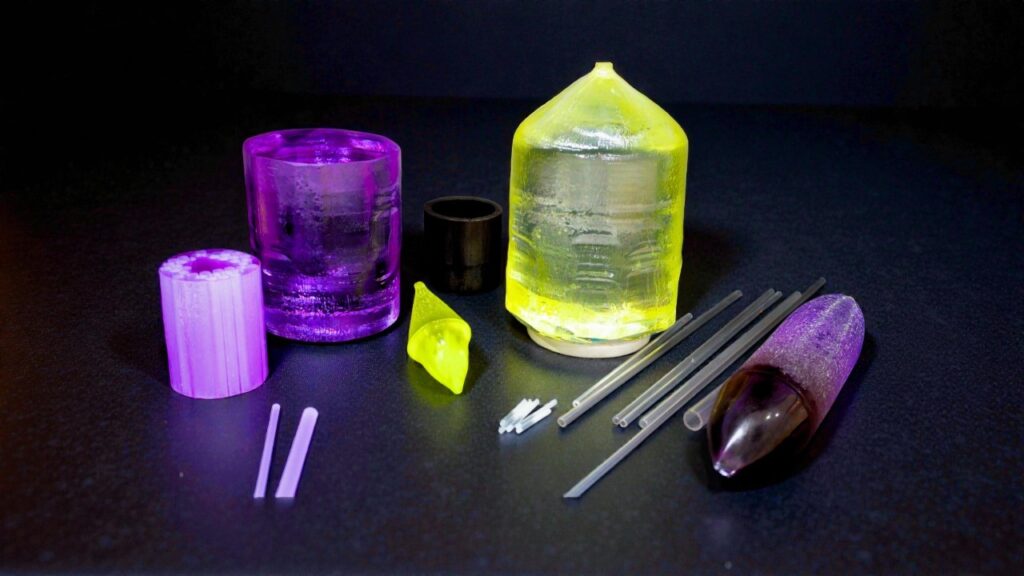
The company, based in Turnov in the Czech Republic, produces synthetic crystals and components for a range of technical applications. Its materials include synthetic garnets and perovskites for lasers, X ray imaging and electron microscopy, as well as lead tungstate crystals used in high energy physics experiments. Crytur also manufactures sapphire profiles and optical elements with thin functional layers applied by vacuum evaporation. Today, a large share of its activity is focused on detector units for electron microscopy, including detectors for backscattered and secondary electrons. These are critical elements in microscopes used to reveal very fine detail, and Crytur supplies such detectors not only for laboratory systems, but also for industrial electron microscopes used in semiconductor quality control. That shift toward more complex assemblies has increased the demands placed on inspection throughout production.
Metrology for tight tolerances and assembly fit
According to Crytur, the move into more complex assemblies brought a need to verify dimensions in the range of tens of micrometers, with shape and position tolerances reaching sub-micron values. In practice, this means that each part must be measured accurately enough to ensure that final assemblies fit and function as intended.
Coordinate measuring machines from Mitutoyo form the backbone of that inspection strategy. Crytur uses STRATO-Apex bridge-type machines in two sizes, the STRATO-Apex 574 with a measuring range of 500 × 700 × 400 mm and the STRATO-Apex 9106 with a range of 900 × 1,000 × 600 mm. Both have a stated resolution of 0.02 μm, and the company operates two of each in two measuring laboratories. The installed base also includes CNC coordinate measuring machines, the CRYSTA-Apex S 574 and CRYSTA-Apex V 544, for small and medium-sized parts, as well as two CRYSTA-Plus M 443 manual machines for smaller components and simpler measurement tasks. Together, these systems cover a wide range of part sizes and inspection needs, from routine checks to more demanding geometric verification.
Optical and roundness measurement where contact is not suitable
Not every component can be inspected with the same method. Crytur’s product mix includes polished surfaces that cannot be touched with mechanical probes without risking damage. For such parts, non-contact optical measurement is essential.
The company uses two Quick Vision Active QVT1-L404 optical measuring instruments with motorized zoom, multi-source illumination and data analysis software. These systems offer a measuring range of 400 × 400 × 200 mm and a resolution of 0.1 μm. For smaller flat parts, Crytur also has two Quick Scope QS-250 Z instruments with a measuring range of 200 × 250 × 100 mm. In addition, five TM-1005B measuring microscopes are used for checking dimensions, angles and shapes of small parts.
Roundness and concentricity are handled with a ROUNDTEST RA-2200 CNC and a ROUNDTEST RA-1600. The RA-2200 includes automatic centering of the measured part, while the RA-1600 uses manual centering supported by the DAT guidance function. That combination gives Crytur a choice between faster setup and greater flexibility for complex measurement tasks. For components used in optoelectronic assemblies, this kind of capability matters because geometric deviations can directly affect alignment, fit and the overall reliability of the finished detector unit.
Software and data evaluation for small batch production
Crytur does not operate in high-volume manufacturing. Production is typically based on individual parts and small batches in the tens of units. In that environment, efficient preparation of measurement routines becomes especially important, because programming and setup time can otherwise weigh heavily on throughput.
For that reason, the company highlights the role of software alongside the hardware. MCOSMOS and the offline programming environment MiCAT Planner are used to prepare measurement procedures from the part, model or drawing. Crytur also points to compatibility across different device types as a practical benefit, since it simplifies work in a mixed metrology environment.
The measurement data is then evaluated with MeasurLink software for SPC. This allows inputs from coordinate measuring machines, roundness testers and other measuring equipment to be combined for statistical analysis of process stability and repeatability. The practical value is straightforward, trends in the process can be identified in time, allowing corrective action before deviations lead to scrap. For a manufacturer of detector units used in demanding microscopy applications, that link between measurement data and process control is critical, because any drift in part quality can quickly affect assembly performance and end use reliability.