
Fraunhofer IAO will launch the Applied Robotics Alliance in July 2026, a new innovation network designed to connect companies around new robotic applications. The initiative focuses on joint development, practical testing, and long-term R&D cooperation. For manufacturers and technology suppliers, the relevance lies in how established robotic systems can be extended into new use cases through combinations of AI, sensors, and actuation technology.
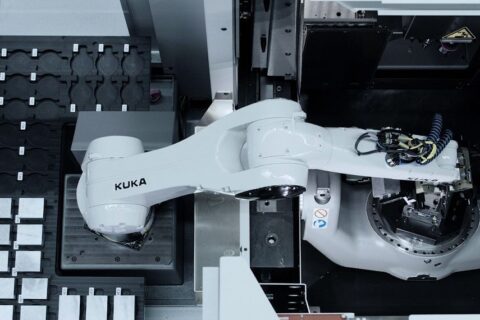
Robotics is moving beyond fixed, preprogrammed tasks. Systems are increasingly expected to work autonomously in less structured environments, process natural language, and handle activities in industrial and domestic settings. According to Fraunhofer IAO, this shift also reveals unused innovation potential outside the best-known application areas. The institute sees opportunities in combining existing robotic platforms with additional technologies such as artificial intelligence, sensor systems, and new actuator concepts.
With the Applied Robotics Alliance, Fraunhofer IAO aims to create a framework in which these combinations can be explored across company boundaries. The network is aimed at robot manufacturers, integrators, component and system suppliers, and users from different sectors. Its purpose is to identify promising application fields, connect suitable partners, and initiate development projects that can turn technical building blocks into workable robotic systems.
Innovation sprints as a development format
A central element of the network is the use of innovation sprints. In these short development phases, specialists from different industries will work together on a defined application area. The idea is to move from initial concepts to prototypes, and from there toward solutions that can be tested for market suitability.
Fraunhofer IAO positions itself as the coordinating party in this process. The institute will moderate the activities within the network and support companies in identifying their specific R&D requirements through confidential one-on-one meetings. On that basis, the project team intends to bring together partners whose technologies or products could complement each other in a new robotic system.
That structure is meant to lower the threshold for collaboration in an area where expertise is often distributed across several specialist companies. For participants, the practical value lies in a more targeted path from technical idea to application concept. Rather than discussing robotics in broad terms, each sprint is organized around a concrete field of use, which helps keep development work focused and easier to assess.
Roadmaps and showroom for visibility
Beyond the sprint format, Fraunhofer IAO says it will support participating companies with customized R&D roadmaps for their strategic innovation activities. This adds a longer-term layer to the network. Instead of limiting cooperation to isolated workshops or prototype exercises, the alliance is designed to help companies structure follow-up development and define where joint work could lead.
The network will also include a Future Robotics Showroom. There, partner companies will be able to present their solutions and make project results visible to a wider audience. For companies involved in collaborative development, that showroom function can serve as a way to demonstrate technical progress and place new concepts in a broader application context.
The Applied Robotics Alliance will run from July 1, 2026, to September 30, 2027. With this initiative, Fraunhofer IAO is setting up a cross-industry format focused on practical robotics development, partner matching, and the search for application areas that go beyond current standard deployments.