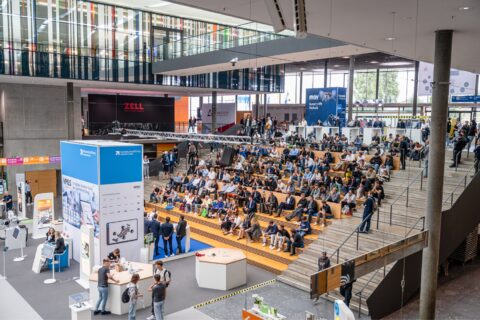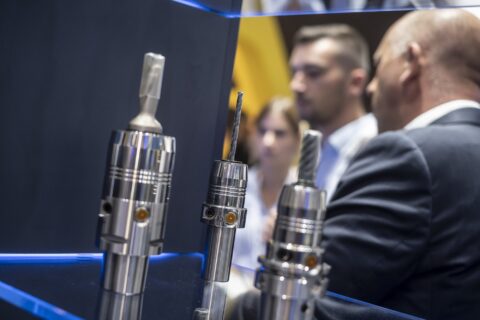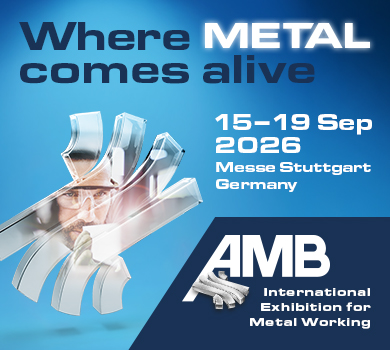

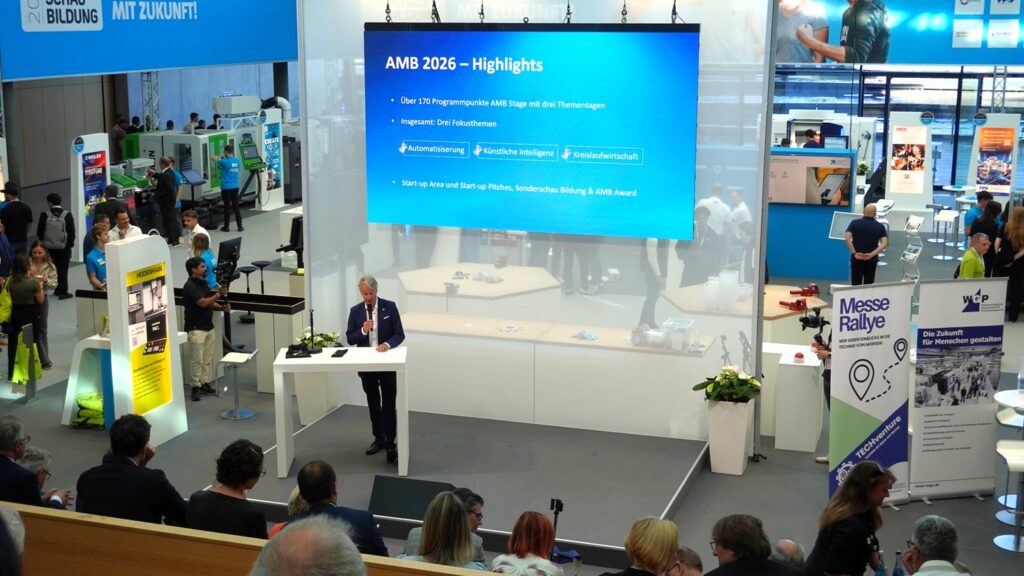
AMB 2026 has opened in Stuttgart with 1,195 exhibitors from 34 countries. They fill all ten exhibition halls. Running until 19 September, the event brings together companies across the metal-cutting process chain. Its relevance lies in the combination of production technology, digital developments and practical manufacturing solutions presented in one location. The 22nd edition of AMB takes place in a region with a long-standing connection to mechanical engineering and metalworking. Stuttgart has hosted the exhibition for more than 40 years. Meanwhile, Baden-Württemberg remains an important European location for machine tools and tools. Messe Stuttgart President Roland Bleinroth described the event as a meeting place that combines regional industry with international participation. Over five days, exhibitors and visitors can discuss current applications, future production requirements and potential partnerships. AMB is supported by the VDMA High-Accuracy Tools Association, the VDMA Software and Digitalisation Association and the German Machine Tool Builders’ Association, VDW.
Baden-Württemberg’s role in production technology
At the opening, Baden-Württemberg’s Minister of Economic Affairs, Labour and Tourism, Dr Nicole Hoffmeister-Kraut, highlighted the state’s position in machine tools and high-accuracy tools. For the regional manufacturing sector, AMB provides a setting where suppliers, users and technology partners can assess developments in production technology. They can also discuss their industrial application. New elements at this year’s exhibition include the “Defence & Security Opportunities” format. According to the organisers, it is intended to offer a platform for a growing field of activity. AMB is also cooperating for the first time with the state agency Baden-Württemberg International. These additions expand the event’s focus beyond individual machines or components. They address the wider market environment in which manufacturing companies operate.
The exhibition’s international dimension remains central. Exhibitors from 34 countries are represented in Stuttgart. Visitors therefore gain access to technologies, services and concepts from across the metal-cutting sector. Companies can compare manufacturing approaches or identify new contacts. The concentration of suppliers and users can also shorten the route from an initial technical discussion to a more detailed assessment of possible applications.
Reliability under pressure
The opening also linked metalworking to high-performance sport. Former biathlete Kati Wilhelm is a three-time Olympic champion and five-time world champion. She described how small margins can determine the result in competition. After a demanding cross-country skiing stage, athletes must rely on calm execution. They also need equipment that functions consistently at the shooting range. That connection illustrates a broader point about metalworking. Components manufactured on metalworking machines often remain largely invisible to the end user. However, they influence the reliability of equipment in demanding applications.
Wilhelm referred to millimetre-level accuracy in rifle components as a basis for dependable performance. In industrial settings, the same principle applies to processes that must operate reliably when time pressure and repeatability matter. AMB uses this connection to place the technologies displayed at the exhibition in a wider context. The focus is not only on the machines themselves. It also includes the material and component basis they create for products and processes. From 15 to 19 September, the Stuttgart event will serve as a marketplace for metal-cutting technology. Products, services, digital concepts and manufacturing solutions are presented across the full exhibition site.