
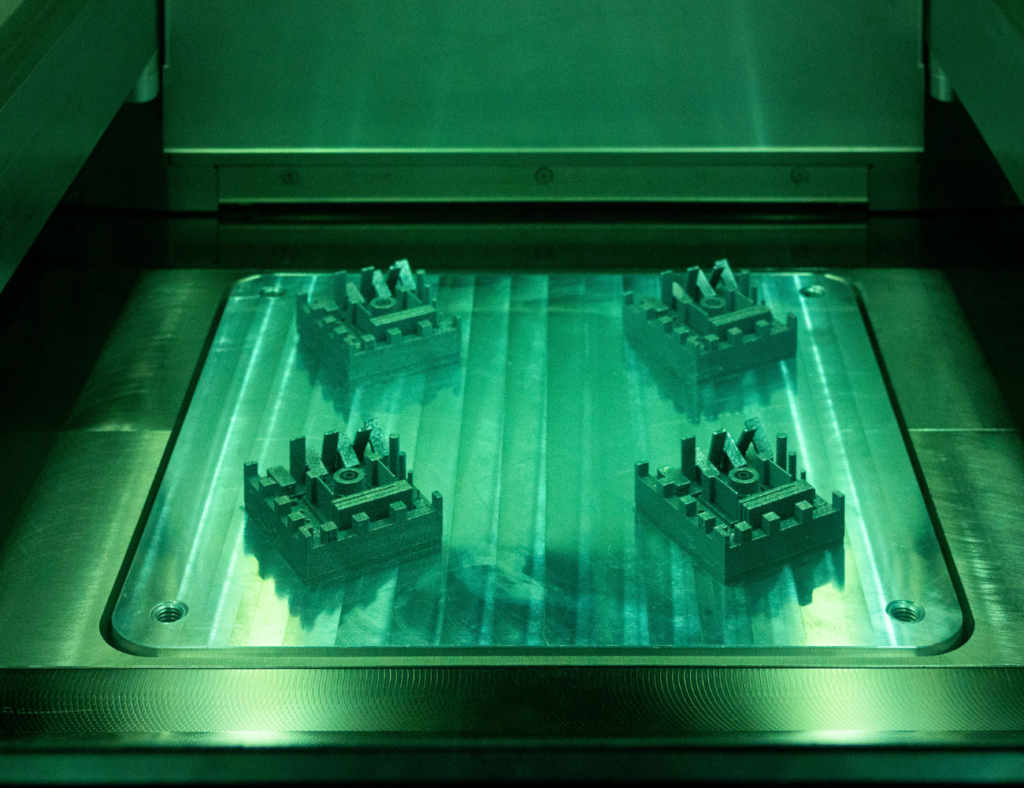
BAM is working on a new approach to quality assurance for metal 3D printed aviation components. In the SONRISA project, the institute and its partners are linking process monitoring with computed tomography to detect defects earlier and reduce the effort required for final inspection. The work addresses one of the main barriers to broader use of additive manufacturing in aviation, reliable and efficient verification of component quality.
Additive manufacturing has clear relevance for aircraft design because it enables complex geometries and lighter metal components. That matters in aviation, where lower weight can translate into lower fuel consumption over long service lives. At the same time, the sector places exceptionally high demands on safety. Every safety relevant part must be inspected thoroughly before installation, and that creates a challenge for 3D printed components. These parts are often delicate, highly individual and difficult to assess with conventional inspection methods, especially when defects such as pores or cracks are hidden inside the material. As a result, testing can become time consuming and expensive, even when the manufacturing route itself offers design and weight advantages. SONRISA is intended to improve that balance by making the production process itself a more useful source of quality information.
Process data as the basis for earlier defect detection
The project focuses on laser powder bed fusion, in which metal powder is applied layer by layer and melted with a laser. During this process, several measurement systems monitor how the build develops. They record, for example, whether the powder is distributed evenly and whether the component surface shows indications of possible defects. Instead of relying only on inspection after production, SONRISA uses these signals to create a digital basis for assessing quality during the build itself.
For aviation manufacturers, that is relevant because it could shift part of the quality assurance effort forward into production. If anomalies can be identified while the component is being built, defects may be recognized earlier and unnecessary downstream inspection effort can be avoided. According to BAM, the aim is to make the manufacturing process more transparent and determine during production whether a part is likely to meet aviation requirements. In practice, that means less dependence on purely retrospective checks and a better understanding of how process behaviour relates to final component quality. It also supports a more structured assessment of process stability, which is critical when additively manufactured parts are intended for safety relevant applications.
Combining monitoring signals with computed tomography
A central element of the project is the link between process monitoring data and high resolution computed tomography X-ray images of the finished components. This comparison allows the project team to relate signals captured during printing to the actual internal properties of the part. In other words, the monitoring systems are not evaluated in isolation, they are checked against what is really present in the component.
That connection is important because it can show which process signatures are meaningful indicators of internal defects and which are not. If those relationships are established reliably, inspection can become more targeted. Areas that are likely to contain critical irregularities can then be examined more closely, while less critical regions may require less effort. For industrial users, this opens the possibility of shortening inspection times without reducing confidence in the result. BAM expects the new methods to improve the reliability of quality assessment and increase the accuracy of inspections, while also lowering time and cost. In a field where verification requirements are strict and component geometries are increasingly complex, that could make additive manufacturing easier to integrate into regular aviation production workflows.
Industrial partners and certification relevance
The SONRISA consortium brings together research and industry from across aviation and manufacturing. Alongside BAM, the project includes Liebherr Aerospace Lindenberg as consortium leader, Boeing Deutschland, MTU Aero Engines and Materialise. Carl Zeiss Industrielle Messtechnik is involved as an associated partner. The industrial partners contribute application knowledge and development experience, which is essential when new inspection methods are intended for practical use rather than laboratory demonstration.
Another notable aspect is the regular exchange with EASA. Certification requirements are a decisive factor in aviation, especially for new production and inspection approaches. By discussing project progress with the agency during development, the consortium is aiming to address certification related questions from the outset. That does not remove the complexity of qualification and approval, but it increases the chances that the methods being developed will fit the regulatory framework aviation manufacturers must work within. If successful, the project could help reduce one of the key obstacles that still limits wider adoption of metal additive manufacturing in flight critical and other safety relevant aircraft components.