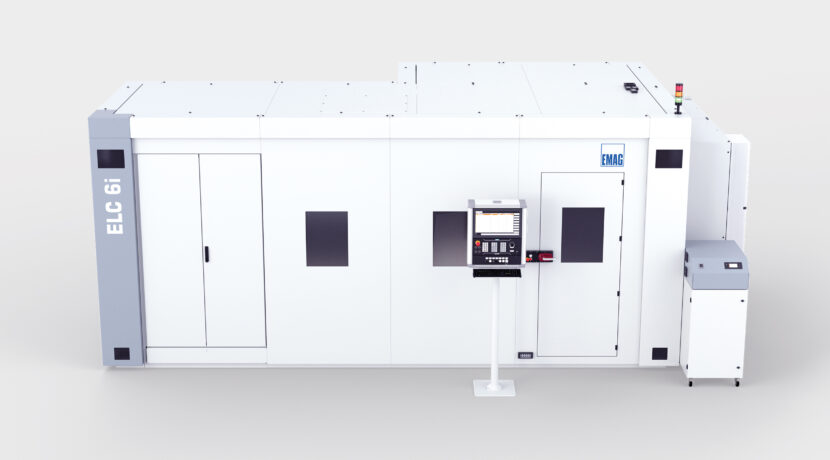

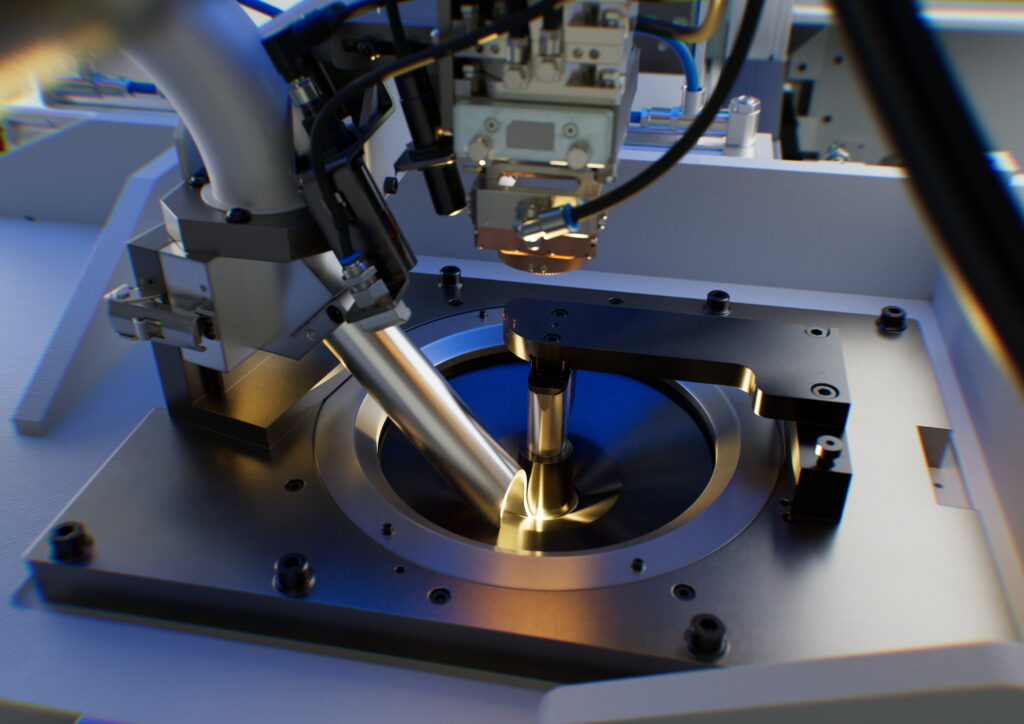
EMAG LaserTec has introduced the ELC 6i, a standardized laser welding system for high-volume powertrain component production. The machine combines up to six process steps within one enclosure. It targets lower space requirements, reduced engineering effort and more consistent automated operation. The concept is aimed at projects producing more than 100,000 parts annually. In these projects, cycle time, investment cost and process reliability are closely linked.
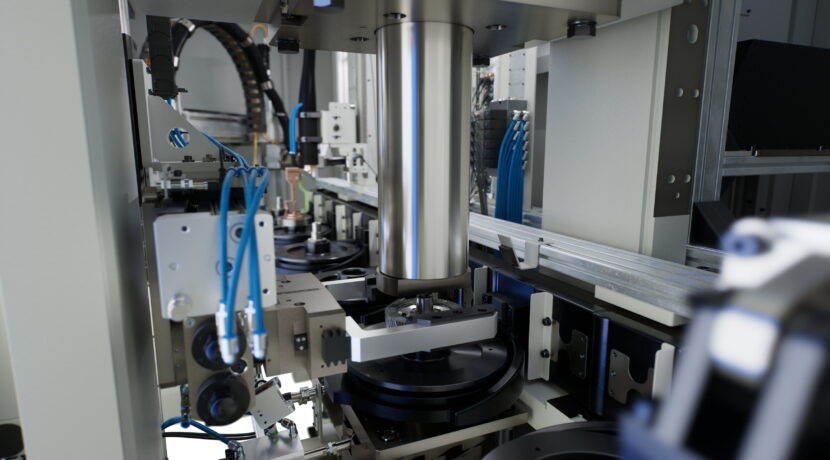
Powertrain manufacturers face pressure to increase output while controlling floor space and system complexity. Individually designed production lines can meet specific requirements. However, they often require extensive engineering, separate controls and more installation space. The ELC 6i uses a standardized approach. It integrates established modules for handling, laser cleaning, joining, welding and optional marking. A central rotary indexing conveyor moves workpieces through the stations in a defined cycle. An integrated laser safety housing encloses the overall process. According to EMAG, the system occupies approximately 21.5 m². It can reduce space requirements by more than 30% compared with individually designed line concepts.
Integrated stations reduce handling steps
The ELC 6i processes two components per cycle. Its transfer system can use up to 18 workpiece carriers. This arrangement enables parallel operations at different stations. It also supports cycle times below 20 seconds. Two stations handle loading and unloading. As a result, the process chain does not require manual intervention. Laser cleaning is used selectively on both parts to be joined before assembly. Oscillating optics guide the laser during this step. Depending on the application, inductive preheating can be added before pressing or welding. This can reduce stresses and support stable processing. The components are then joined using a servomechanical pressing unit. Force-displacement monitoring controls this operation.
Laser welding follows with multi-axis kinematics for workpiece positioning. Sensors provide seam position control. The system is intended for circumferential welds on powertrain components. Its process sequence is designed to limit component distortion. Laser marking can be integrated as an optional final operation. It provides component traceability. Bringing these functions together in one machine reduces intermediate handling. Moreover, the workpiece remains within a controlled transfer concept from loading through unloading.
Standardization targets cost and delivery time
The welding station is based on the ELC 6 machine concept. EMAG states that this concept is already used in hundreds of its systems. In the ELC 6i, the established welding technology is combined with predefined system configurations and standardized handling modules. The supplier states that this approach can reduce investment costs by up to 15%. The comparison is with individually engineered production lines.
A central Siemens Sinumerik One CNC control replaces several individual control systems. This is intended to reduce software complexity during programming, commissioning and ongoing operation. Standardized assemblies also affect maintenance and spare-parts management. Common components are used across different systems. Therefore, service activities and parts planning can follow a more consistent structure.
EMAG also cites delivery-time reductions of up to 20%. These reductions are linked to reusable software modules and established machine designs. The approach is particularly relevant for price-sensitive series projects. It suits applications where similar process sequences recur across multiple component variants. Rather than designing every line from the ground up, the ELC 6i uses a defined machine architecture. This architecture can be adapted within established limits.
Changeovers remain possible
Although the system is standardized, it accommodates different workpiece variants. For components with comparable geometries and diameters, EMAG says changeover-free production may be possible. Where adjustments are needed, they are mainly limited to workpiece holders, joining tools or clamping devices. The supplier states that a complete changeover normally takes less than 20 minutes. Components with special dimensions can also be evaluated for integration into the machine concept. This evaluation takes place on a project-specific basis. The approach is relevant where automotive component ranges change during a production system’s operating life. It also supports manufacturers using platform strategies across related parts.
Process development and testing are supported at EMAG LaserTec’s Laser Application Center in Heubach. The facility develops customer-specific processes and optimizes component geometries. It also produces prototypes and supports the transition to series production. Available equipment covers laser cleaning and structuring, welding, coating, hardening and testing technology.