
A new research project aims to use causal and explainable artificial intelligence to identify why defects arise in aluminum high-pressure die casting. AluKauKi will combine production data, sensor technology and engineering knowledge. The goal is to help manufacturers address root causes rather than only predict quality problems. Its initial target is to reduce scrap rates by up to 30 percent.
Quality deviations in complex manufacturing systems can create substantial costs. These include scrap, lost productivity and additional process interventions. However, conventional AI systems are often limited to identifying patterns linked to defective parts. They can indicate that a problem is likely. They do not necessarily show whether a specific process parameter is responsible or what effect an adjustment may have. The AluKauKi project stands for Causal AI-supported Reduction of Scrap Rates in Aluminum Die Casting. It addresses this limitation. Constructor University and industry partner Electronics GmbH will develop and validate methods for causal and explainable AI in an industrial setting. The German Federal Ministry for Economic Affairs and Energy (BMWE) has awarded €475,000 in funding. Constructor University will receive €277,000. The project is scheduled to begin in October 2026.
Causal models for complex process interactions
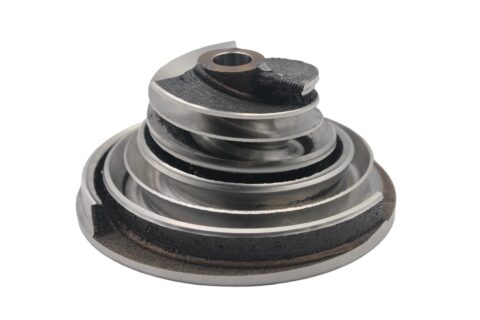
Aluminum high-pressure die casting is a fast process. Material is injected into moulds under high pressure to produce complex components. These include parts for automotive and electronics applications. The final result can be affected by temperature, pressure, material properties and machine conditions. These variables also influence one another. As a result, their effects can be difficult to isolate through conventional analysis. A data-driven model may detect that particular combinations of settings regularly occur alongside defects. However, these correlations do not establish that changing one setting will remove the problem. Another process condition may cause the observed relationship. Several interacting factors may also be responsible.
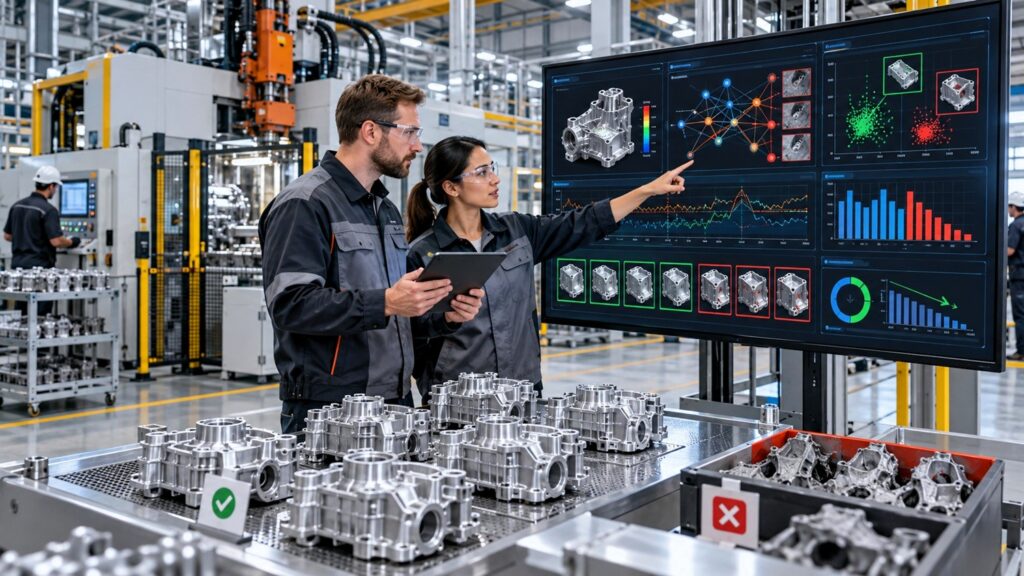
Causal AI is intended to investigate these relationships more directly. Rather than only estimating the probability of a defect, it is designed to examine why the defect occurs. It can also assess what could happen if engineers alter a parameter. According to Professor Hendro Wicaksono of Constructor University, this distinction is central to industrial use. Production teams need more than an alert that a defect may occur. They also need a basis for deciding which corrective action is appropriate. The project will combine human knowledge, production data, physical understanding and artificial intelligence. Constructor University’s Data-Driven Industrial Systems research group will lead the development and scientific validation of the AI methods. Electronics GmbH will contribute sensor technologies, production data, software, system integration and validation under manufacturing conditions.
Explainability for production decisions
Alongside causal analysis, AluKauKi will focus on explainable artificial intelligence, or XAI. In production, AI recommendations can affect product quality, output and costs. Engineers therefore need to understand the reasoning behind a recommendation. They must also retain the ability to assess or challenge it. The planned system is intended to avoid functioning as a black box. It should show the causal chain behind a recommendation. It should also identify process conditions that contribute to a quality issue. In addition, it should indicate the expected effects of changing a parameter. This approach would allow users to examine what-if scenarios before making interventions on the shop floor. Engineers could therefore assess potential consequences before changing the process.
The approach is based on the principle that AI should support human expertise rather than replace it. Explainability is therefore treated as a requirement for practical use. It is not viewed as an additional reporting feature. A recommendation becomes more useful when engineers can connect it to process knowledge and evaluate its possible consequences. Although the first application concerns aluminum high-pressure die casting, the project partners intend the methods to provide a transferable basis for other machines, materials and manufacturing processes. Many companies collect large quantities of production data. However, they still struggle to identify the root causes of quality problems. AluKauKi will test whether causal and explainable AI can turn this data into more actionable process understanding.