
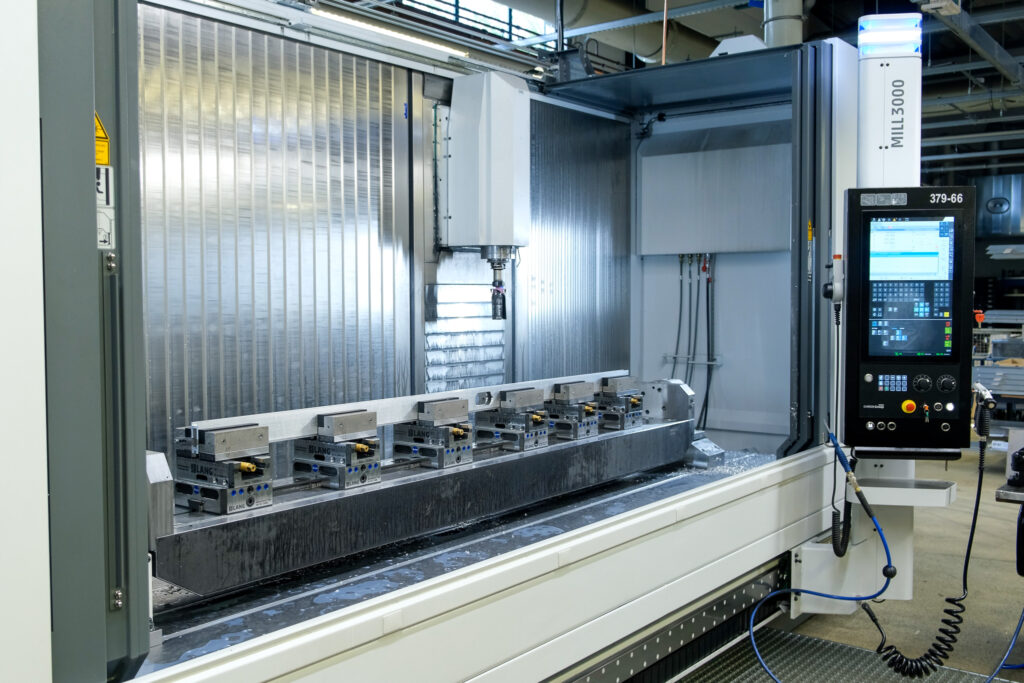
Dowaldwerke has expanded its in-house machining capacity for long aluminium profiles. The company uses a MILL 3000 machining center from the CHIRON Group. The new production concept reduces clamping operations, repositioning and handling when manufacturing railway components. A swivel bridge with a fourth axis enables lateral machining without reclamping. This addresses a key limitation of the previous setup. Based in Dippoldiswalde, Saxony, Dowaldwerke manufactures railway technology components. These include profiles for interior door systems, boarding aids and bridging platform edges. The company also produces hydraulic cylinders for agricultural, construction and other vehicles.
Many hollow aluminium sections for railway applications exceed two metres in length. On the existing MILL 2000, these parts required additional clamping, repositioning and manual handling. As a result, throughput times increased, while personnel and machine capacity remained occupied. Dowaldwerke also decided to bring more profile machining in-house. External suppliers could not provide the required travel ranges or meet the company’s accuracy requirements. Therefore, the task was to establish an economical process for various long profile geometries. The process also needed to maintain quality and productivity.
One clamping for more machining operations
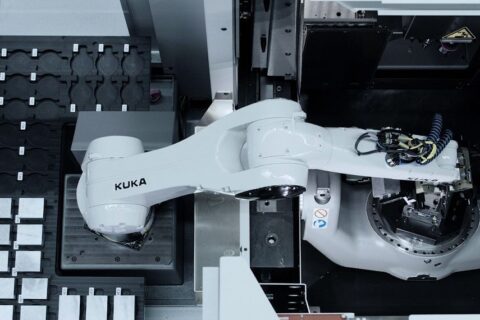
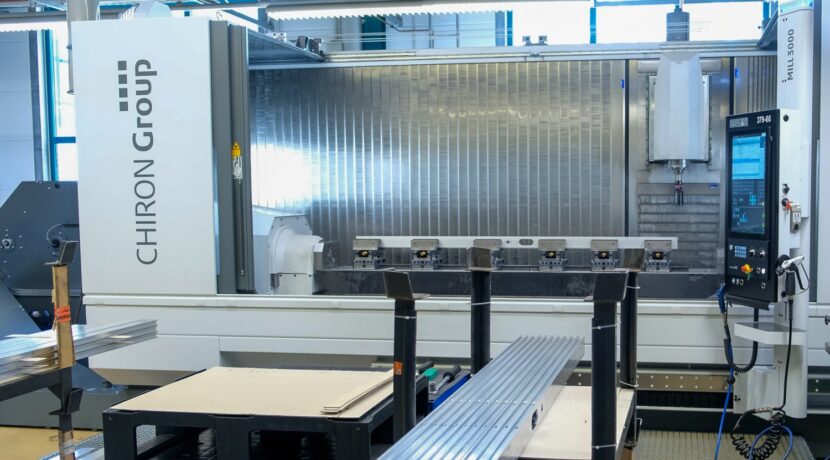
The new concept centres on the MILL 3000. The machining center provides an X-axis travel of 3,000 mm. CHIRON Group developed the configuration with Dowaldwerke for the company’s range of profiles. The objective was to complete as many machining operations as possible in one clamping. A common production platform was also required for different profile types. The machining operations include drilling, contour milling, edge milling and lateral machining. A key feature is the individually designed swivel bridge. It is fitted as a fourth axis and can rotate the workpiece by 90 degrees. This allows the machine to process lateral surfaces directly. The workpiece does not need to be removed, repositioned and clamped again.
For Dowaldwerke, fewer clamping operations also reduce the number of reference points required in the process. According to the company, one clamping jaw is now sufficient for complete profile machining. Machining between the clamping devices is also possible. This simplifies the setup of long workpieces. It also reduces handling during repeated repositioning. Fewer position changes are intended to improve process reliability. This is particularly relevant for profiles that would otherwise require several setups.
Reducing setup and non-productive time
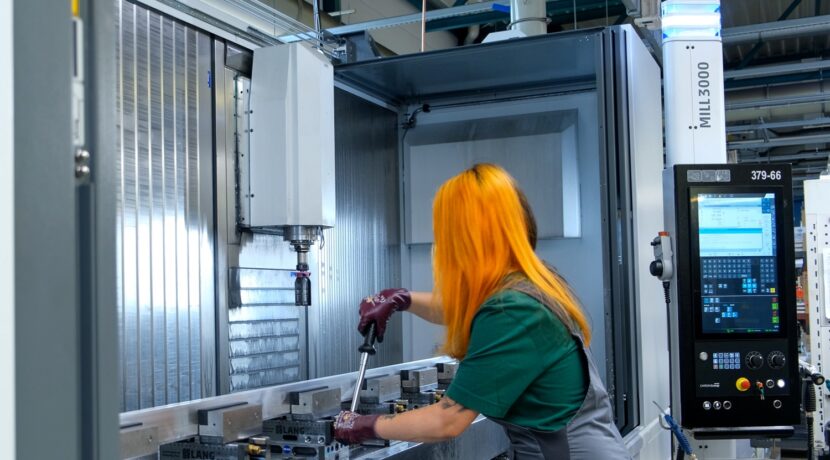
The production concept is designed for changing variants and geometries. It is not limited to a single profile. This flexibility is important because the machining department handles various railway components. Each component may have different machining requirements. A uniform clamping concept is intended to reduce setup work when changing between parts. Short tool-change times are another relevant factor in the application. Dowaldwerke carries out numerous tool changes within its machining programmes. The company expects the machine’s tool-changing performance to limit the time required for these changes. This should support a more efficient programme sequence. Together with reduced clamping and handling, the concept can shorten throughput times. It can also lower non-productive time.
Operator involvement also influenced the investment decision. At Dowaldwerke, milling specialists largely programme, set up and machine workpieces independently. Employees were already familiar with the MILL-series concept through the existing MILL 2000. This familiarity was considered relevant to the daily operation of the new machine. It also supports the introduction of a production process for long aluminium profiles. The project included technical coordination and adjustments after installation. Requirements identified during operation were addressed through cooperation between Dowaldwerke, CHIRON Group personnel in Tuttlingen and local service staff. For the manufacturer, the new machining center extends an established production setup. It addresses a specific operational issue: machining long aluminium profiles efficiently with fewer clamping steps.