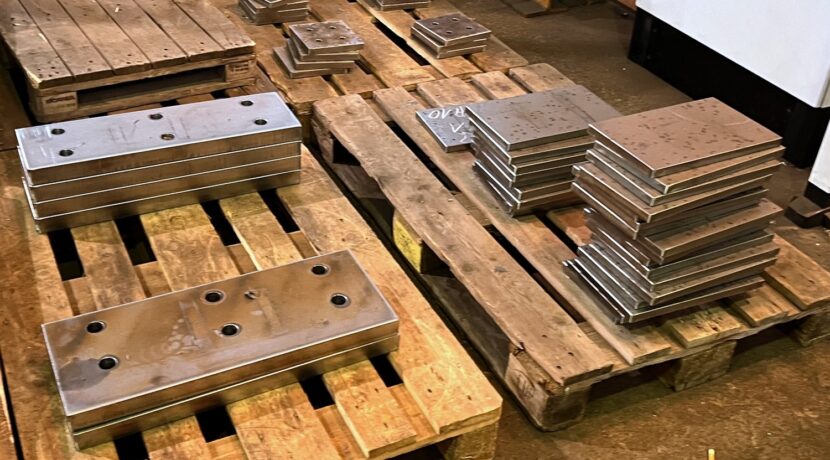

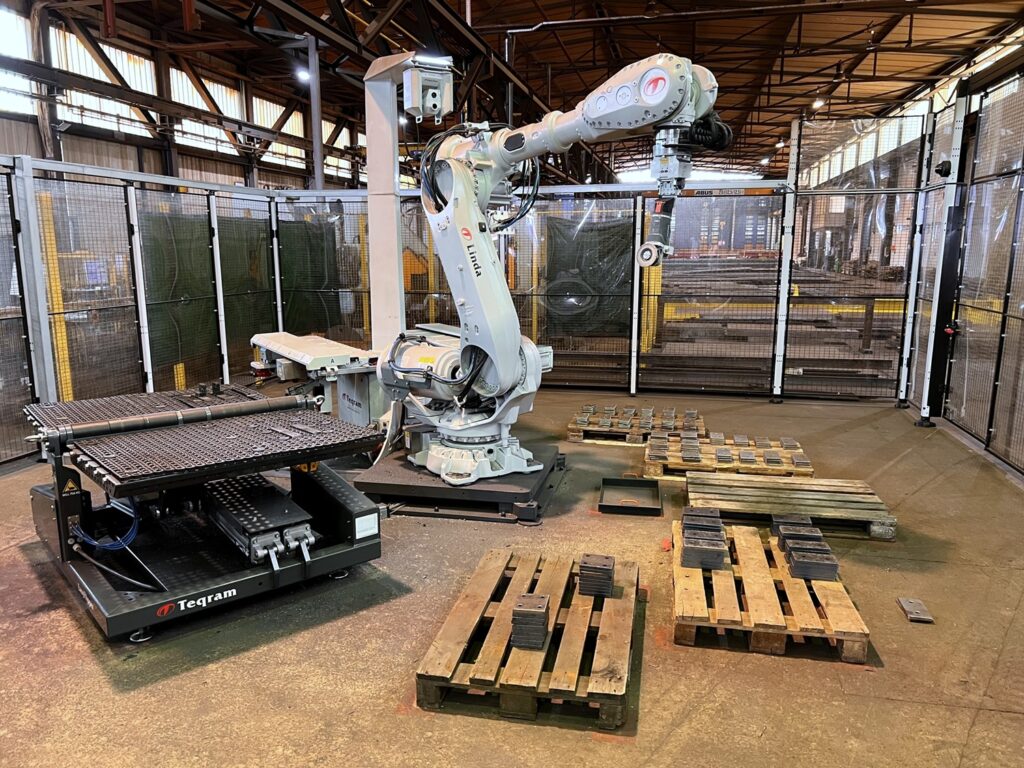
Claus Queck GmbH has automated the deburring and grinding of flame-cut and plasma-cut steel components with an AI-powered grinding robot from Teqram. The installation is intended to make P3 surface preparation reproducible for Deutsche Bahn projects. It also aims to reduce rework and remove physically demanding, repetitive work from skilled employees.
At Stahlbau Queck, grinding had become a production bottleneck. Grinding and deburring often remain heavily dependent on manual work in steel construction. Skilled employees spent considerable time on a task that produced variable results. Quality could differ between operators and over the course of the working day. Fatigue, physical strain and concentration affected manual grinding results, particularly when processing large or heavy components.
The company therefore sought a system that could provide consistent processing quality and improve working conditions. It selected Teqram’s EasyGrinder, an autonomous robotic system that combines 3D vision technology with artificial intelligence. Alongside economic considerations, a key requirement was reliable compliance with the P3 preparation grade for Deutsche Bahn projects. The aim was not simply to automate one operation. Instead, the company wanted to make a variable post-processing step more predictable and easier to document.
Consistent grinding and deburring parameters
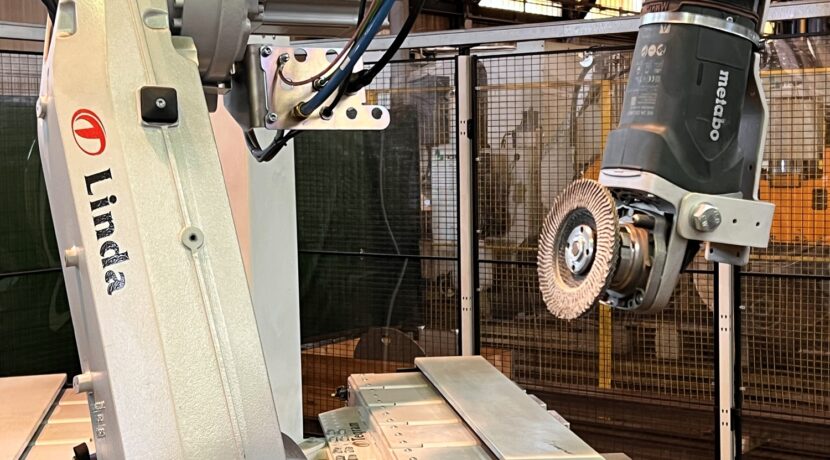
The EasyGrinder now deburrs and grinds demanding flame-cut and plasma-cut parts at Stahlbau Queck. The operator selects the required preparation quality. The robot then processes each component autonomously using the same parameters. This approach is designed to limit variation between manually processed components. According to Thomas Nehring, head of the cutting department at Stahlbau Queck, manual processing inevitably produces different results. “Two employees will always deliver different levels of quality. With the EasyGrinder, those variations are a thing of the past,” he says.
For components with complex geometries, the system uses vision technology to identify the workpiece. It then processes the component with consistent contact pressure. Heavy parts can also be handled without exposing employees to the same physical load as manual grinding. The company reports fully reproducible and documented surface quality. It also reports a reduction in rework. This is particularly relevant to projects with defined surface preparation requirements. If grinding becomes a production bottleneck, variations in finish quality can create additional handling and corrective work. They can also cause uncertainty in subsequent operations. Automating the process therefore provides a repeatable method for an operation that previously depended heavily on individual operator performance.
A different role for skilled employees
Ergonomics and the availability of skilled labour also influenced the investment decision. Manual grinding and deburring combine repetitive work with physical effort. This is especially demanding when employees process large steel components. By assigning these tasks to the robot, Stahlbau Queck intends to reduce the burden on employees. It also aims to free skilled workers from work that is demanding and difficult to standardise. Initial reservations about the technology reportedly disappeared quickly. The system was integrated into daily production without complex programming. Employees have named the robot “Linda”, reflecting its acceptance on the shop floor.
Nehring describes the practical difference between manual and automated work: “Linda doesn’t call in sick, and heavy components don’t give her back problems either.” For the company, the robot is not positioned as a replacement for its workforce. Instead, it shifts demanding, repetitive work away from employees. The system also supports the company when bidding for international contracts with strict quality requirements. At the same time, Stahlbau Queck considers modern, ergonomic production technology relevant to attracting younger skilled professionals.