
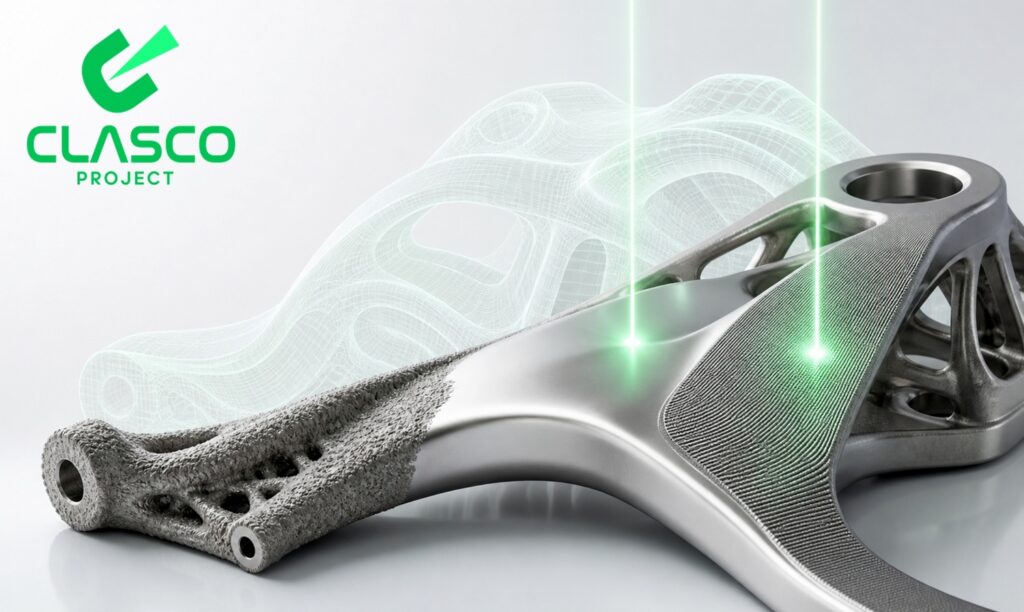
The completed CLASCO research project developed an integrated laser-based route for post-processing additively manufactured metal components with complex geometries. Technische Universität Dresden coordinated the European consortium. The consortium combined surface smoothing, microstructuring and digital process control. The work addresses a central limitation of metal additive manufacturing: rough surfaces that often need further treatment before use in demanding aerospace or medical applications.
Metal additive manufacturing provides considerable freedom in lightweight design and component geometry. It can produce shapes that are difficult or impossible to manufacture conventionally. In suitable applications, it can also reduce material use. However, printed metal parts commonly have comparatively rough surfaces after production. This can limit their suitability where defined surface behaviour is required. Examples include corrosion resistance, wettability and interaction with biological materials.
CLASCO stands for Climate Neutral and Digitalised Laser Based Surface Functionalisation of Parts with Complex Geometry. The project examined how to address post-processing requirements through a connected manufacturing chain. Over three and a half years, it combined laser polishing, Direct Laser Interference Patterning, process monitoring, digital twins and artificial intelligence. The consortium tested the technologies on aerospace and medical demonstrators.
Laser polishing reduces roughness without contact
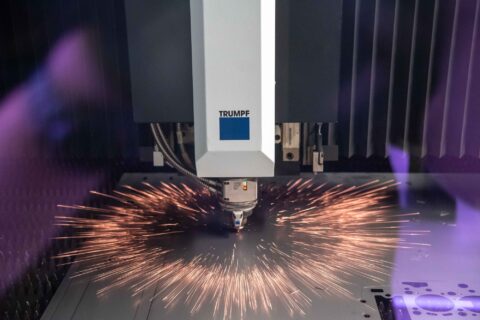
The first stage of the CLASCO process chain was laser polishing. This contact-free method smoothed complex printed metal components before further functionalisation. According to the project results, it reduced the typical roughness after 3D printing from around 10 to 30 micrometres to less than one micrometre. This result is particularly relevant for components with intricate shapes. Conventional mechanical finishing can be difficult to apply consistently across all surfaces. Laser polishing provides a route for treating surfaces without direct tool contact. It can also reach areas where the geometry complicates other finishing methods.
The project then processed selected areas using Direct Laser Interference Patterning, or DLIP. This method generated regular structures in the micrometre range. It did more than improve surface finish. Instead, it enabled the research team to modify surface properties for the intended application. The project identified wettability, corrosion behaviour and the interaction between implant surfaces and biological materials as properties that such structures can influence. By combining polishing and microstructuring, the process chain addresses two separate post-processing tasks. The first is reducing roughness created during printing. The second is creating defined surface functions where they are required on the component. Moreover, the researchers integrated process monitoring, digital twins and artificial intelligence. These tools enabled digital monitoring during processing.
Lightweight design included from the component stage
CLASCO did not focus solely on post-processing. The project also examined how additive manufacturing can reduce material use and component weight during design. Researchers combined the design freedom of additive manufacturing with topology optimisation for two aerospace demonstrators. For an A350 mounting bracket, the project reported a weight reduction of approximately 53 percent. A corresponding lever was designed to be around 38 percent lighter. These results show that the production route begins before surface treatment. Component geometry, material use and surface requirements all influence the overall manufacturing concept.
The laser-based processing route was applied after additive manufacturing. This process prepared and functionalised the resulting surfaces. In this way, the project linked lightweight design with the requirements of high-value applications. Components can use less material, but they must still meet the surface-related demands of their intended use. Weight reduction was a key design objective for the aerospace demonstrators. The medical demonstrators, however, highlighted the importance of controlled interactions between surfaces and biological materials. The project used the same underlying process chain for both cases. It adapted the surface microstructures to the required function.
Sustainability depends on the entire process chain
Another CLASCO finding is that additive manufacturing should not automatically be considered more sustainable because a component uses less material. The project assessed the full process chain. It identified several factors that influence the overall balance. These factors include metal powder production, powder recovery and reuse, processing time, energy demand and inert gas use. Therefore, savings from lightweight design or reduced component material cannot be considered separately from the resources needed to produce, process and finish the part. The investigations identified metal powder reuse and efficient post-processing as particularly important for improving resource efficiency in additive metal manufacturing. This places the laser treatment route within a wider manufacturing context. Its relevance concerns more than smoother or functionally structured surfaces. It also involves the efficiency of achieving the required result.
The formal project period is now complete. However, the partners intend to continue transferring the developed methods into industrial systems, processing services, technology licences, contract research and follow-up projects. Future work will focus on making the processes more robust and efficient. It will also address further industrial uses involving complex, high-value metal components with defined surface requirements.