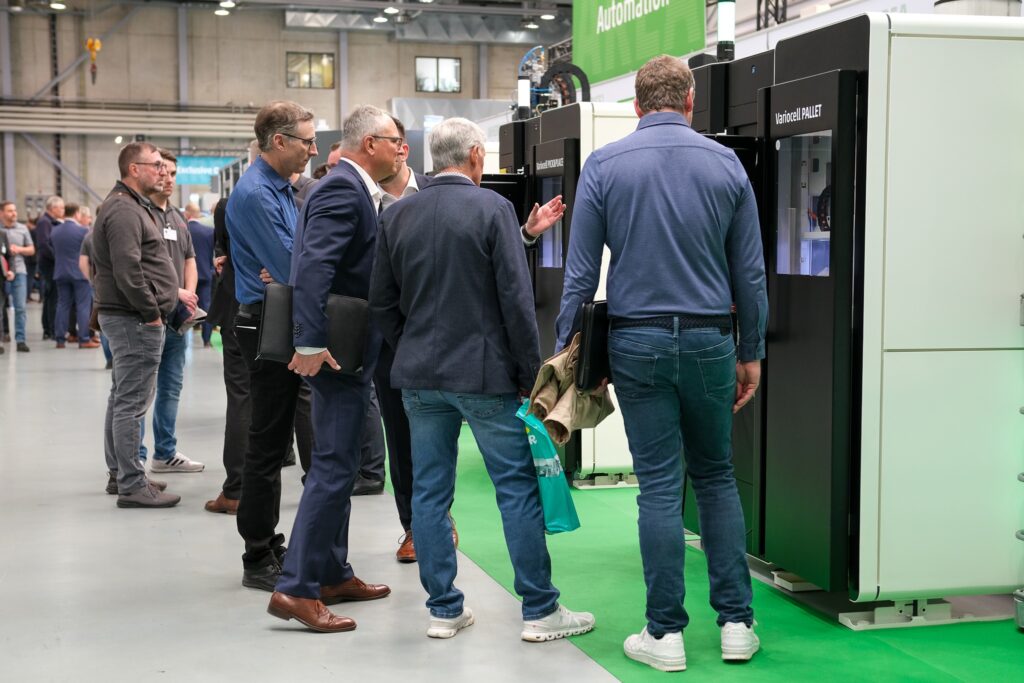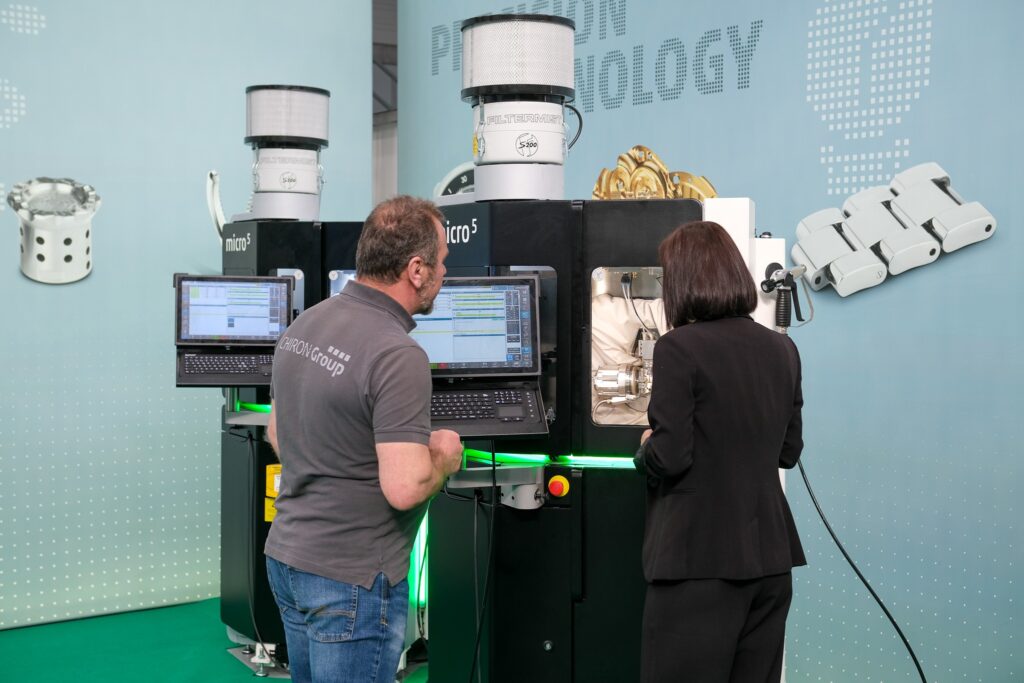

At its Open House in Tuttlingen, the CHIRON Group placed automated machining at the center of the discussion. More than 1,200 visitors saw live applications combining machining centers, handling systems and partner technologies. For manufacturers facing smaller batches, shorter delivery windows and pressure on staffing, the event showed how automation is moving closer to the machine tool itself.
From 21 to 23 April, Chiron’s headquarters again served as a compact industry meeting point, with 36 partner companies involved in live demonstrations and process-related exhibits. The format was built around direct exchange at running machines, rather than static product displays. Visitors could follow complete solution scenarios, including machining, handling, clamping, measuring, tooling, CAM strategies and digital applications.
The event was organized around several application areas, including automation, medical and high accuracy machining, service and outlet solutions. This made it easier for visitors to focus on the subjects relevant to their own production environment. The central message was clear: higher autonomy in machining depends not only on the machine tool, but also on how workpiece flow, storage, programming and process integration are arranged around it.
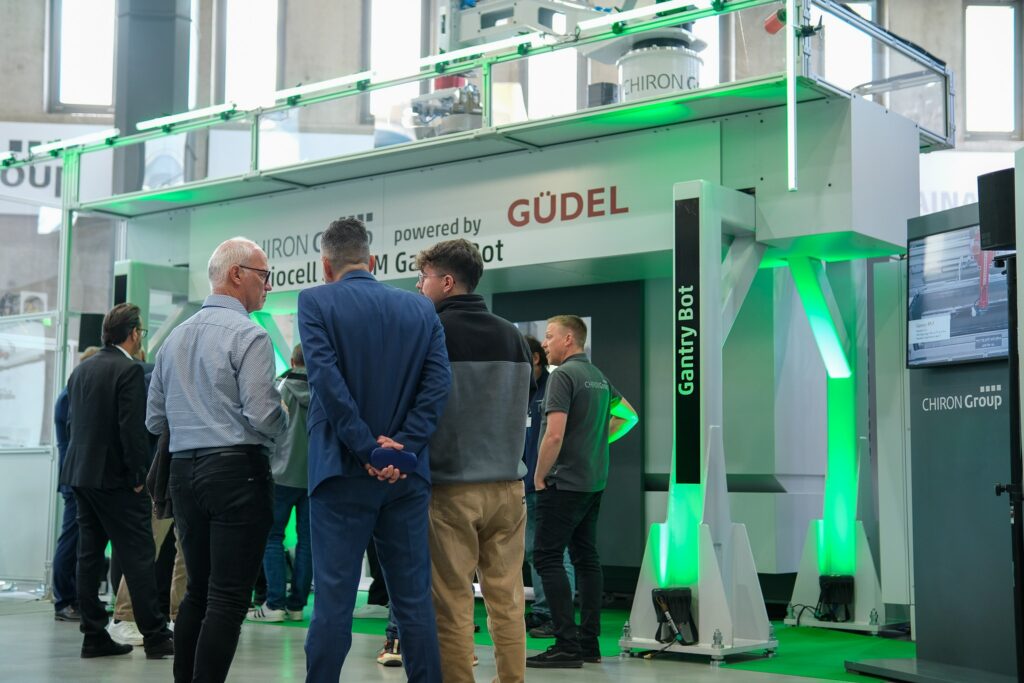
Gantry automation for larger workpieces
One of the most visible demonstrations was the new Variocell SYSTEM with Gantry Bot, shown handling a gearbox housing on an FZ 19 S mill-turn machining center. The system loads from above, leaving the working area and the space around the machine accessible. For production staff and maintenance teams, that has practical value: operators can move safely beneath the automation and still reach the machine without the layout restrictions that can come with floor-mounted robots.
According to Chiron, the gantry system offers greater reach than an industrial robot at comparable mass, while retaining the required degrees of freedom through its mechanical design. The concept is intended for machining centers in the 15 to 25 series and MILL range, both as standalone solutions and in linked production setups.
The layout options are broad. Machines can be arranged with access from the front, rear or end face, and storage systems for raw and finished parts can be integrated according to the production strategy. In practice, this supports different scenarios, from two identical machines used for OP10 and OP20 operations to systems feeding different machines for separate processes. Programming through the machining center HMI in G-code is also relevant, because it reduces the need for separate robot programming knowledge.
Compact automation for micro machining
In the medical and high accuracy machining area, Chiron showed the Micro5 XL in 5-axis simultaneous HSC machining on a demonstration workpiece called the Bone Watch. The application was used to show how small machine architecture, dynamics and stability can support fine machining tasks without requiring a large machine footprint.
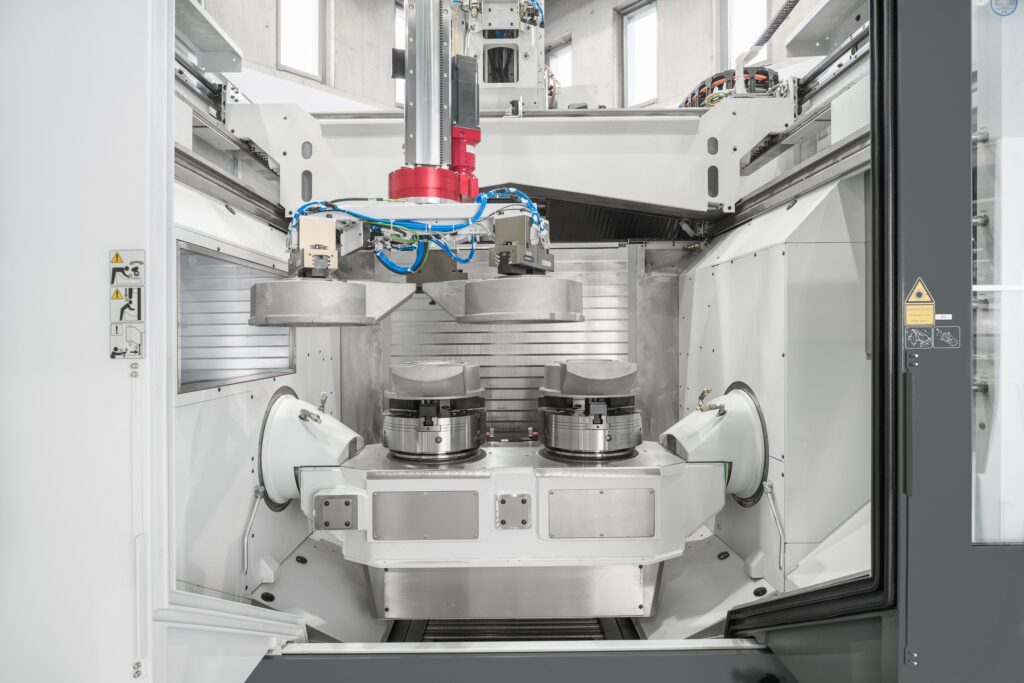
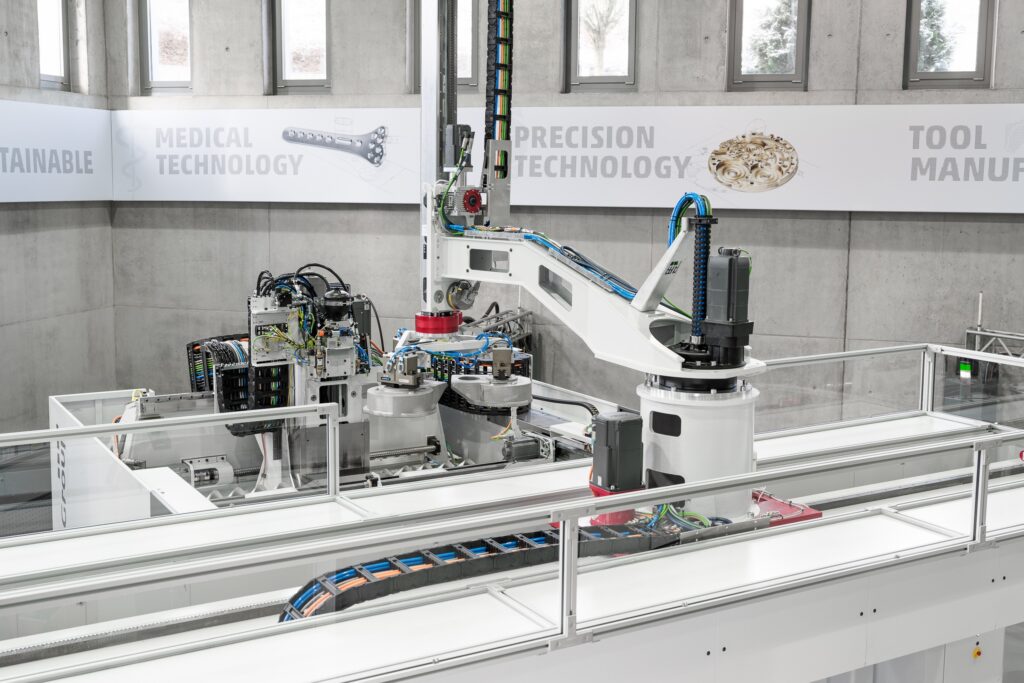
Three automation variants were presented for the Micro5 XL. The Variocell PICK&PLACE was shown in live operation, handling raw and finished Bone Watch parts. This linear system uses a dual gripper and processes workpieces up to 2.5 kg, with a maximum interference diameter of 145 mm. Its pallet store is designed as a cart, which supports setup outside the machine area. Depending on component height, it can hold up to 24 base pallets in a 400 x 300 mm format.
The second option, Variocell PALLET, is designed for pre-set zero-point pallets with fixtures and workpieces. It loads and unloads the pallets automatically, clamps them in the C-axis through a zero-point clamping system and identifies them by RFID. The storage capacity is up to 16 pallets with a workpiece cube of about 120 mm.
For applications requiring more process flexibility, the Variocell UNO adds a 6-axis robot. Besides loading and unloading, it can support additional steps such as turning, marking or measuring. With a dual gripper it handles workpieces up to 1.5 kg, or up to 2.5 kg with a single gripper.
Complete machining for smaller series
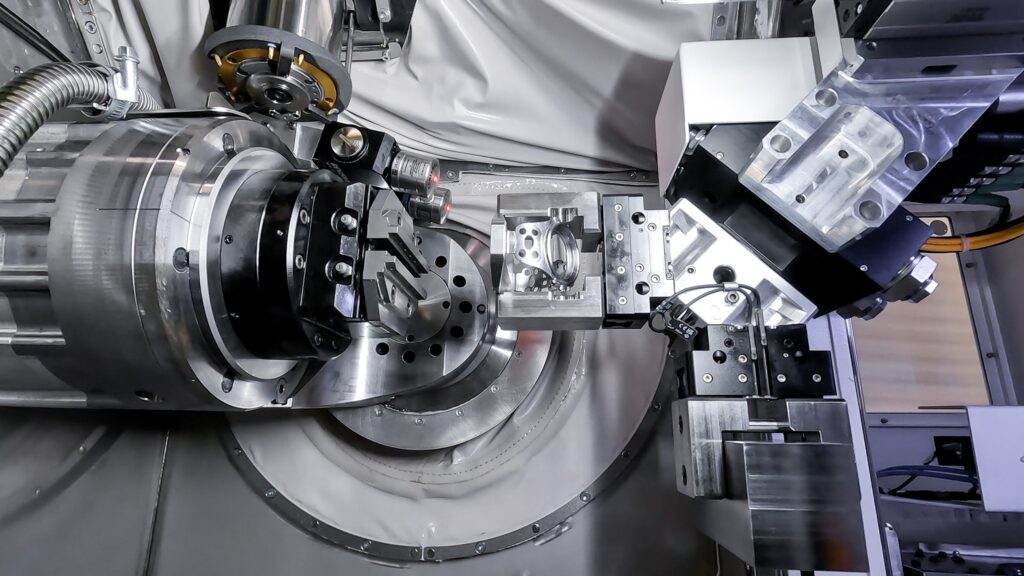
The MT 715 demonstrations addressed a different production challenge: how to combine productivity with flexibility when batches become smaller and call-off times shorter. Chiron presented the machine variants as complete systems for milling-turning applications, including the integration of gear cutting processes.
Depending on the component and machining task, hobbing, gear skiving, shaping and skew beveling can be integrated individually or in combination. This reduces the need to move parts between separate machines and can help stabilize quality by keeping more operations in one clamping or in a more controlled process chain.
Workpiece handling on the MT 715 is automated through an integrated linear handling system for components up to 65 kg. Tool capacity is another important factor for mixed production. The magazine can hold 64 or 128 tools with lengths up to 250 mm, or 176 tools with lengths up to 450 mm. That gives manufacturers room to keep different operations and part families available without frequent manual intervention.
Chiron also showed an option for machining longer shaft parts from bar stock in a continuous process. These parts can have diameters up to 100 mm and lengths up to 1,400 mm. For such applications, the working area has been expanded to 1,550 mm in width. On the MT 715 two and MT 715 two⁺ variants, the second machining unit can be equipped with a turret for up to twelve tools. Combined with a steady rest, this supports stable machining of long or delicate shafts.
Partner technologies close to the process
A notable part of the Open House was the placement of partner technologies directly in the manufacturing context. The 36 participating companies did not only show peripheral products, but positioned their expertise around the machines and automation cells. The range included tooling, clamping systems, measuring technology, automation components, digital applications and CAM strategies.
For visitors, this setup made the process chain easier to assess. Tool selection, fixture design, part handling, measurement and programming all influence whether an automated cell performs reliably in daily production. Seeing these elements together helps engineers and production managers identify where bottlenecks may arise before a system is specified.
The format also gave Chiron’s specialists room to discuss service, process optimization and modernization of existing systems. That is relevant for manufacturers that cannot replace complete production lines, but still need to improve availability, autonomy or throughput. Matthias Rapp, Vice President Global Marketing at the CHIRON Group, described the direct exchange near running machines as a key part of the event, because it allowed concrete manufacturing scenarios to be discussed in practical terms.