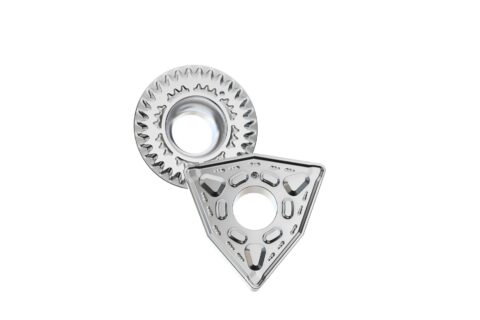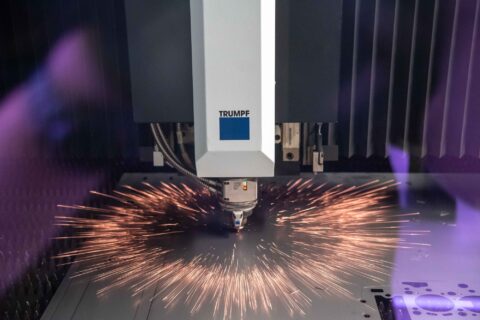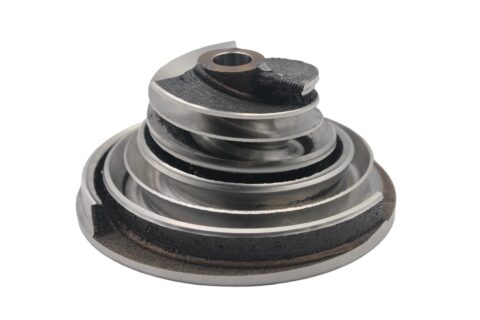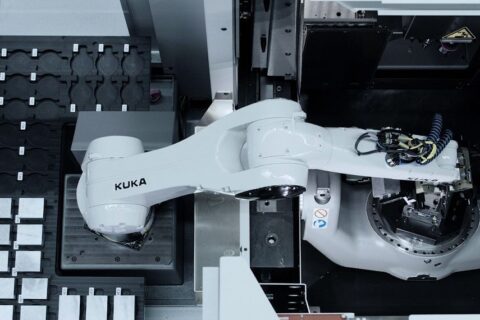

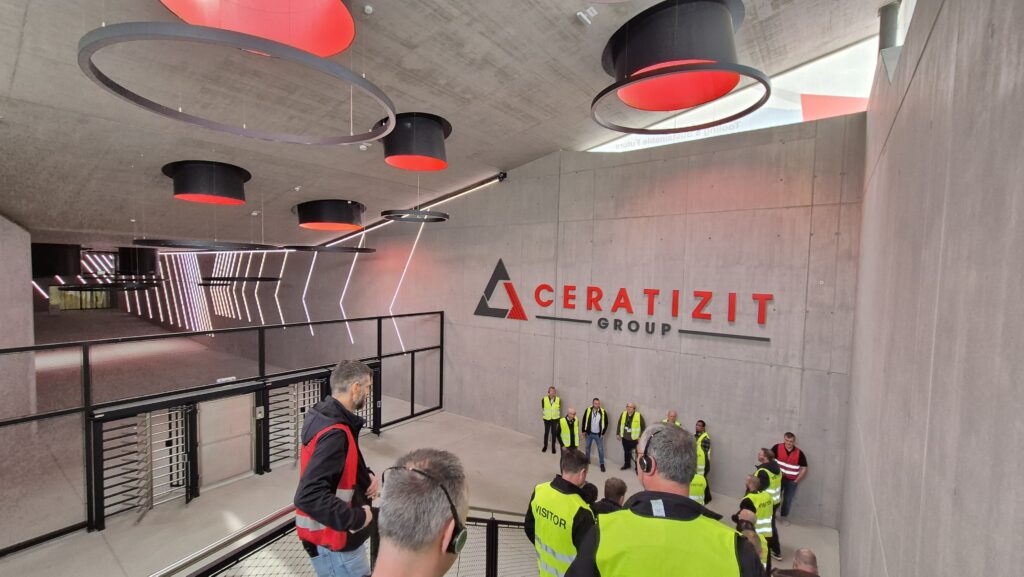
During CERATIZIT’s customer trip, Kreckelmoos formed the link between primary carbide production and further processing. While Reutte is responsible for pressing, sintering and coating, Kreckelmoos focuses on post-processing. Here, inserts and carbide rods receive their geometry, edge quality and surface finish.
The factory is located close to Reutte and is closely connected to the production carried out there. That proximity made clear during the customer trip how CERATIZIT has structured the different process steps. Carbide production does not stop after sintering. For use in machining processes, reproducible geometries, controlled surfaces and reliable cutting edges are just as important.
Kreckelmoos is designed as a modern post-processing site. The three-storey building has a gross floor area of around 45,000 m². This includes production halls, storage and logistics areas, offices and social facilities. The production area itself covers more than 15,000 m².
Link between Reutte and Balzheim
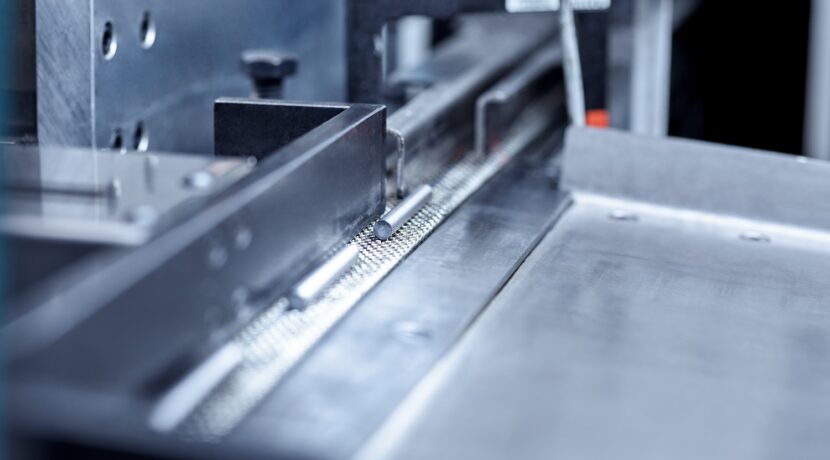
The processes inside the factory are clearly separated. Inserts are ground on one side, while carbide rods are processed on the other. Internal logistics are largely automated. Automated guided vehicles transport semi-finished products between the various processing stations, supporting the flow of materials through the factory.
For visitors, the connection with Reutte was particularly relevant. Products that are pressed, sintered and coated there receive the post-processing in Kreckelmoos that is needed for their later application. For inserts, this includes cutting edge geometry and surface quality. For rods, the focus is on dimensional accuracy and preparatory machining for further processing.
Some of the rods continue from Kreckelmoos to Balzheim. There, they are turned into finished tools such as drills, milling cutters and reamers. Another part is sent directly to the logistics centre in Kempten for distribution to customers and tool manufacturers.
Post-processing determines usability
The role of Kreckelmoos shows how important post-processing is within the carbide production chain. The basic properties of the material are created in Reutte, but its usability in machining is partly determined by the finishing operations. Small deviations in geometry, surface or cutting edge can affect tool life, process reliability and part quality for the end user.
This also applies to carbide rods that CERATIZIT supplies to external tool manufacturers. A significant volume is not processed into finished tools within the company’s own organisation, but is supplied to other manufacturers. They use the rods as starting material for their own drills, milling cutters and other cutting tools.
Kreckelmoos therefore has a dual function. The factory supports CERATIZIT’s own tool production, while also supplying semi-finished products to the wider market. For customers, the visit made clear that the quality of a carbide tool is not determined by a single production step. It is the result of controlled processes that follow one another closely, from powder composition to post-processing and distribution.
Read more about the other Ceratizit factories
Ceratizit’s customer trip showed how carbide tools are produced step by step within an integrated production chain. In Reutte, the process begins with powder, granulate, pressing and sintering. In Kreckelmoos, inserts and rods undergo post-processing. In Balzheim, carbide rods are turned into drills, milling cutters and reamers. Kempten is home to Ceratizit’s Technical Center, where live tool demonstrations are carried out. Kempten also houses the logistics center, from where all tools are shipped to customers on the same day. Read the articles about the other factories to see how each location contributes to the quality, availability and application of carbide tools.