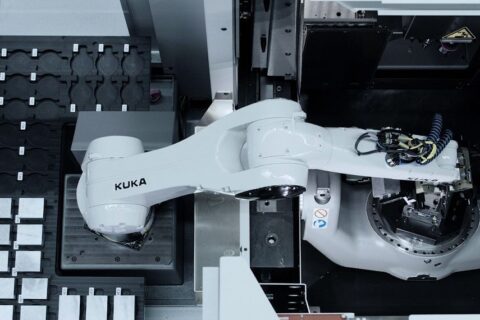

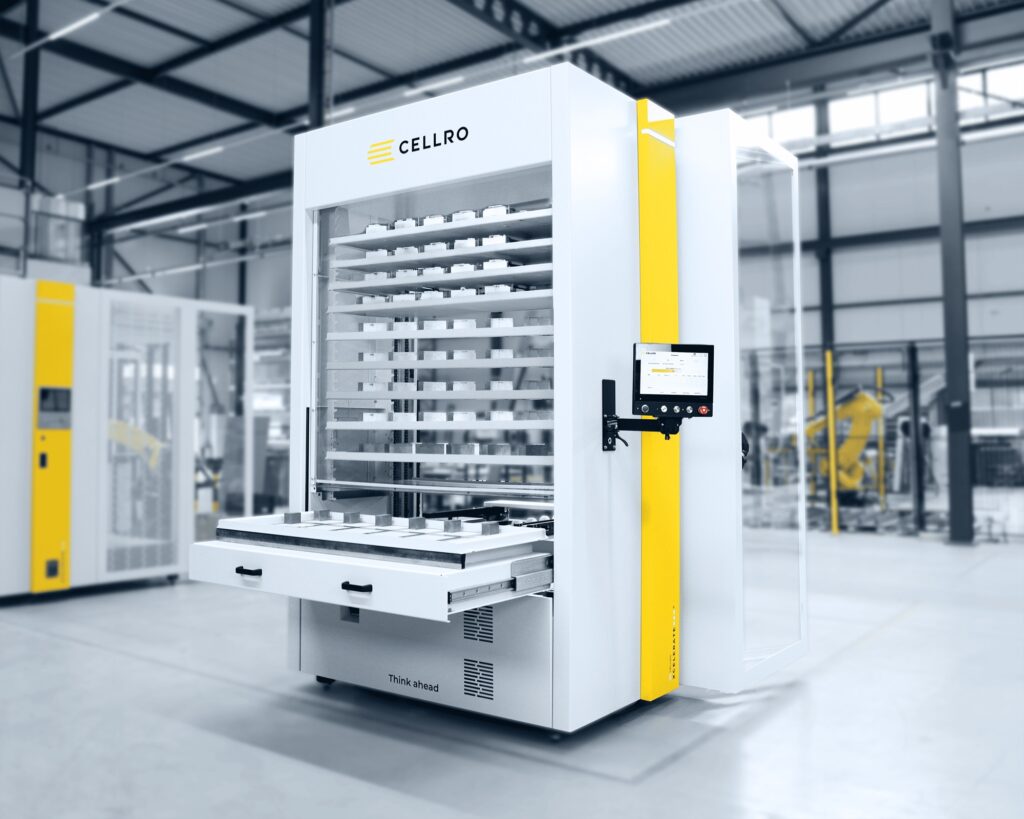
Cellro has introduced the Xcelerate X60 Next Gen, a modular CNC automation system designed to grow with changing production requirements. Machining companies can start with the capacity and functions they need today. They can then add storage, machining options or a second CNC machine later.
This approach helps avoid unused capacity while retaining the value of the original installation. The new system is a comprehensive redesign of Cellro’s existing X60 platform. According to the company, the Next Gen version combines greater storage capacity with more options for expanding the CNC automation cell after installation. The system can handle workpieces, shafts and pallets. Therefore, different product types can be processed within one automated machining setup.
Cellro positions this modular structure as an answer to uncertainty about future production volumes and product mixes. Companies may need additional buffer space when batch sizes increase. However, they may also require more machine hours or another machining process. Rather than selecting the largest configuration from the outset, users can extend the installed system when requirements arise. The first three Xcelerate X60 Next Gen systems were sold before the official launch, both in the Netherlands and internationally. Cellro will present the system at AMB in Stuttgart in September 2026.
One cell for varied product mixes
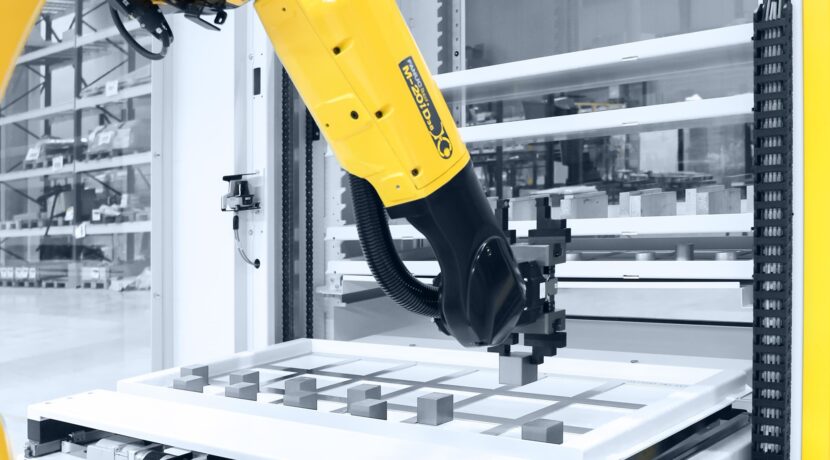
The Xcelerate X60 Next Gen is intended for turning, milling, grinding and measuring applications. It handles workpieces, shafts and pallets up to 400 by 400 mm, with a maximum weight of 45 kg. This range enables manufacturers to automate different component types and machining operations within the same cell.
Between production series, the system can automatically retool the connected CNC machine. This supports unmanned production in high-mix, low-volume environments. Without automation, product changes would otherwise require regular operator intervention. As a result, a manufacturer can use the cell for a broader product mix. It does not need to be assigned to one fixed component family or machining process.
According to Cellro, the automation system can be connected to virtually any CNC brand. This supports integration with an existing machine fleet without requiring a specific CNC platform. Open data connectivity is also supported for links to shop-floor systems, including ERP software. Such connections allow the automation cell to operate within the wider production environment. Moreover, it can exchange relevant information with existing systems.
Storage expands after installation
The cell uses Cellro’s Smart Lift system to stack up to 17 trays vertically. By using the available height, the entry-level configuration provides 7 m² of storage capacity. It does not rely solely on additional floor area. When production volumes or buffer requirements increase, users can add side cabinets, rear cabinets and Euro pallets. These extensions increase storage capacity to a maximum of 12 m². This is the largest capacity within Cellro’s Xcelerate portfolio.
The additional space can be installed after the original setup. For example, it can be added when a new product series or larger batch requires a greater supply of parts or pallets. This staged expansion means that a company does not need to install all possible storage capacity at the start. The initial configuration can reflect current production needs. The physical buffer can then grow when workloads change. Cellro also offers ergonomic pallet-loading modules for operators. These modules provide an additional loading option when pallets need to enter the automated production flow.
A second CNC machine on the same cell
Expansion is not limited to storage. If one CNC machine no longer provides enough available machining hours, a second machine can be installed on the same Xcelerate X60 Next Gen cell. This can increase output or combine different operations, such as turning and milling, within one automated setup. This option is relevant when production demand exceeds the capacity of the first machine. It is also useful when a component requires more than one machining process. In both cases, the existing automation system remains in place and is extended rather than replaced.
The original investment in the cell and its installed functions is therefore retained as the production configuration develops. For components that require machining on several faces, Cellro offers the R-C2 | 6S module. Adding this module enables fully unmanned six-sided machining. Together with automatic retooling, expandable storage and support for two CNC machines, it provides several ways to adapt the cell to new series, larger batches or additional process steps.
The Xcelerate X60 Next Gen will be displayed at Cellro’s stand 6D71 during AMB in Stuttgart from 15 to 19 September 2026.