
AMB 2026 will place circular economy topics firmly on the metalworking agenda. Alongside digitalisation and automation, the Stuttgart trade fair will highlight hard metal recycling, recycled tool packaging and the practical conditions needed to keep critical materials in circulation. For manufacturers, the relevance is direct, from supply security and cost stability to more transparent material flows.
From 15 to 19 September 2026, AMB will occupy all ten halls of Messe Stuttgart with a broad range of metalworking technologies and process chain expertise. The organisers are positioning sustainability not as a side topic, but as a strategic issue closely tied to competitiveness. In the interview accompanying the announcement, Markus Heseding, Managing Director of VDMA Precision Tools, describes this shift in clear industrial terms. He points to three central themes for the sector: return and recycling of tool packaging, the supply of hard metal for metalworking, and the product carbon footprint as a basis for comparable CO2 data.
The strongest emphasis in the interview falls on the first two. That focus reflects a practical concern shared across much of manufacturing: how to maintain access to essential materials under rising geopolitical and economic pressure. AMB intends to address that concern with concrete examples, research results and direct exchange between companies and partners across the value chain.
Why tungsten circulation matters for metalworking
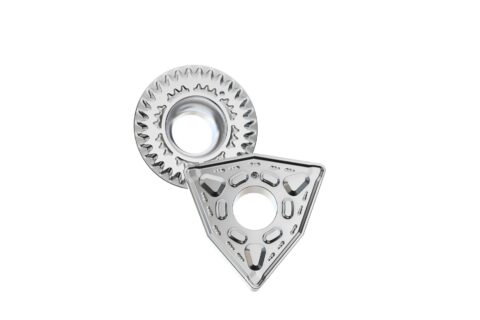
A key issue for the tool industry is the supply of tungsten, the critical raw material used in hard metal tools. Heseding notes that global competition for tungsten is increasing, driven in part by rising demand from other sectors such as defence. At the same time, Europe has only limited primary extraction projects, while dependence on Chinese suppliers remains high. For metalworking companies, that combination translates into higher costs, stronger price fluctuations and greater uncertainty in supply.
That matters because hard metal tools are embedded in almost every machining process. If material availability becomes unstable, the consequences are felt well beyond the tool sector itself. This is why the interview frames hard metal scrap not simply as waste, but as a strategic recyclable material. According to Heseding, every quantity that remains within Europe supports industrial sovereignty and reduces exposure to external disruption.
The practical response is a stronger recycling system. He argues for better take-back structures, higher collection rates and more consistent recycling quality. Customers also have a role, by returning hard metal scrap to European partners rather than allowing that material to leave the regional loop. In that sense, recycling is presented not only as an environmental measure, but as an industrial supply strategy.
Tool packaging recycling moves from concept to implementation
The second recycling topic highlighted ahead of AMB concerns tool packaging. Here, the technical side is not described as the main barrier. According to Heseding, the challenge lies more in economics and organisation. Tool packaging has a relatively low market value, which makes it harder to build a convincing business case for collection and reprocessing. Scalability, availability and uniform material quality also remain important obstacles.
For manufacturers, this is a familiar pattern. A technically viable recycling route does not automatically become a stable industrial solution unless enough sorted material can be collected and processed reliably. That requirement for volume and consistency is what determines whether recycled content can move beyond pilot use and into regular packaging production.
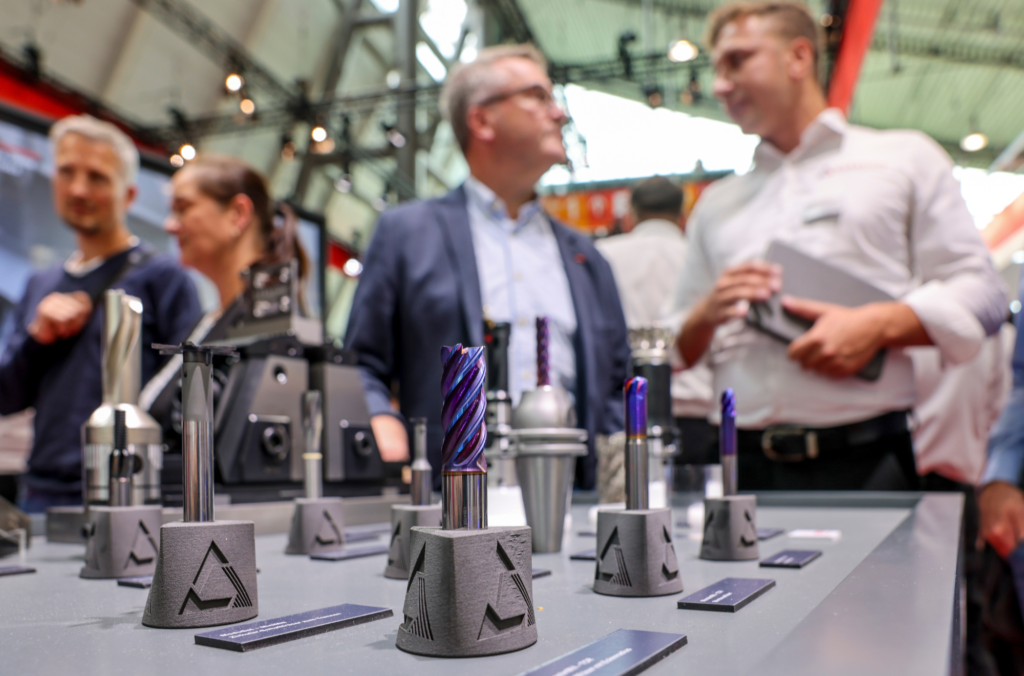
The VDMA working group on recycling tool packaging is addressing this through cooperation across the value chain. Heseding reports that trials have already achieved effective return and recycling of used packaging into post-consumer recycling material, which was then retested and processed. This creates a more reliable data basis for a closed material loop. He also points out that some companies already offer tool packaging made entirely from recycled material, and that several manufacturers have switched their packaging over completely. These examples are set to be shown at AMB 2026.
Digitalisation supports traceability in recycling systems
Although the interview focuses mainly on circular economy topics, it also links them directly to digitalisation. At AMB, digital technologies are expected to show how recycling management can be made more transparent and easier to organise across multiple partners. Heseding refers in particular to material flow transparency, digital verification and standardised processes along the value chain.
This is an important connection for production companies. Recycling systems only work well when materials can be identified, collected, documented and reintroduced under controlled conditions. Digital tools can support that by making origin, composition and movement more visible, especially in fragmented supply chains. In practice, that can help reduce uncertainty, improve consistency and create a clearer basis for decisions on sourcing and recycling.
The fair will also address artificial intelligence in manufacturing more broadly, while collaborative processes are intended to illustrate current automation concepts. Within the VDMA Technology Forum at Stand B50 in Hall 1, the association plans to show how sustainability, recycling management and digitalisation are being implemented in the precision tool industry. Member companies and research partners will contribute their own solutions, while results from a recently completed research project on increasing efficiency in hard metal recycling will also be presented.
AMB as a meeting point for practical exchange
The organisers and VDMA also stress the role of AMB as a place for direct exchange. Heseding argues that the fair’s strength lies in bringing together the full process chain of metalworking in one location. With visitors from Germany and neighbouring industrial markets including Switzerland, Austria, Italy, the Netherlands, France, Sweden, the Czech Republic and Türkiye, the event combines a strong domestic base with international reach.
That matters because the issues around raw materials, recycling and industrial competitiveness cannot be solved by one part of the sector alone. Tool manufacturers, recyclers, machine builders, software providers and production companies all influence how quickly workable solutions can be scaled. A trade fair format gives these groups a shared setting in which technical developments can be shown alongside practical implementation models.
In that respect, the circular economy theme at AMB 2026 is less about abstract sustainability targets and more about how manufacturers can respond to supply risk, material dependency and process demands with usable industrial approaches. The fair’s programme suggests that recycling, digitalisation and automation are no longer separate discussions, but increasingly part of the same operational conversation.