
Aerospace manufacturing combines difficult materials, complex geometries and strict quality demands, all within a market shaped by volatile demand and fragile supply chains. At the Aerospace Forum in Pfronten on 19 and 20 May 2026, DMG MORI and Walter will address that reality with a programme built around practical machining solutions, process integration and flexible automation.
The event is positioned around a question that is central to many aerospace suppliers and manufacturers: how to maintain reliable and economical production when component variety is high and standardization is limited. Turbine blades, structural parts and landing gear components all place different demands on the machine tool, the cutting process and the production setup. According to DMG MORI, the forum will bring together technology demonstrations, workshops and presentations from both the company and industry participants. The common thread is the transformation of aerospace manufacturing, with a strong emphasis on what this means at shop floor level. Rather than focusing on a single machine concept, the programme links machining strategy, cutting technology, process integration and automation into one production view.
5 axis machining for complex aerospace parts
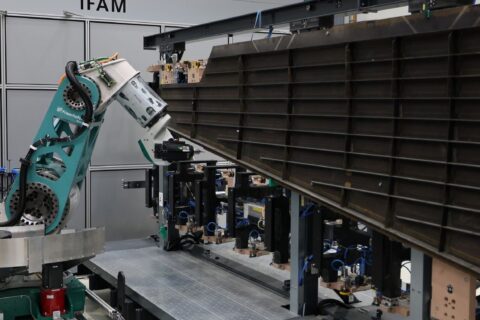
A central theme at the forum is 5 axis simultaneous machining, which DMG MORI presents as a key enabler for manufacturing complex aerospace components. In this sector, part geometries are often unique and the scope for standardized processing is limited. That makes 5 axis milling particularly relevant, because it allows difficult contours to be machined in one setup and reduces the need for repeated reclamping.
In practice, that has several effects. Combining operations in a single machining area can shorten throughput times and improve the use of available machine capacity. Fewer reclamping steps also support dimensional accuracy and more consistent part quality. For manufacturers working with demanding aerospace parts, those gains are not marginal, they directly affect process stability and production planning.
The material mix in aerospace further underlines the need for this approach. Components may be made from aluminum, composites, nickel based high temperature alloys or titanium alloys. DMG MORI states that 5 axis machining enables optimal tool positioning, helping to maintain consistent cutting conditions even in challenging materials. That is relevant not only for surface quality and geometry, but also for tool life. Walter will use the forum to present current cutting technologies and show how they fit into these manufacturing strategies.
Process integration broadens the machine role
Beyond milling alone, the forum will also highlight process integration as a way to expand what a machining center can do within a single production flow. DMG MORI points in particular to machine configurations with a mill turn table, which allow the same platform to handle rotationally symmetrical parts with complex geometries while also covering additional steps such as grinding and in process measurement.
That broader machine role is relevant in both series production and MRO environments. In aerospace, where part complexity is high and component routes can be long, integrating more steps into one setup can reduce handover points between machines and lower the risk of variation between operations. It also creates a more compact process chain, which can simplify scheduling and support more stable lead times.
During the Aerospace Forum, DMG MORI says it will demonstrate several of these solutions together with Walter and other partners on different machines, including the DMU 125 FDS duoBLOCK. The practical significance lies in showing how machining centers can be configured not just as standalone assets, but as platforms for a broader set of manufacturing tasks.
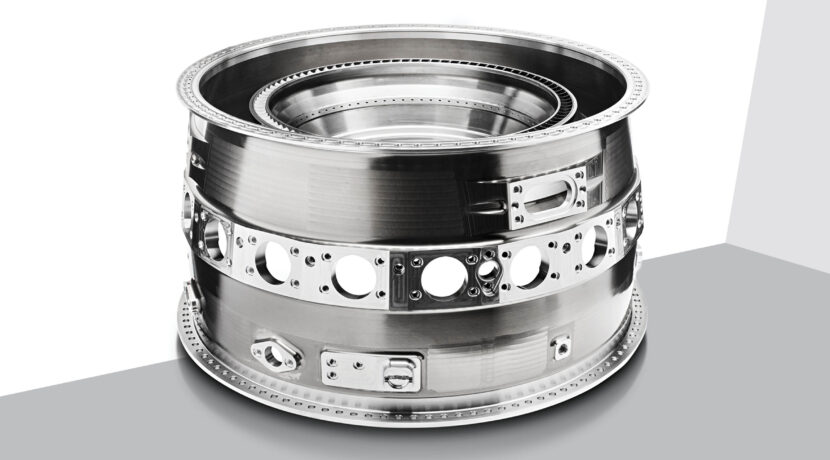
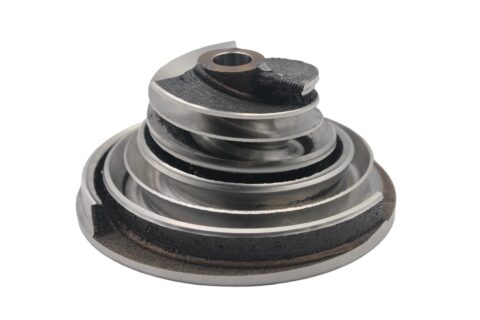
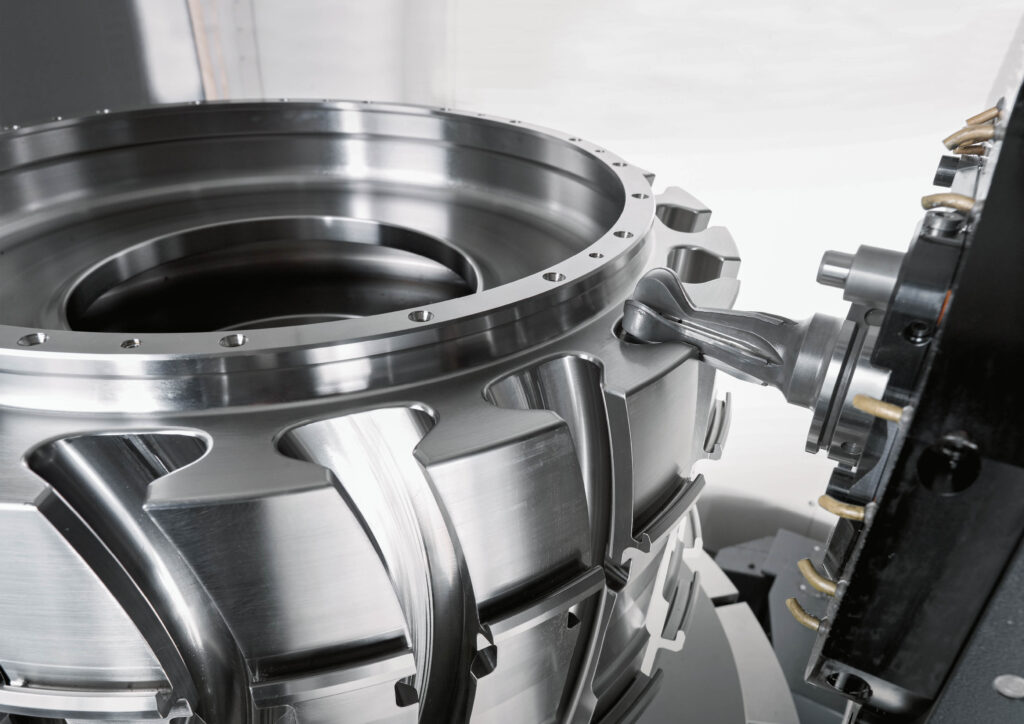
industries. This component is manufactured on a high-precision machine tool from DMG MORI.
Automation for fluctuating demand
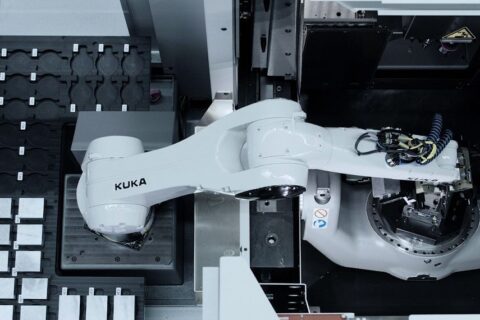
Automation is another main topic, but the emphasis is clearly on flexibility rather than high volume repetition. According to DMG MORI, aerospace production is characterized by fluctuating demand, small batch sizes and changing orders. That makes automation requirements different from those in mass production and shifts attention toward systems that can be adapted to changing job mixes.
In that context, pallet handling and workpiece handling systems are presented as especially suitable for small to medium batch production. They can help raise machine utilization without forcing the user into rigid production patterns. DMG MORI also points to driverless transport systems that move pallets, tools and other materials between machine and warehouse while operating alongside shop floor personnel.
A notable point is the emphasis on configurability and retrofit potential. If automation can be added quickly or integrated into an existing process, it becomes more realistic for companies that want to improve productivity without redesigning the entire factory. For aerospace suppliers under pressure to respond to changing orders while maintaining quality and traceability, that kind of scalable automation is likely to be one of the more practical themes at the event.
Machining transformation as the framework
DMG MORI places these topics within its broader Machining Transformation, or MX, model. In that framework, 5 axis technology forms the production base, while process integration and automation are combined with digital transformation and green transformation. For visitors, that matters less as a label than as a way of linking separate production decisions into one strategy.
The forum in Pfronten appears to use aerospace as a concrete application field for that broader manufacturing model. By combining machine demonstrations with workshops and industry presentations, the event is intended to show how machining, tooling, integrated process chains and automation can be aligned in response to the sector’s current pressures. For aerospace manufacturers, the relevance is straightforward: the technical challenges are not new, but the need to handle them with more flexibility and fewer process losses continues to grow.
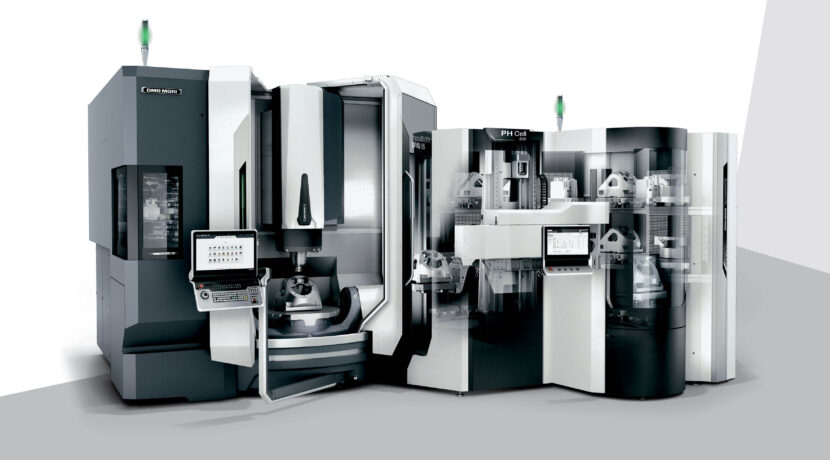
monoBLOCK, enable highly productive and flexible production