
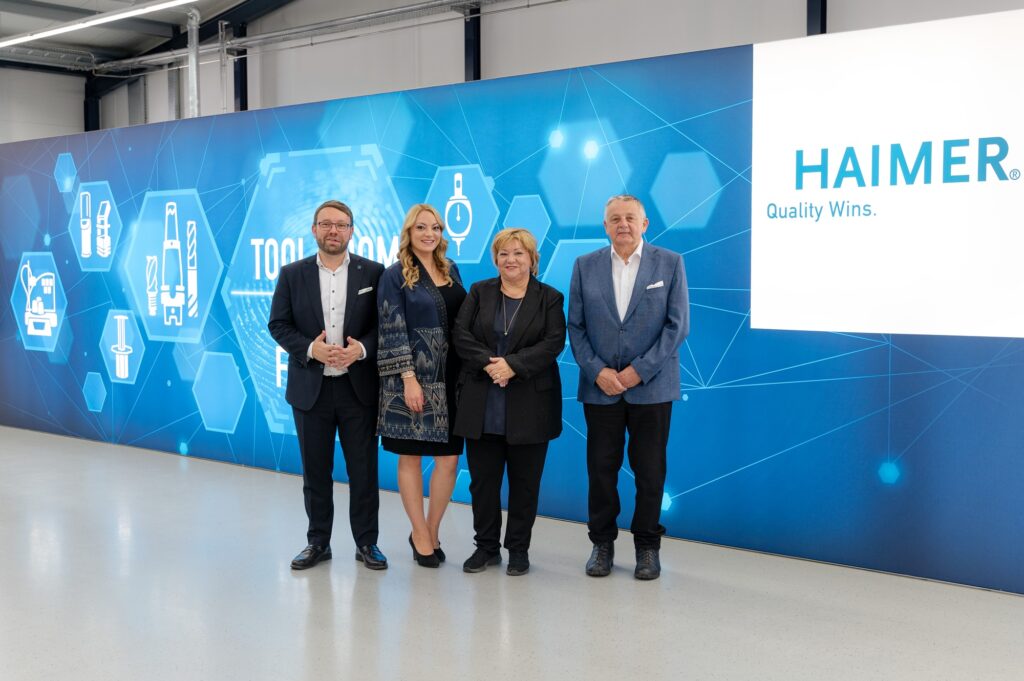
HAIMER will transfer ownership of the company’s shares to Andreas and Kathrin Haimer on 1 August 2026. The siblings will become managing partners of the Igenhausen-based tooling and tool management supplier. Ownership will remain within the German Haimer family. Founders Claudia and Franz Haimer will continue in management until the end of 2027. The ownership transfer concludes a succession process prepared over several years. Andreas and Kathrin Haimer have already held management positions within the group. They currently lead the business alongside the founders. Claudia and Franz Haimer will oversee the transition through 2027. They will then continue supporting the company through a newly created advisory board.
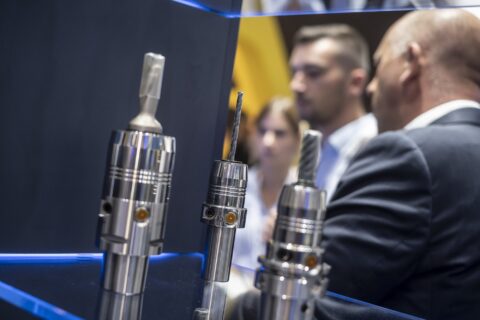
For customers and partners, the change is intended to preserve HAIMER’s owner-managed structure. It also maintains the company’s long-term approach to investment and product development. HAIMER supplies shrink-fit and balancing technology, tool holders, presetting equipment and software-supported tool management systems for machine tools. Its strategy centres on the Tool Room of the Future concept. This approach combines equipment, data management and automation for tool assembly and preparation processes.
Continuity in ownership and management
With the transfer of shares to the second generation, HAIMER remains wholly owned by the founding family. The company considers this continuity important in a metalworking market affected by cost pressure, skills shortages and growing requirements for digitisation and automation. Kathrin Haimer points to responsibilities that extend beyond the ownership transition. These responsibilities concern employees, apprentices and the company’s local operations. HAIMER currently employs around 800 people worldwide. Approximately 500 work at its Igenhausen manufacturing site. A further 50 employees work at the Bielefeld site, where HAIMER Microset presetting machines are produced. The company also trains around 40 apprentices.
Andreas and Kathrin Haimer plan to continue the existing development path. At the same time, they intend to expand work on digitisation, automation and sustainability. Areas named by the company include digital products, connected tool room systems and automated cells for shrinking, presetting and balancing. These developments aim to make tool preparation more repeatable and transparent. This is particularly relevant for manufacturers seeking to reduce manual intervention and maintain stable processes across multiple shifts. HAIMER’s founders will remain involved in the handover during the next 17 months. Their continued involvement is intended to provide operational continuity. Responsibility for the business and its ownership will then move fully to the second generation.
Tool room automation as a strategic focus
The company links the generational change directly to its tool room strategy. Its Tool Room of the Future concept is designed to connect tool assembly, setup, presetting and data management. The objective is to replace disconnected or manually managed processes with a data-driven workflow. This workflow can be integrated more closely with production. HAIMER describes tool assembly as an area that can often lack transparency. In its approach, software manages tool and setup data. These data are connected with dispensing systems, presetting equipment and machine-side processes. The portfolio includes the WinTool tool and data management system, Toolbase dispensing systems and the Tool Room Manager software. It also includes hardware for shrinking, balancing and measurement.
The practical relevance lies in the connection between tool preparation and machine availability. Stable tool data, organised tool availability and automated preparation steps can support more reliable machining operations. This is particularly important where skilled labour is limited. HAIMER also refers to automated production running around the clock. In such environments, tool preparation needs to be traceable and consistently managed. The company manufactures metal-cutting products itself. It operates more than 200 machine tools and processes around 5,000 tonnes of metal annually. According to Andreas Haimer, this experience informs the company’s focus on productive processes and tool management. HAIMER reports demand for integrated tool room systems from sectors including semiconductor manufacturing, aerospace, space, defence and energy.