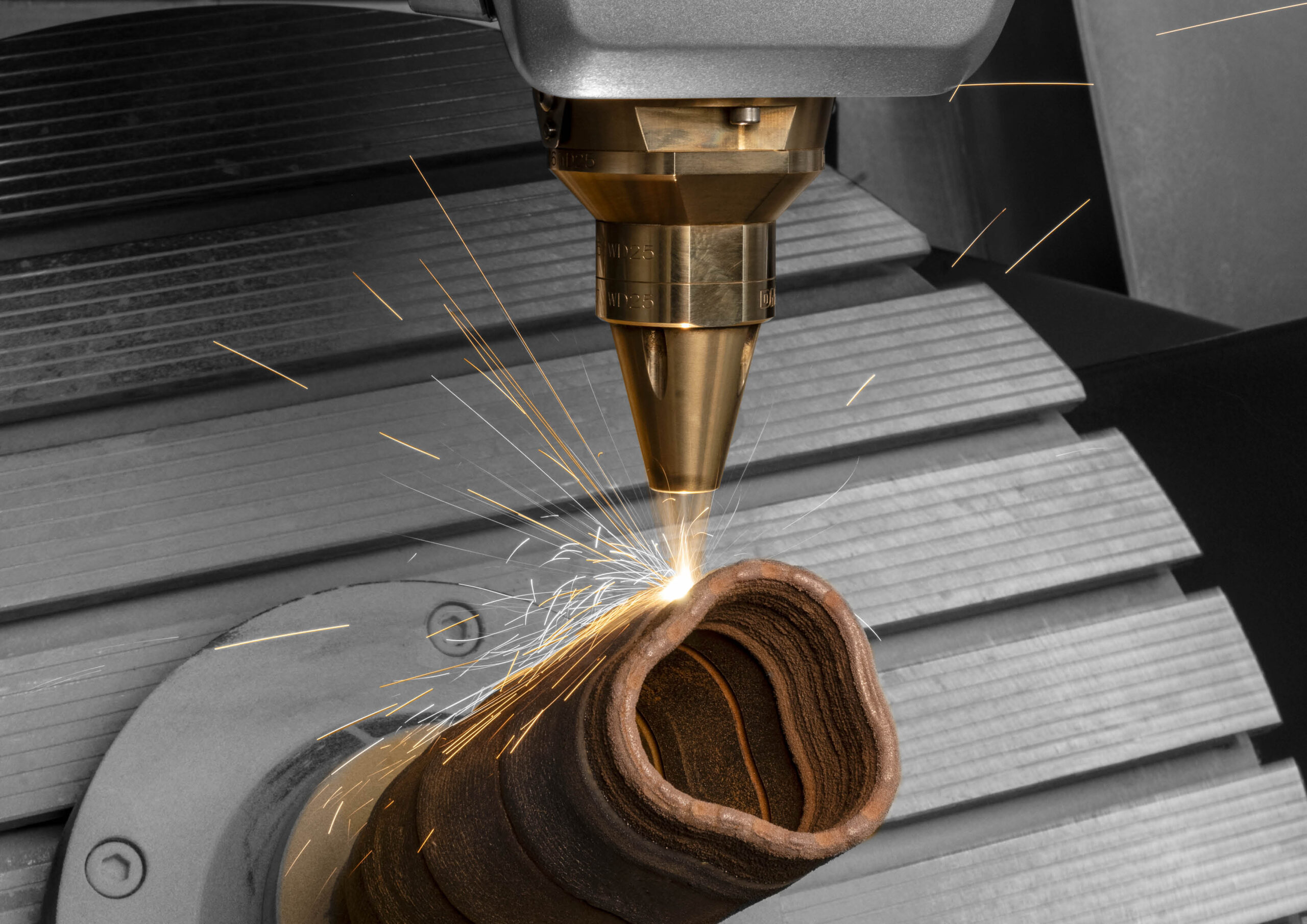
DMG MORI will use AMB 2026 to show how machine tool investments can become more adaptable over their full life cycle. The company will present 20 largely automated machines in Stuttgart, with a focus on process integration, automation, digital tools, and scalable entry-level solutions for manufacturers facing tighter budgets and changing production demands.
At its booth in Hall 10, covering more than 2,100 m², DMG MORI will present technologies for 5-axis simultaneous machining, 6-side turn-mill processing, and additive manufacturing. The common thread is Machining Transformation, or MX, the company’s framework for combining process integration, automation, Digital Transformation, and Green Transformation.
The AMB presentation also gives a stronger role to Best Fit Machines, or BX. These machines are intended to offer a lower-complexity route into MX, while still supporting automation and digital connectivity in many cases. For production companies, the relevance lies in scalability. Not every investment has to begin with a fully integrated high-end system. Some applications require additional capacity, simpler operation, or a more accessible cost level, while keeping a path open toward connected and automated production.
Life cycle support as part of the machine investment
DMG MORI positions the commissioning of a machine not as the end of a project, but as the start of a longer collaboration. In practice, this means that the machine, automation, software, service, and training are treated as connected parts of the same investment. For manufacturers working under rising quality and productivity requirements, that approach can influence how reliably a system performs over time.
The company’s offer includes state-of-the-art machines, automation systems, digital tools, and products from the DMQP portfolio. Service and spare parts programs are intended to support machine availability, while modernization concepts such as retrofits and lifecycle services can extend the useful life of equipment or adapt it to new production needs. DMG MORI also includes financing through DMG MORI Finance and customized training programs in its broader partnership model.
For shops planning investments in a volatile market, this life cycle perspective is relevant because it connects the initial machine choice to later changes in production. A machine that can be serviced, modernized, automated, or digitally integrated over time offers more room to respond when batch sizes, part variants, or process requirements change.
BX machines lower the entry barrier to MX
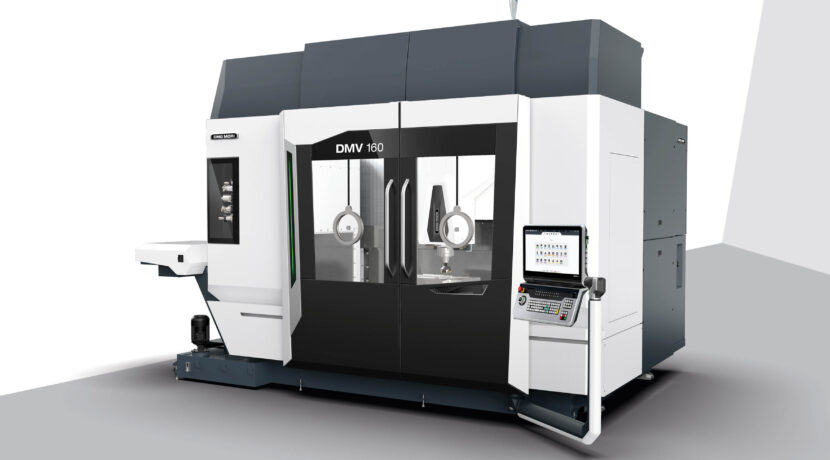
The new BX category adds less complex and more attractively priced machines to the wider MX portfolio. At AMB, examples include the DMV 160 as a new size class in vertical milling, the CLX 450 for turn-mill operations, and the DMX 80 U for 5-axis milling. These machines are aimed at applications where manufacturers need a cost-effective entry into more capable production, or extra capacity for simpler workpieces in an already advanced manufacturing environment.
Most of the BX solutions are already compatible with CELOS X and can be automated. This is important for shops that want to avoid a dead-end investment. A machine may start as a relatively straightforward capacity addition, but still remain suitable for later integration into a more connected production environment.
DMG MORI also links the BX approach to shop-floor programming. Its technology cycles are designed to accelerate programming tasks and integrate specific machining processes. One example is the Gear Package ALL IN 2.0, which includes eight technology cycles. It enables gear machining on existing turn-mill machines, reducing the need for a separate gear-cutting machine in suitable applications.
Complete machining reduces handling and setup steps
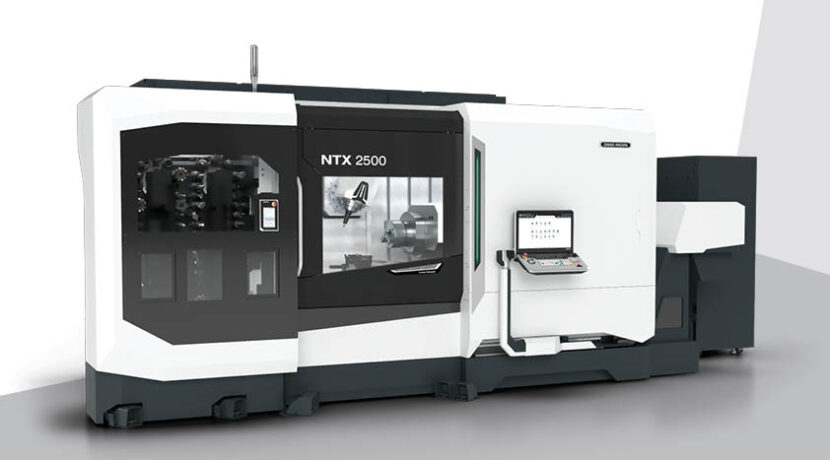
A major theme in the AMB presentation is process integration. DMG MORI will show 5-axis simultaneous machining centers and turn-mill centers for 6-side complete machining, with additional process steps such as gear cutting, grinding, and measuring integrated into a single setup. Demonstrations include the DMC 80 FDS duoBLOCK and the 3rd Generation NTX 2500.
For production, the practical value is clear. Fewer separate setups can reduce handling effort and help stabilize the process chain from machining through to finishing. The integration of an automatic measuring unit, together with pallet and workpiece changes, is intended to increase machine uptime. It also supports consistent machining accuracy because checks and corrections can take place within the process environment.
Gear machining is another example of this broader complete-machining approach. On the CLX 450, the gearBROACHING technology cycle is aimed especially at job shops that need flexibility without investing in dedicated gear-cutting machinery. For companies dealing with varied workpieces and changing order profiles, the ability to perform more operations on one machine can shorten lead times and simplify planning.
Automation moves beyond high-volume production
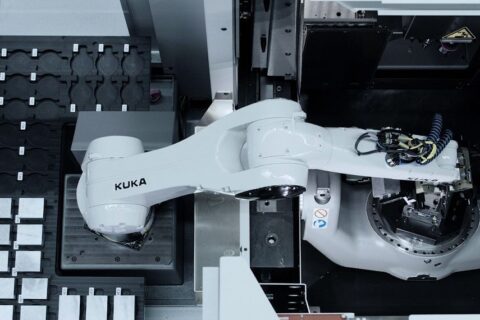
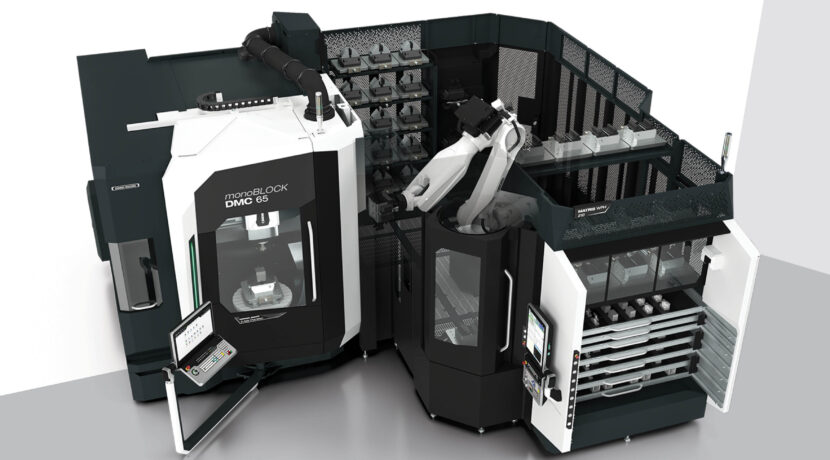
DMG MORI also addresses the growing need for flexible automation. Smaller batch sizes and more component variety mean that automation can no longer be treated only as a solution for mass production. At AMB, the company will demonstrate the compact MATRIS WPH 70 on a 2nd Generation DMU 60 eVo. The robot-based system is designed to handle both workpieces and pallets.
Combined with an automatic measuring unit, the MATRIS WPH solution is intended to raise machine uptime and support cost-effective 24/7 production. For manufacturers, the ability to automate both pallet and workpiece handling gives more flexibility in how jobs are organized, especially when production includes changing part families or varying batch sizes.
The Robo2Go will also be shown with the easyFIX automation clamping system on a 5-axis DMU 40. In this configuration, the robot can reposition the vise during workpiece changes. This removes the need for manual operator intervention at that step, while automated clamping helps maintain process consistency. The emphasis is not only on reducing labor input, but on making unattended production more stable and repeatable.
Digital tools support programming and service
Digital Transformation is presented as one of the central elements of MX. With CELOS X, DMG MORI connects machines, processes, and applications on one platform. The stated aim is to make production less complex and more transparent. For service, the my DMG MORI online platform is used to support direct communication with relevant specialists, while spare parts procurement is also handled through a digital platform.
Programming is another focus. DMG MORI technology cycles can reduce programming times by up to 60 percent and integrate processes such as gear cutting or grinding. Selected cycles can be activated temporarily through the my DMG MORI customer portal, allowing users to test them and apply them with flexible payment options.
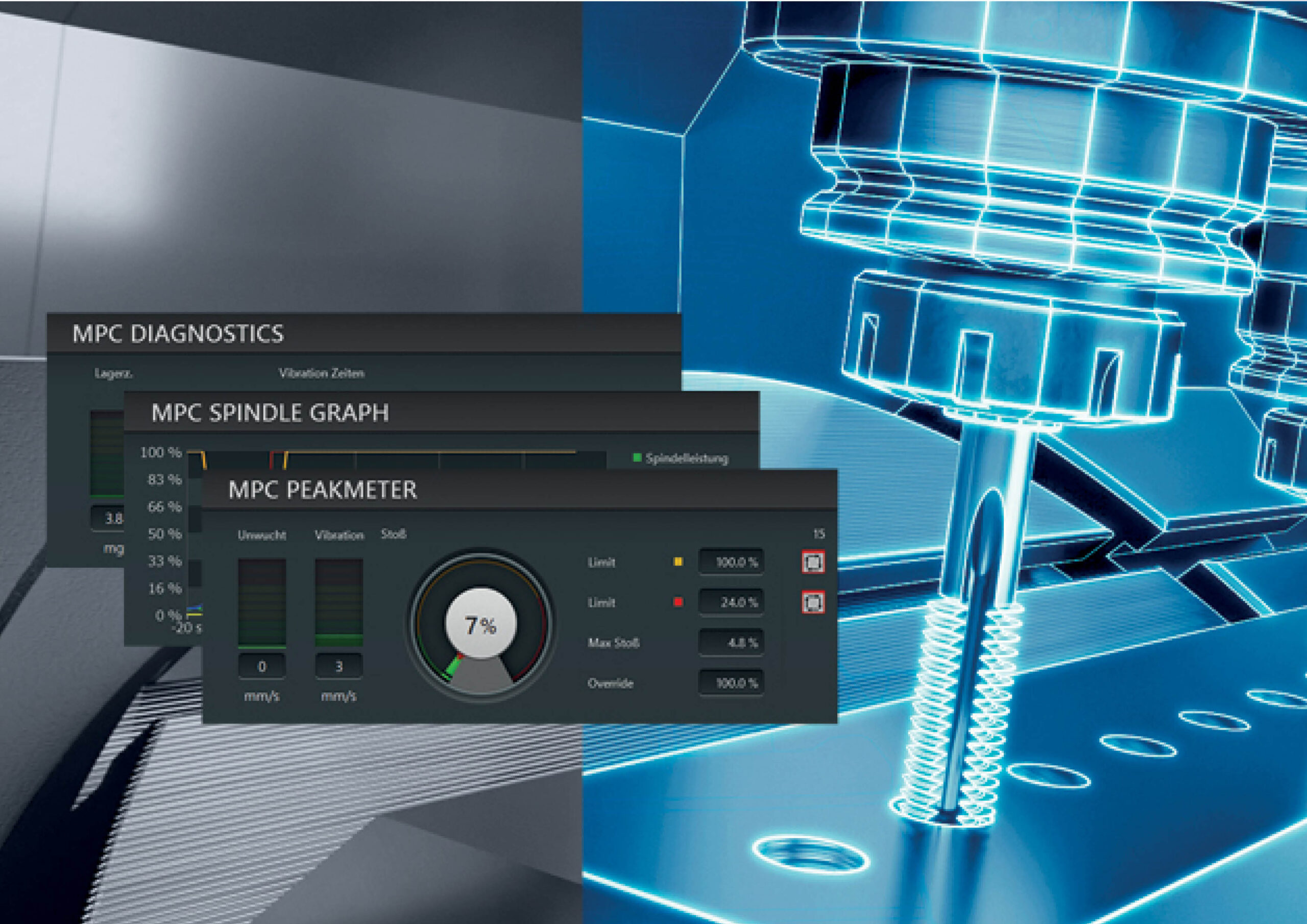
At AMB, the on-demand range will be expanded for all machines from the Pfronten plant. The Application Turning Cycle adjusts the feed rate in a process-oriented way in relation to table load. Machine Protection Control 2.0 monitors vibrations and can quickly shut down the machine when necessary, reducing the risk of a crash. These functions connect digital control more closely to process stability on the shop floor.