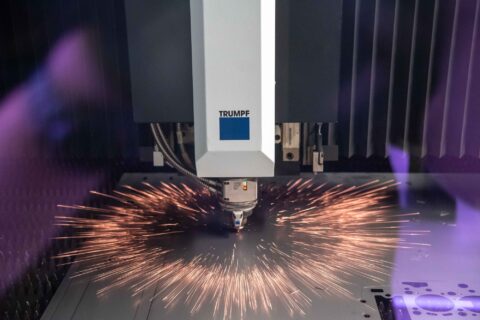

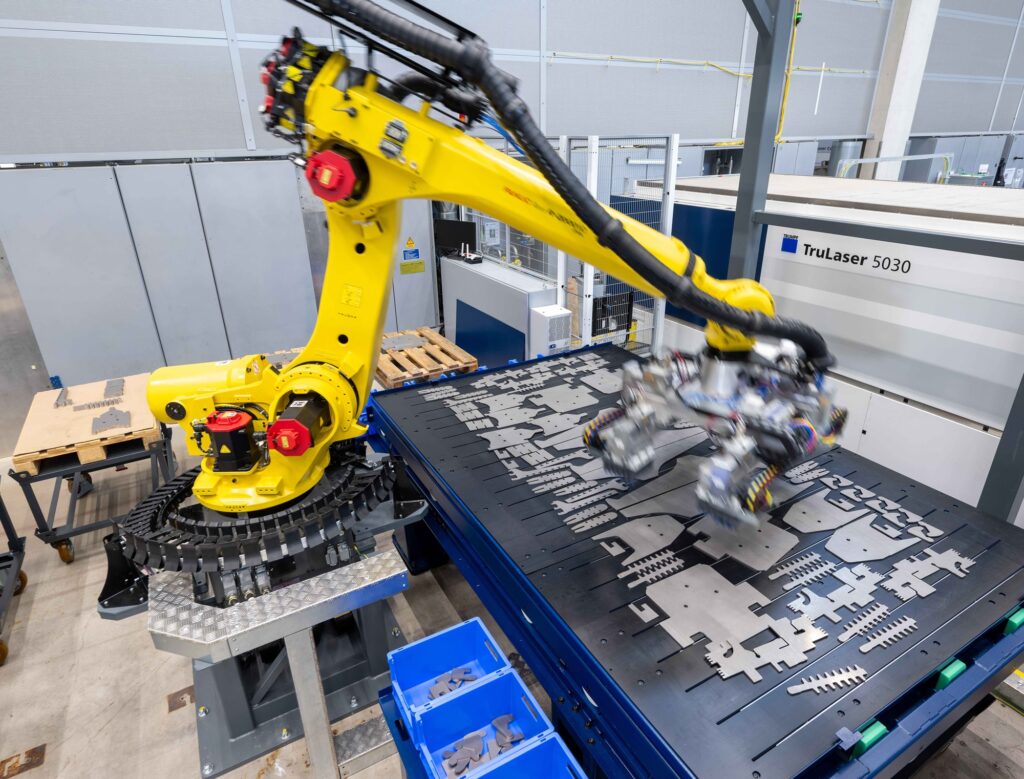
TRUMPF has become an official partner of the IPAI AI network in Heilbronn. This strengthens its European links with companies, research institutions and AI specialists. The cooperation is aimed at exchanging experience, developing new fields of application for artificial intelligence and transferring AI more directly into industrial practice. This includes software development and robot handling in sheet metal production.
The partnership brings together two different roles in the development of industrial AI. TRUMPF contributes experience from machine tools, laser technology and digital manufacturing solutions. IPAI provides an ecosystem in which companies and institutions can work on AI applications, supported by infrastructure, expert exchange and real-world lab spaces.
For manufacturing companies, the relevance lies less in AI as a general technology and more in its practical use on the shop floor. Applications in sorting, inspection, software development and robot training show where the technology is already being directed. In these areas, AI can support process reliability, reduce manual effort and make complex production tasks easier to manage.
TRUMPF frames the cooperation as part of a broader European AI community. According to Sarah Engel, Head of AI at TRUMPF, the development speed of AI makes shared learning important. IPAI, she says, creates space for exchange among AI experts, joint projects across company boundaries and an ecosystem that attracts talent.
European cooperation for industrial AI
The agreement gives TRUMPF access to international AI committees from different disciplines. This is intended to allow its specialists to exchange knowledge with experts from other organizations on an equal footing. For a manufacturing technology company, that kind of access can be important because industrial AI rarely depends on one field alone. It involves software, data, production knowledge, automation and application-specific experience.
IPAI positions itself as an application-centered AI innovation and collaboration platform based on European values. Its aim is to close the gap between research and practical application by creating an open ecosystem for companies and institutions. The platform is supported by partners from business, politics and society, with the state of Baden-Württemberg, the Dieter Schwarz Foundation, the companies of the Schwarz Group and the city of Heilbronn among its initiators.
For TRUMPF, this setting offers a route to work on AI developments within a European network rather than in isolation. The practical focus is significant. In production environments, AI systems must fit into existing processes, support stable operation and deliver usable results under real manufacturing conditions.
Real-world labs for software and robot training
One concrete part of the cooperation is the use of IPAI infrastructure. TRUMPF intends to use the network, for example, to further develop software with generative AI. In manufacturing, such development is relevant because software increasingly shapes how machines, automation systems and digital services are used in daily production.
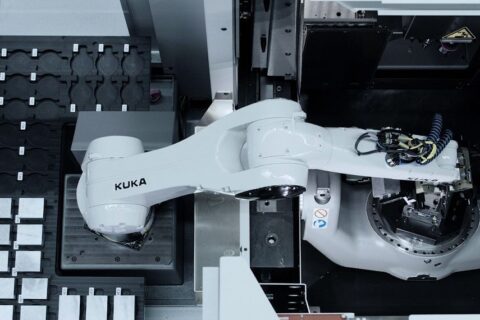
IPAI also offers real-world lab spaces where AI-based solutions can be tested and developed further. TRUMPF plans to use these spaces to train robots in complex handling tasks in sheet metal production. This is a demanding area because sheet metal parts can vary in geometry, size and position, and automation has to interact reliably with changing production conditions.
The opportunity to test AI systems outside a purely theoretical environment can help shorten the distance between development and application. For companies working with automation, this matters because robot handling tasks must be stable enough for real production, not only for demonstration. The cooperation gives TRUMPF a setting in which such AI-based approaches can be explored together with other AI specialists and institutions.
Existing AI applications in sheet metal and welding
TRUMPF already has several AI-based manufacturing solutions on the market. One example is SortMaster-Vision, a solution for sheet metal production in which an AI-based robot automatically sorts components and assigns them to the correct job. The practical value lies in connecting identification, handling and job allocation in a process that would otherwise require manual attention or more rigid automation.
Another example is VisionLine Inspect, a technology used to check the quality of weld seams. The press information names applications in electromobility as one field where this is used. Weld seam inspection is a critical production step because the result has to be assessed consistently and close to the process. AI-based inspection can support this by helping evaluate quality features in a structured way.
These existing applications show the direction of the cooperation with IPAI. The focus is not on AI as a separate topic, but on its use in concrete manufacturing tasks. Sorting, inspection, software support and robot training are all areas where better data processing and learning systems can influence efficiency, accuracy, flexibility and process stability.
IPAI campus expands the physical base
The partnership also connects TRUMPF with a larger AI infrastructure that is still being built in Heilbronn. The IPAI CAMPUS is planned on a 30-hectare site in the north of the city and is intended to provide space for 5,000 people working around AI. Construction began at the end of 2025, and the first buildings are scheduled to be ready for occupation by the end of 2027.
For IPAI, the campus is the physical center of its goal to create a European location for AI development and application. For industrial partners, the importance of such a setting is the concentration of expertise, facilities and collaboration opportunities in one place.
TRUMPF’s involvement adds a manufacturing perspective to this ecosystem. The company generated sales of 4.3 billion euros in 2024/25 and employs 18,303 people. It operates in machine tools, laser technology, digital networking, consulting, platforms and software, with production sites in Europe, North America, Mexico and China. Within the IPAI network, that industrial base becomes part of a broader effort to bring AI development closer to practical use in European manufacturing.