
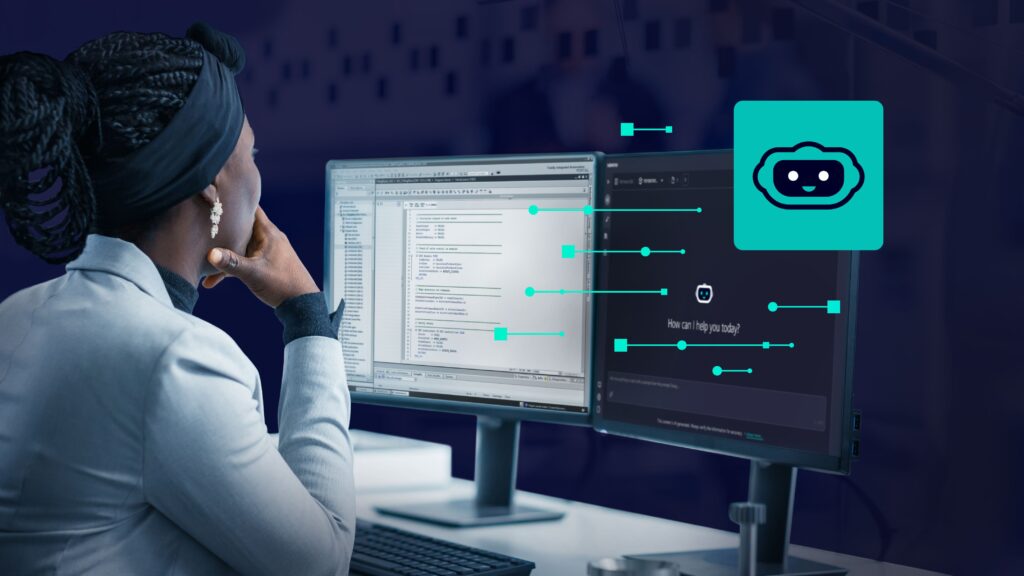
Siemens has made the Eigen Engineering Agent generally available. It is positioned as an AI system that can carry out automation engineering tasks rather than only generate suggestions. Launched at Hannover Messe 2026, the tool connects directly to TIA Portal. It is designed to produce project-specific PLC code, HMI visualizations and device configurations that can be reviewed within existing engineering workflows.
The launch addresses a practical pressure point in automation: engineering capacity. Siemens points to tightening innovation cycles and a shortage of skilled engineers as factors that make automation engineering a bottleneck, particularly as systems become more complex. Generic AI tools can help with ideas or draft outputs. However, engineers still have to translate those results into the structure, standards and constraints of a real project.
The Eigen Engineering Agent is intended to close that gap by working inside the engineering environment itself. Siemens says the agent has full awareness of project context, including data structures, blocks, parameters and component relationships. It also checks its own work before handing results back to the engineer. According to the company, AI-powered workflows can be completed two to five times faster than manual alternatives, with up to 80 percent higher solution quality and 50 percent greater engineering efficiency.
Project context inside TIA Portal
A key difference between the Eigen Engineering Agent and more general AI tools is its connection to TIA Portal, Siemens’ engineering platform for automation projects. Instead of producing broad answers that still need to be adapted manually, the agent can reference the actual project data. That includes the relationship between components, the blocks already in use, relevant parameters and the structure of the automation logic.
For engineers, this matters because automation work is rarely isolated. A change in PLC code, HMI visualization or device configuration has to fit the project as it exists, not as a generic example. Siemens says the agent can deliver outputs that are immediately usable in the assigned project, including in legacy or undocumented systems. Before results are shown to the engineer, the system breaks down complex tasks, executes them step by step, evaluates the result against project requirements and iterates where needed.
This approach is also relevant for onboarding. Siemens cites an automotive line builder where new engineers previously needed weeks to understand project structure and component relationships. By querying the project directly, for example by asking which blocks control a specific station, new team members could get accurate answers immediately. According to Siemens, onboarding time fell from weeks to days.
From suggestions to executed engineering tasks
The Eigen Engineering Agent is presented as part of a shift from AI as an advisory tool to AI as an executor of defined engineering work. Siemens describes the system as using multi-step reasoning and self-correction to complete tasks autonomously within industrial constraints. The work still returns to the engineer for review, but the intermediate effort of generating, adapting and checking routine engineering content is reduced.
In practice, the intended applications include PLC coding, HMI visualization and device configuration. These are areas where repeatable work can consume engineering time, especially when project standards have to be followed consistently. Siemens says the direct connection to TIA Portal allows the agent to align its outputs with each customer’s standards, rather than producing generic logic that needs extensive rework.
Rainer Brehm, Chief Technology Officer and Chief Operating Officer for Automation at Siemens Digital Industries, links the product to Siemens’ broader goal of “automating automation.” In his view, the move is from manually executing individual tasks toward orchestrating outcomes across the engineering workflow. The practical effect, if achieved in real projects, is less repetitive work for automation engineers and more capacity for higher-level system decisions.
Early use across industrial workflows
Siemens piloted the Eigen Engineering Agent with more than 100 companies in 19 countries before general availability. The examples provided show a focus on reducing manual effort in coding, configuration, visualization, documentation and issue resolution.
Prism Systems in the United States used the agent to create, modify and import SCL code, reducing the process to seconds. John Elias, President at Prism Systems, said engineers had already recognized the potential of tools such as ChatGPT. However, the challenge was bringing those capabilities into real industrial workflows. The Siemens tool, in his words, helps close that gap for engineering and automation.
China-based CASMT, which builds high-end equipment production lines for new energy vehicles, applied the system to device configuration, code generation and HMI visualization. For an electromechanical braking line, CASMT reported that the agent turned a complex, multi-discipline task into a conversational workflow, while simplifying setup, reducing specialist handoffs, accelerating delivery and making debugging faster.
ANDRITZ Metals, active in technologies, plants and digital solutions for metal processing and forming, used the product for code generation, documentation and more targeted issue resolution within TIA Portal. For manufacturing companies with extensive automation and control software, those use cases point to a clear target area: reducing the engineering time tied to repeatable software development and troubleshooting tasks.