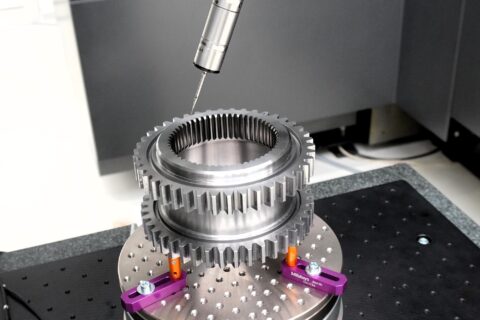

Gear production is increasingly shaped by the interaction between tooling, machine capability, software, and process knowledge. Sandvik Coromant’s tooling concepts and simulation software show how power skiving, hobbing, and gear milling can be controlled within modern machining environments. In this context, flexibility, accuracy, and process stability are often just as important as the selected cutting method.
Choosing the right gear manufacturing process depends on more than the tool mounted in the machine. Gear geometry, workpiece size, batch size, accuracy requirements, and the available machine configuration all influence whether power skiving, hobbing, milling, shaping, or broaching is the most suitable route. Therefore, gear machining is a process choice rather than a fixed production recipe.
Power skiving is often assessed against shaping and broaching. Compared with shaping, it can offer higher accuracy, shorter cycle times, and improved quality. It also allows harder materials to be machined more effectively. Broaching remains relevant, particularly for larger gears, but its fixed tool form limits the freedom to produce variants. In that comparison, flexibility and tooling cost become important factors. For manufacturers dealing with changing part families or smaller batches, that difference can have a direct effect on planning and production economics.
Process choice depends on the complete setup
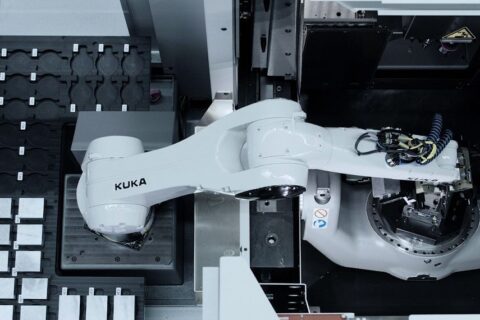
Sandvik Coromant positions gear manufacturing as a combination of tool technology, machine motion, and digital preparation. That is especially relevant in power skiving, where stable production depends on precise coordination between the tool and the workpiece. The operation is not defined by the cutter alone, but by the way the complete machining system is prepared and controlled.
This broader view is important because gear production rarely fits a single universal method. The same workshop may need to machine different gear sizes, geometries, and materials, while also working within the limits of its available machines. In that environment, the most effective process is the one that matches the technical requirement without adding unnecessary complexity or cost.
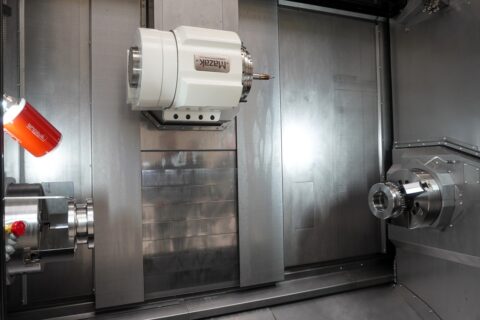
For power skiving in particular, the machine must be capable of the required synchronized motion. The workpiece and the tool rotate at the same time, while their axes are positioned at an angle. Together, they create a generating motion. If the machine capability, cutting data, and tool design are not aligned, the process becomes difficult to control. This is why process know-how and preparation are central to the application.
Tooling concepts for different entry points
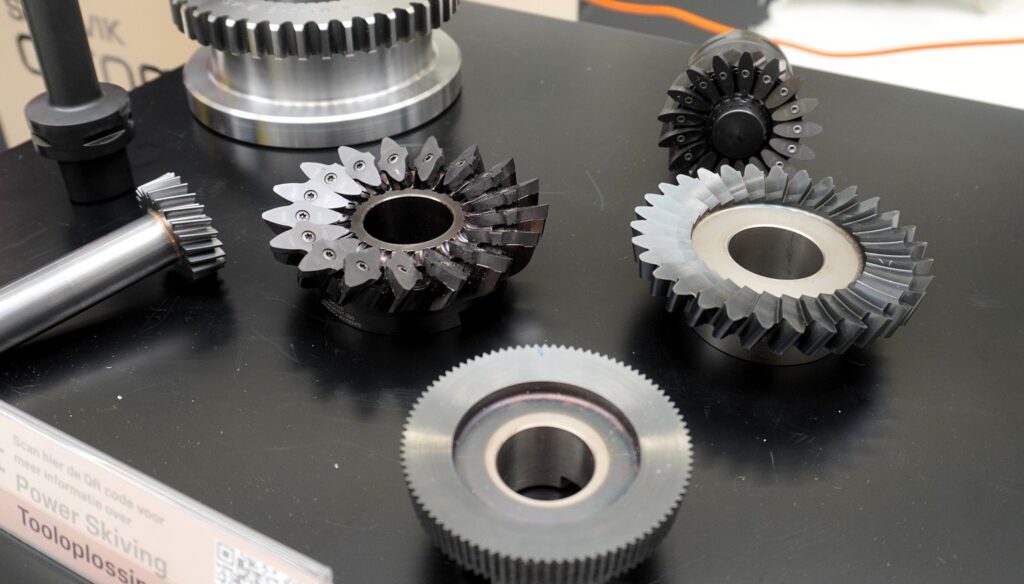
Sandvik Coromant’s gear machining program includes holders, solid-carbide and HSS tools, and insert-based solutions. This range reflects the different requirements found in gear production, from accessible entry points to tooling concepts aimed at longer tool life and repeatable positioning.
One example is the CoroMill 180, an insert solution in which the insert is positioned on top of a rail. This design prevents the insert from being pushed backward during machining. The practical effect is improved positioning accuracy, which is important in gear operations where small deviations can affect the final tooth geometry and quality.
The company also offers the CoroMill 178 as a solid-carbide solution and the CoroMill 178H as an HSS solution. Both are available in tapered and cylindrical versions. The tapered version is described as an accessible entry-level tool, which can be relevant for companies introducing the process or expanding their gear machining capability step by step. The cylindrical version is intended for longer tool life and can be reground more often, which can be useful where repeat production and tool economy are key considerations.
Software makes power skiving more manageable
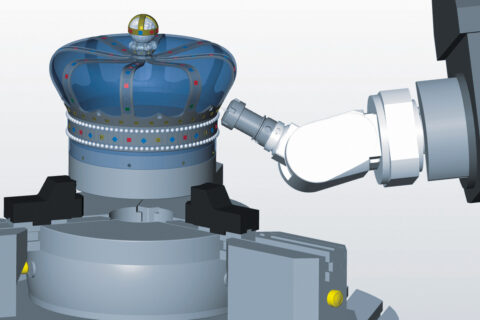
Digital preparation is a decisive part of power skiving because the cutting motion is complex. The tool and workpiece rotate simultaneously, the axes are angled, and the resulting generating movement must be calculated accurately. The software also has to account for cutting geometry, synchronization, and interference checking before the process reaches the machine.
For this purpose, Sandvik Coromant uses calculation and simulation software from Esco. The platform supports the chain from geometric design through to quality control. It includes gear design, cutting tool development, machining process simulation, and the generation of machine programs. This connects the design of the gear and the tool more directly with the actual machining strategy.
A key element is the virtual machine. This digital representation of the machine, tool, and workpiece allows the complete process to be simulated in advance. The technical demands of gear production do not disappear, however the process becomes easier to evaluate before cutting begins. For companies that want to integrate gear machining into existing production, that can reduce uncertainty and support a more controlled introduction of power skiving, hobbing, or gear milling.