
Osnabrück University of Applied Sciences and RWTH Aachen have started a three-year DFG research project on additively manufactured copper alloys for high-temperature applications. Together with industry partner KME, the researchers are investigating copper materials that can withstand extreme temperatures, high loads, and demanding operating conditions. At the same time, they must remain suitable for production in a metal powder bed process.
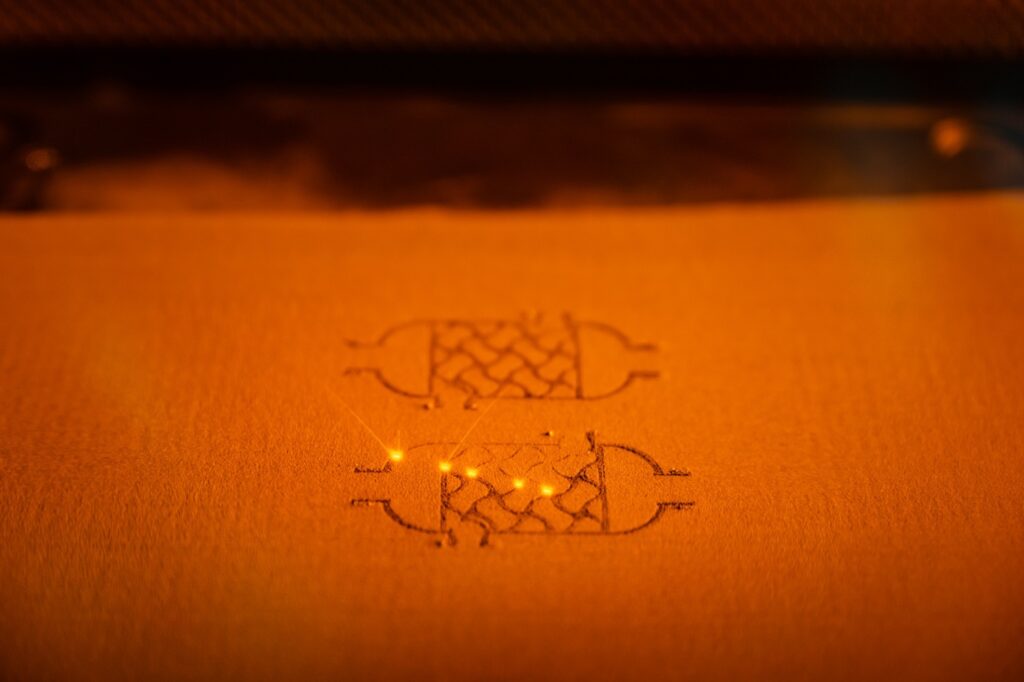
Copper is attractive for demanding technical applications because of its thermal properties. However, those same properties make it difficult to process in additive manufacturing. In laser powder bed fusion, metal powder is melted locally, and the component is built up layer by layer. With copper, this process is especially challenging because the material conducts heat very effectively and reflects a large share of the laser light used in standard systems.
According to project leader Prof. Dr.-Ing. Katrin Jahns, Professor of Materials Technology and Manufacturing Processes for Metals at Osnabrück University of Applied Sciences, copper reflects just under 98 percent of the incident light when red lasers are used. Only around 2 percent of the energy enters the material, and that energy is quickly dissipated. As a result, uniform melting is difficult. The new project addresses this processing problem while also examining alloy concepts that are difficult or impossible to produce by conventional routes.
Why copper is difficult in the powder bed
The starting point of the Cu-VHCF project is the interaction between copper’s material behavior and the additive process. In powder bed manufacturing, stable melting is essential for building components with reliable properties. Copper’s strong reflectivity limits the amount of laser energy available for melting. Its high thermal conductivity then removes heat from the melt zone quickly, which makes process control more demanding.
This is not only a question of whether the powder can be melted. For applications such as aerospace, high voltage engineering, heat exchangers, or rocket engines, the finished material must also retain its mechanical and thermal properties under prolonged exposure to high temperature and load. Therefore, the researchers are looking beyond printability alone. They are investigating how alloy composition, powder production, and process parameters influence the final component.
The practical relevance is clear. If the process can be made stable and reproducible, copper alloys could be used in components exposed to temperatures and continuous loads that are currently difficult to address with conventional copper materials. The project is intended to identify the key parameters needed for later industrial use.
(pictures: Osnabrück University of Applied Sciences)
Alloys beyond conventional casting routes
A central focus is on copper alloys that are difficult to manufacture using conventional processes such as casting. The press release names copper chromium niobium as an example. These alloys can form brittle structures during conventional production, which limits their usability. Additive manufacturing offers a different route because of the very high cooling rates during both powder production and the later 3D printing process.
These cooling rates can lead to finely distributed chromium niobium particles, known as dispersoids. According to Jahns, these particles strengthen the material and promote the formation of a protective oxide layer. The researchers expect this combination to improve mechanical and thermal behavior, including creep properties.
Creep is the permanent deformation of a material under high temperature or high load over a prolonged period. In applications such as aircraft engines, high voltage installations, and other heavily stressed components, creep resistance is a decisive factor for long-term reliability. The project therefore examines whether copper chromium niobium alloys can become copper materials suitable for permanent use above 500 degrees Celsius.
Simulation and experiment across the process chain
The project maps the additive manufacturing process chain from alloy design to component testing. RWTH Aachen calculates which phases form at specific compositions and temperatures. Prof. Dr.-Ing. habil. Ulrich Krupp, head of the RWTH Aachen Institute of Iron and Steelmaking, describes this as work with a digital twin. The aim is to reduce time-consuming preliminary tests and adapt both material chemistry and process parameters more specifically.
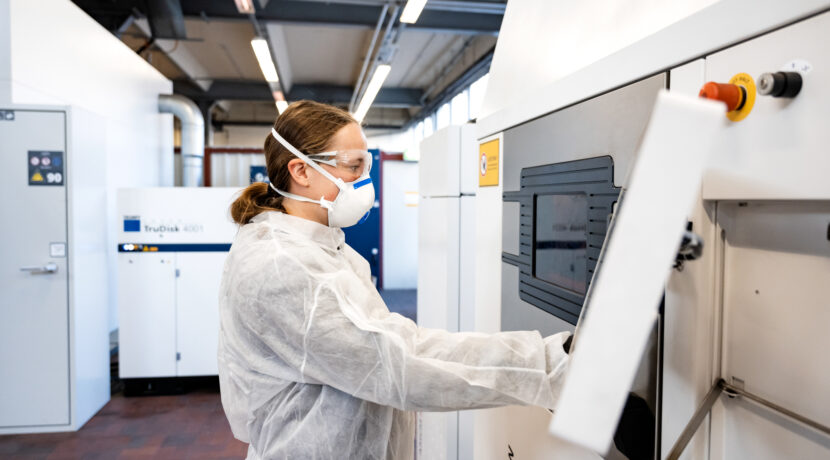
On this basis, Osnabrück University of Applied Sciences produces and prepares the required metal powder. Components are then manufactured in an industrial 3D printer and analyzed for their mechanical and thermal properties. This combination of simulation, powder preparation, additive processing, and testing is intended to show how the alloy behaves through the full manufacturing route.
The industrial need is already visible, according to Jahns, but production remains complex and currently requires special systems. That is one reason these materials are not yet ready for series production. By identifying stable and reproducible processing conditions, the project aims to create the technical basis for future use in high-temperature copper components.