
Rising costs, volatile markets, and stronger international competition are pushing manufacturing higher on the strategic agenda. The Aachen Manufacturing Technology Days 2026 will address how companies can assess new production technologies not as isolated technical projects, but as tools for competitiveness, resilience, and industrial transformation.
The event takes place on June 24 and 25, 2026, under the technical direction of the Manufacturing Technology Institute, MTI, of RWTH Aachen University and the Fraunhofer Institute for Production Technology IPT. Its focus is deliberately practical: which manufacturing technologies are ready for industrial use, where they fit into production systems, and how management can judge their economic relevance.
The program is aimed at decision-makers from sectors including automotive, aviation, defense, and energy. Speakers from companies such as MTU Aero Engines, Mubea, DMG MORI, and Rheinmetall Aviation Services will present how manufacturing technology is being used within current transformation strategies. The central question is not only what can be technically demonstrated, but how new approaches can be implemented at scale in existing industrial environments.
Manufacturing technology as a management issue
For many companies, manufacturing development is no longer a matter handled only within engineering departments. Investment in automation, digitalization, process monitoring, and traceability affects capacity planning, cost structures, product quality, supply chain resilience, and the ability to respond to changing markets. The Aachen event reflects this shift by addressing both technology and top management.
This is relevant because new production technologies often fail to move beyond pilot projects when their benefits are not clearly linked to business decisions. A process monitoring system, for example, is not only a technical add-on. Its value depends on whether it improves process stability, reduces rework, supports documentation requirements, or makes production more transparent. The same applies to automation and traceability, which must be assessed in relation to integration effort, scalability, and operational benefit.
By bringing executives and technical experts into the same setting, the event aims to create a clearer basis for decisions. The emphasis is on industrial implementability rather than scientific detail, which should help participants evaluate whether a technology can realistically be transferred to their own production systems.
Technology demonstrations in real production scenarios
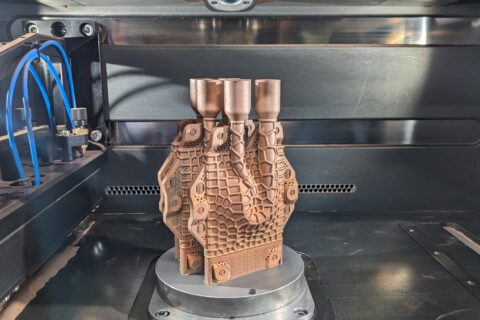
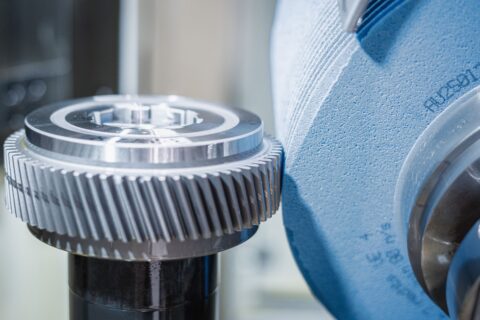
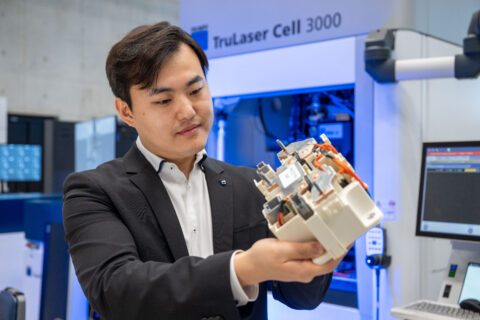
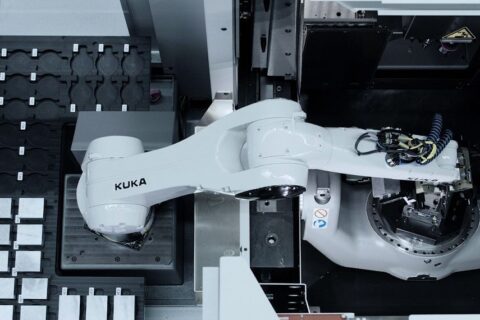
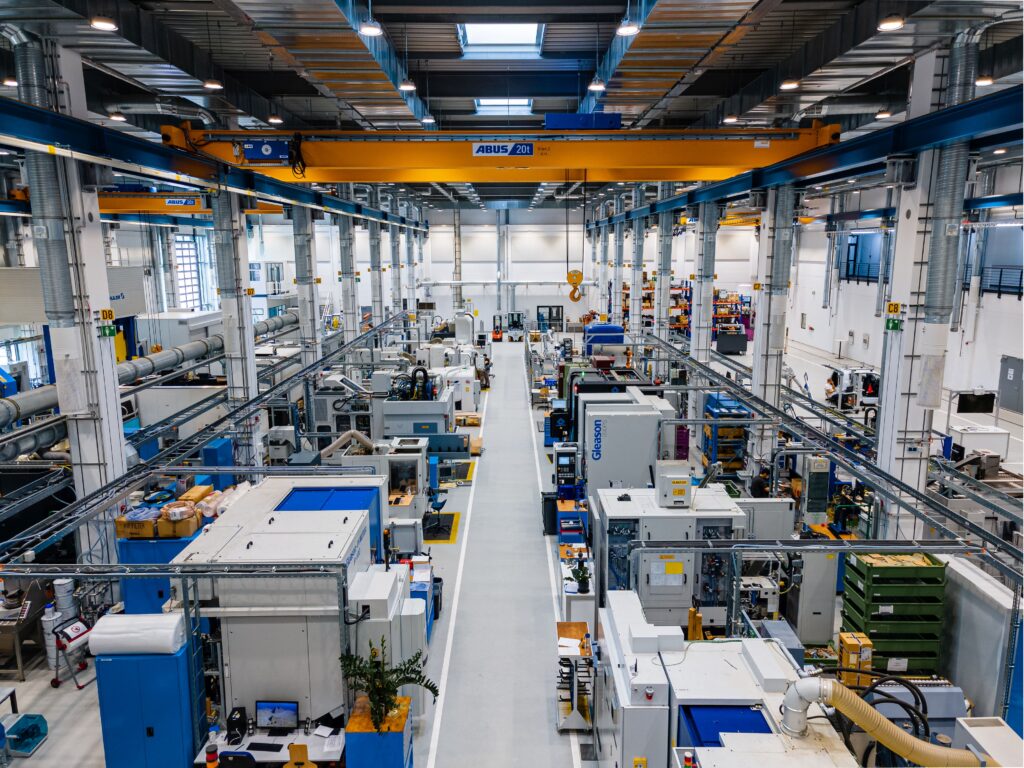
A central part of the Aachen Manufacturing Technology Days is a technology show in the machine halls of MTI and Fraunhofer IPT. Across six stations, the institutes will present solutions developed along concrete products and industrial process chains in cooperation with industry. The demonstrations focus on practical production engineering challenges rather than abstract laboratory concepts.
The technologies shown cover areas that are becoming increasingly important for competitive manufacturing, including digitalization, automation, process monitoring, and traceability. In practice, these topics are closely connected. Digital systems only create value when they support stable processes and provide usable information. Automation becomes more effective when it can be monitored and adapted. Traceability gains importance when companies need to document process steps and product histories across complex value chains.
The stated aim is to make the presentations understandable and transferable for participants from both technical and executive roles. Instead of going deeply into research details, the stations are intended to show what a technology does, where it can be applied, and what industrial benefit it may offer. For manufacturing companies, that distinction matters. A demonstrator becomes relevant only when it helps answer questions about integration, productivity, reliability, and economic return.
A view toward manufacturing in 2030
The event also places the presented technologies in a longer-term context. Prof. Dr. Thomas Bergs, head of MTI and a member of the executive board at Fraunhofer IPT, will give a keynote on the transformation of manufacturing and put forward a vision for 2030. The question behind this perspective is direct: what will German industry be producing by then, and which manufacturing capabilities will be needed to remain competitive?
Bergs frames the event around implementation. “We do not want to just talk, but get straight into implementation: How do we bring innovation into production in a scalable, economical, and effective way?” he explains. That focus is significant, because many manufacturing companies already recognize the need for change but face difficult choices about investment priorities, technology readiness, and organizational capacity.
The Aachen Manufacturing Technology Days therefore position manufacturing as a strategic enabler rather than a downstream execution function. The practical challenge for participants will be to connect the technologies on display with their own production realities: existing machines, workforce skills, product requirements, quality systems, and cost pressures. That is where the discussion about future manufacturing becomes operational, and where the value of new technology has to be proven.