LTJ, Laser Technology Janssen, is an advanced high-tech company specialised in microlaser processing of metallic foil materials and tubes. The company focuses on metal foil-based microproduction, ranging from flat precision parts to assembled components produced through laser cutting, laser welding, bending, forming and controlled finishing. LTJ supports customers throughout the full process, from early development and prototyping to production, inspection, cleaning and packaging. Its working philosophy is built around precision, reproducibility and First Time Right production.

Microlaser and precision manufacturing

With laser technology at the core of its production capabilities, LTJ produces extremely small and accurate components in 2D, 2.5D and 3D. The company works with parts from 1 x 1 x 1 mm up to 600 x 300 x 300 mm, with material thicknesses from 0.05 mm to 1.25 mm and tolerances from 5 to 50 micrometres. For specific micro laser cutting applications, LTJ also processes very thin materials starting from 0.005 mm. Materials include titanium, molybdenum, platinum, tantalum, spring steel, stainless steel, phosphor bronze, brass, Inconel, copper, aluminium, magnesium and other high-performance alloys.

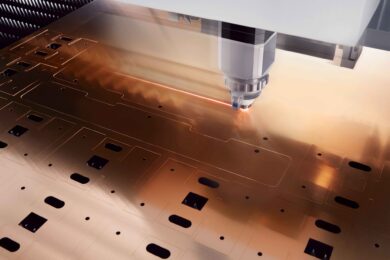
LTJ’s competencies include micro laser cutting, micro laser welding, ultrashort pulse laser processing, precision film laser cutting, laser welding of metal 3D printed parts, micro bending and forming, engraving and marking, precision gearing, shims and spring band products. Micro laser cutting is used for very small and complex shapes in thin metal foils, with high accuracy, burr-free processing, minimal thermal stress and strong reproducibility. Micro laser welding enables the joining of delicate metal components with controlled heat input, minimal distortion and high repeatability. LTJ operates 5-axis welding systems for both pulsed and continuous wave laser welding, including systems with VisionLine detection and PFO technology.

In addition to cutting and welding, LTJ offers high-precision bending and forming of micro laser-cut parts. This allows flat foil components to be transformed into complex functional parts, brackets, springs, frames and micro assemblies. The combination of laser processing, CNC-controlled bending technology and in-house tooling gives LTJ control over the full manufacturing route, from cut geometry to final shape.

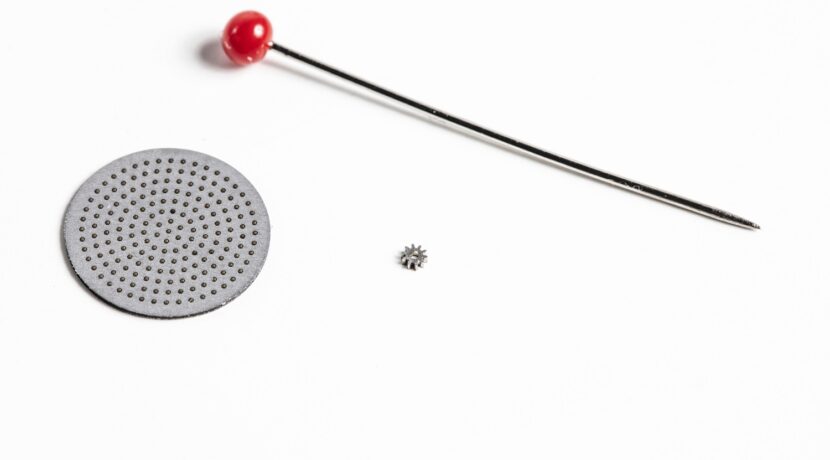
LTJ micro-laser-cut gear wheel with a diameter of 1.4 mm.

Applications and industries

LTJ works for sectors where small components must meet very high requirements for precision, cleanliness and reliability. Its technologies are used in medical technology, aerospace, semiconductors, optics, defence, watches and other high-tech OEM industries. Applications include medical instruments and implants, sensor components, electronic enclosures, precision tools, aerospace parts, optical components, semiconductor parts, micro drives, precision instruments and complex assemblies.

By combining microlaser cutting, welding, bending, forming, cleanroom production, inspection, cleaning and packaging under one roof, LTJ offers more than a single production step. The company acts as a specialist partner for customers that need small, complex and reliable components, produced with tight process control from development to delivery.

LTJ Laser Technology Janssen is specialized in high-precision micro laser processing of metal foils, thin-walled components and complex micro assemblies. From its base in Wijchen, the company supports customers in sectors where accuracy, reproducibility and cleanliness are critical, including medical technology, aerospace, semiconductors, optics, defense, watches and other high-tech OEM applications. The company’s production capabilities cover flat metal foil parts as well as complex 2D, 2.5D and 3D assemblies with extremely small dimensions and tight tolerances.

Micro laser welding

One of LTJ’s core competencies is micro laser welding. The company joins very small metal components with controlled heat input and minimal distortion. With 5-axis welding systems for pulsed and continuous wave laser welding, including vision and PFO systems, LTJ can produce accurate welded assemblies for medical instruments, sensor components, electronic enclosures, aerospace parts and precision tools. The company also has experience with helium leak-tight laser welding.

Micro laser cutting

LTJ also offers micro laser cutting for thin materials and complex geometries. This process is suitable for components that require high accuracy, fine contours and minimal thermal influence. It allows the company to produce small, detailed parts from thin metal foils and other high-tech materials.

Precision film laser cutting

For ultrathin foils, LTJ applies precision film laser cutting. This production method is used for components where burr-free edges, repeatability and dimensional accuracy are essential. It is particularly relevant for applications in medical technology, electronics, optics and other precision industries.

Ultrashort pulse laser processing

With ultrashort pulse laser technology, LTJ can process sensitive materials with very little heat input. This makes the process suitable for thin films, delicate components and high-tech materials where conventional laser processes could cause too much thermal impact.

Laser welding of metal 3D printed parts

LTJ also uses laser welding for metal 3D printed components. The company can weld printed parts to sheet metal, turned parts or other printed components. This capability is supported by cleaning, alignment, microscopic inspection and welding advice, making it suitable for customers working with complex additive manufactured assemblies.

Laser processing of magnesium foil

Another specific production capability is laser processing of magnesium foil. Magnesium is attractive for lightweight applications in aerospace, electronics and robotics. LTJ processes this material for components where low weight, precision and repeatability are important.

Micro bending and forming

Beyond laser cutting and welding, LTJ produces micro-bent and formed parts. This enables the company to turn laser-cut components into functional 2.5D or 3D shapes. The combination of cutting and forming is useful for small precision parts, springs, connectors and other functional micro components.

Precision gears

LTJ also produces precision gears and gearing components. These parts require accurate tooth geometry, clean edges and consistent repeatability. Laser technology allows the company to manufacture small gears for applications where conventional production methods may be less suitable.

Shims and spring band products

For technical adjustment, spacing and spring functions, LTJ manufactures shims and spring band products. These components are often used in precision assemblies where exact thickness, flexibility and dimensional stability are important.

Engraving and marking

LTJ provides laser engraving and marking for components that require identification, traceability or functional marking. This can be applied to small precision parts without significantly affecting the component geometry.

Leak testing and pressure decay testing

Quality control is also part of LTJ’s offering. The company performs leak testing and pressure decay testing, including helium leak testing for applications where airtightness or fluid-tightness is critical.

Specialist weld research

LTJ supports customers with specialist research into laser welds. This includes cross-sections, polishing, etching, microscopic analysis, optical measurement and reporting. These services help customers validate weld quality and improve the reliability of their products.

Cleaning and packaging

Finally, LTJ offers cleaning and packaging, including cleanroom-compatible packaging and cleaning to ASML Grade 2 particle level within an ISO 6 cleanroom. This makes the company suitable for customers that require not only precise production, but also controlled handling, cleanliness and documentation.

With these production capabilities, LTJ Laser Technology Janssen combines micro laser cutting, welding, forming, marking, testing, cleaning and documentation into one controlled process. The company is therefore positioned as a specialist for small, complex and reliable components in demanding high-tech applications.


LTJ Laser Technology Janssen has established an advanced cleanroom in Wijchen for applications where precision, cleanliness and process control are essential to the quality of the final product. In this controlled environment, the company carries out processes such as micro laser welding, micro laser cutting, engraving, assembly and quality control for critical components.

Controlled environment for micro production

The cleanroom is an important part of LTJ’s service offering. In micro production, even small particles, temperature fluctuations or changes in humidity can affect the final result. For that reason, temperature, humidity and particle concentration are carefully regulated inside the cleanroom.

This makes the facility suitable for highly accurate machining and assembly of high-quality components for sectors such as medical technology, optics, aerospace and the high-tech manufacturing industry.

ISO 6 validated cleanroom

According to LTJ, the cleanroom is designed to safeguard precision, innovation and quality. The environment is validated to ISO 6 and provides a low-particle workspace in which micro precision production can take place under controlled conditions.

In addition, LTJ has measuring and inspection equipment on site. Its engineering team can also support customers with specialist technical questions, helping to align product design, production requirements and quality control.

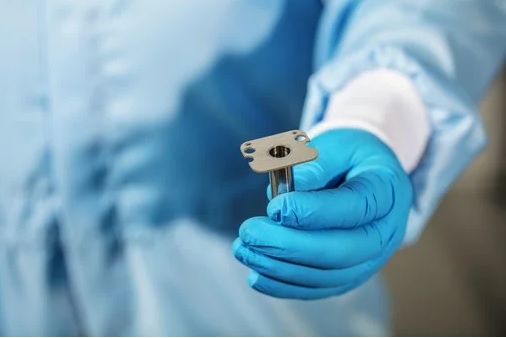
LTJ 2.5D microwelding

Production capabilities in the cleanroom

Several production processes are carried out inside the cleanroom. LTJ mentions micro laser welding for high-tech applications, as well as micro laser cutting and engraving of thin metal foils from 0.005 mm thick, ceramic materials and plastics.

Assembly, quality control, prototyping and small series production under controlled conditions are also part of the cleanroom capabilities. This enables LTJ to support customers not only with individual production steps, but also with a more complete and controlled manufacturing process.

Precision combined with sustainability

Sustainability has also been considered in the design of the cleanroom. The facility is equipped with smart air circulation systems, energy-efficient installations and a modular layout. This allows LTJ to respond flexibly to changing customer requirements and new technological developments.

Reliable production for critical components

With its cleanroom, LTJ supports customers that place high demands on reliability, reproducibility and cleanliness. The combination of laser expertise, controlled production conditions, inspection and engineering makes it possible to produce small and complex components for applications where margins for error are minimal.

Logo LTJ Laser Technology Janssen

Laser Technology Janssen bv
Sheet Metal Based Micro Productions

Address
Copernicusstraat 12
6604 CR Wijchen
The Netherlands

General contact
Phone: (+31) 24-6757996
Email: info@lasertechnologyjanssen.nl

Visit website

Latest News

Services