
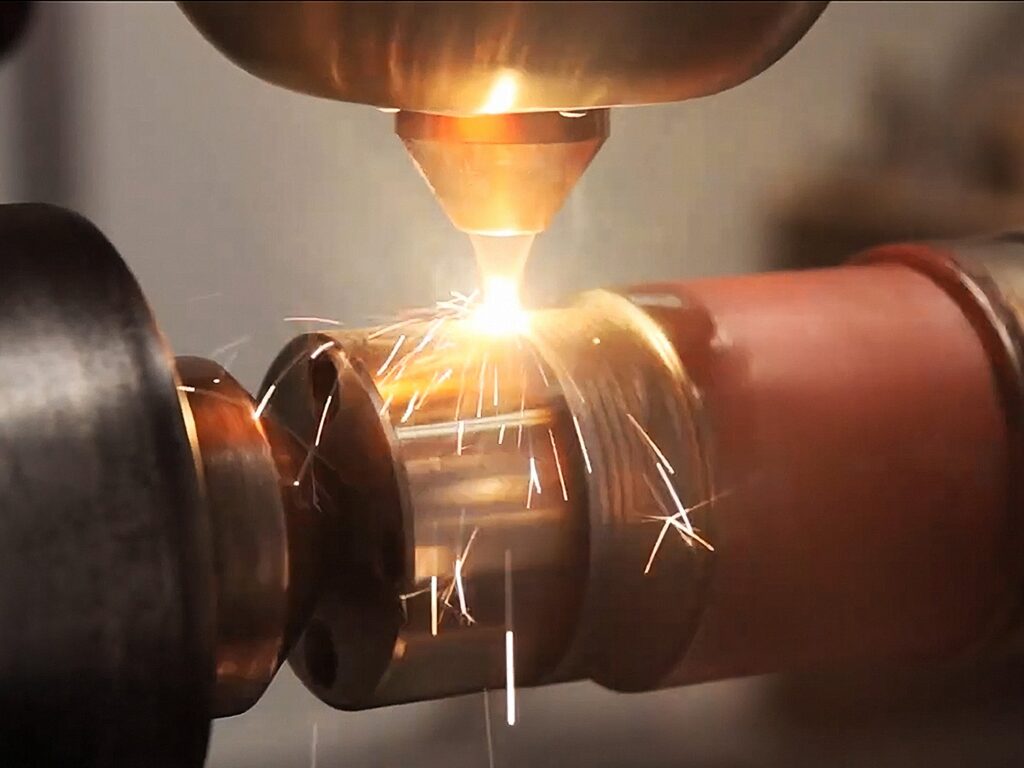
Fraunhofer ILT and Etxetar are expanding the industrial use of laser metal deposition and extreme high-speed laser material deposition. Their memorandum of understanding combines process knowledge, machine tool engineering and application expertise at a time when regulation, repair economics and scalable coating solutions are opening new markets for these technologies.
Laser-based deposition is gaining relevance where conventional replacement or coating strategies become too costly, too slow or too difficult to scale. The pressure is visible in several areas at once. In brake systems, regulation is increasing the need for robust coating processes. In aviation, the value and complexity of components make repair an attractive route. In rail and gear applications, localized wear creates demand for controlled, repeatable restoration.
The partnership between Fraunhofer ILT and https://www.etxetar.com/ is built around these practical requirements. Fraunhofer ILT contributes in-depth expertise in LMD and EHLA, including digital process optimization and automated adjustment of process parameters. Etxetar adds machine tool know-how, industrial process integration and application work on turbine blades, blisks, railway axles and gear components. Together, the partners aim to move proven processes into broader industrial use.
Regulation strengthens the case for EHLA coating
One of the clearest drivers is Europe’s Euro 7 framework. Its scope now includes non-exhaust emissions such as brake particle emissions, which changes the market conditions for coating and surface technologies. For manufacturers of brake discs and other wear-intensive components, this creates a direct need for coating solutions that can be applied reliably and at industrial scale.
EHLA is positioned in this context as a process for high-speed coating applications. Etxetar has already developed EHLA-based solutions for this market environment, while Fraunhofer ILT sees regulation as a trigger for wider adoption. Once legislation creates a defined technical requirement, manufacturers are more likely to evaluate alternatives that can reduce wear-related emissions and support durable component surfaces.
The relevance is not limited to Europe. Fraunhofer ILT expects similar requirements to emerge in other major markets, including China, India and Japan. Therefore, scalability becomes central. A coating process must not only work in a laboratory or isolated production case, but also be transferable into production environments where throughput, repeatability and integration with existing manufacturing systems determine whether adoption is realistic.
High-value repair opens opportunities in aviation
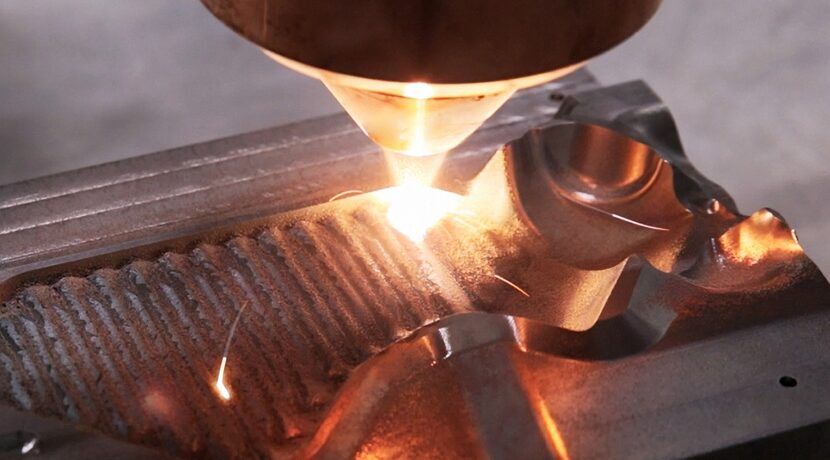
Aviation is one of the most demanding application fields for LMD-based repair. Components such as blisks, turbine blades and other geometrically complex parts combine high material value with demanding service conditions. Replacing these parts prematurely can be costly, while repair requires strict control over the deposited material, geometry and process stability.
This is where LMD becomes relevant. The process can address localized damage and support repair strategies for components where extending service life is economically important. However, aviation components leave little room for variation. Process control, repeatability and accurate restoration of geometry are essential, particularly for parts exposed to severe operating conditions.
Etxetar’s application work in turbine blades and blisk repair provides a practical foundation for the partnership. Fraunhofer ILT adds process knowledge that can help adapt LMD to specific component requirements and tighter industrial standards. The same logic also applies outside aviation. Etxetar documents use cases in gear repair, helicoidal gear repair and certified railway axle repair, where wear or localized damage can make replacement expensive. Space-related components are also under consideration, especially where advanced manufacturing and repair strategies are relevant to specialized applications.
Digital process control reduces manual correction
A key part of the collaboration is the use of digital process optimization. In coating and repair, components often do not present ideal or uniform conditions. Wear can be uneven, layer thickness can vary and repeated manual correction steps may be needed if the process cannot respond to the actual geometry of the part.
Fraunhofer ILT’s AI SLAM project shows how this can be addressed in laser metal deposition. The system records component geometries during coating, detects deviations from the target contour and adjusts process parameters such as feed rate in real time. This creates a more adaptive process, especially for tasks where the condition of the component changes from part to part.
The practical value lies in reducing the gap between individual successful results and dependable industrial performance. Larger datasets allow the software to improve the process iteratively. For users, this can support more stable coating and repair operations, fewer manual interventions and better alignment between the deposited material and the required contour. In combination with Etxetar’s in-house software, monitoring and AI capabilities, this digital layer becomes part of the move toward production-ready LMD and EHLA systems.
From process knowledge to industrial systems
The memorandum of understanding is not focused on introducing untested technologies. It is aimed at widening the industrial field for processes that are already proven, then adapting them to applications where regulation, component value and durability requirements create fresh demand.
That requires more than a capable laser process. Industrial users need machine concepts, production line solutions, monitoring, software and process strategies that fit their components and production conditions. Etxetar brings experience in developing additive process solutions, LMD and EHLA cells and machines and industrial integration. Fraunhofer ILT contributes the process expertise needed to translate LMD and EHLA knowledge into scalable system designs.
This combination is important because applications such as brake disc coating, turbine component repair, gear restoration and railway axle repair each impose different requirements. Geometry, material condition, throughput and quality control vary widely. A development partnership that links process research with machine engineering can address those differences more directly than a generic technology transfer approach. For manufacturing companies, the relevant question is not only whether laser deposition works, but whether it can be integrated reliably into the way high-value components are made, coated or repaired.