
Fastems will present automation concepts for high-mix CNC production at AMB 2026 in Stuttgart. The focus is on pallet systems, robotic loading and software-driven production control. At Hall 10, Booth A51, the company will address a practical issue for machining companies: keeping machines productive when order priorities, batch sizes and staffing levels keep changing.
AMB remains a major European platform for metal cutting technology. Messe Stuttgart organizes the event around the machining value chain across ten themed halls. Fastems is using the exhibition to focus on mixed manufacturing environments, where lost capacity is often caused less by the machine tool itself and more by the coordination around it.
In these environments, orders, pallets, fixtures, tools, raw material and manual tasks all compete for attention. A machine may be technically available. However, it may still wait for the correct NC program, fixture or operator action. Fastems’ AMB program follows that logic. Rather than presenting automation as a separate machine add-on, the company links hardware to planning and resource management through its Manufacturing Management Software, MMS. The software is used to plan, run and monitor high-mix production, including non-automated cells. It generates production schedules from orders, checks resources and updates the plan when priorities change.
Pallet automation as a scalable starting point
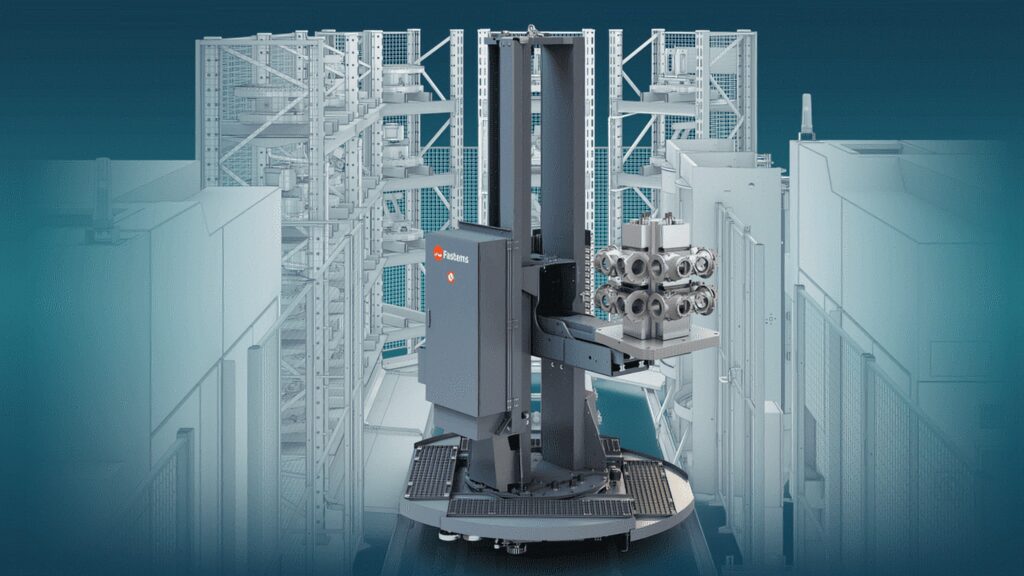
One of the main exhibits at AMB is FPS Stationary, a compact version of the company’s Flexible Pallet System. The concept is aimed at 4- and 5-axis milling machines, where manufacturers want to increase unmanned capacity without immediately moving to a large multi-machine FMS. According to Fastems, the system can later be expanded into a full Flexible Pallet System. Therefore, it is relevant for companies that want to automate one machine first while keeping a growth path open.
The broader FPS platform handles pallets and zero-point plates from 300 to 630 mm and is designed for milling and mill-turn machines, including compact vertical 5-axis machines. Fastems emphasizes the 360-degree layout, which allows machine tools, storage modules and loading stations to be positioned on different sides of the system. That flexibility matters in many subcontracting and machine-building environments, where available floor space and ceiling height can be just as important as payload or pallet capacity.
The payload range also reflects different shop requirements. The AMB information lists FPS Stationary payload versions from 500 kg to 1,500 kg, while the FPS technical data shows variants for 500, 1,000 and 1,500 kg loads including pallet. Fastems also states that FPS can integrate machine tools from more than 90 brands, including machines with and without automatic pallet changers. For brownfield factories, that compatibility can be decisive because it allows existing equipment to become part of a more predictable production flow.
Robotic loading extends unmanned running time
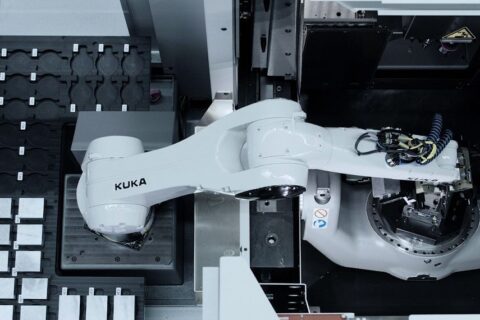
Fastems will also show robotic automation in action, including a cell concept for milling, turning and fixture loading. The technical rationale is straightforward. Pallet buffers can increase spindle availability, but short machining cycles may still require frequent operator input. In those situations, robotic loading can extend unmanned running time without depending only on more pallet storage.
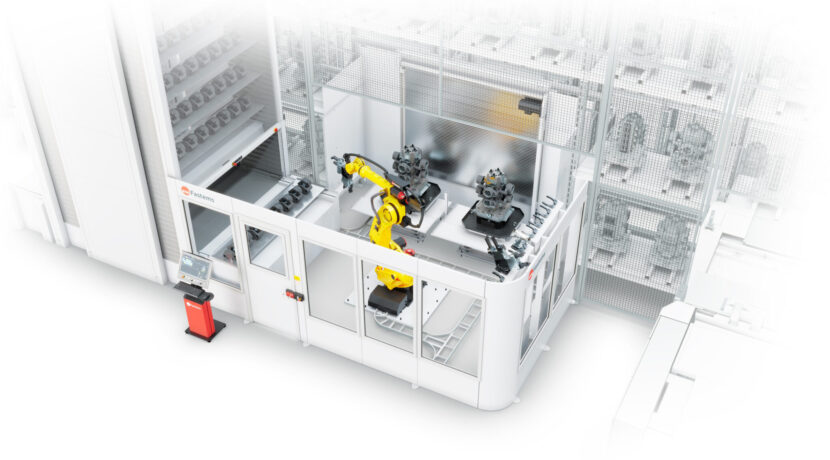
This role is visible in the Auto-Loading Cell, ALD. The ALD is designed to load and unload machining pallets in an FMS and is scheduled through MMS. Fastems positions it for applications where operators must frequently load pallets, or where expanding pallet storage would require too much floor space or additional fixture investment. The system can work with material stored inside the FMS or with external storage. It can also include operations such as deburring, marking, washing or finishing.
The central technical point is not only the robot, but its integration into the production schedule. Fastems states that MMS checks material availability, manages part instances on pallets, schedules gripper changes and logistics tasks, and provides traceability across the cell. That separates the concept from a stand-alone robot cell that simply responds to a machine request. In high-mix production, the value lies in treating the robot, fixtures, material and machine schedule as one constrained system.
Fastems also connects its AMB robotics presentation to turning and mill-turn automation. The Agile Manufacturing System, AMS, is described as a robot-based automation solution for direct machine tending, with configurable part routes, automated setup changes and payloads up to 1,000 kg. For manufacturers combining turning and milling work, this points to a wider development in factory automation: flexible handling is moving beyond palletized machining centers toward multi-process cells where routing, clamping and handling are planned together.
Software brings manual operations into production control
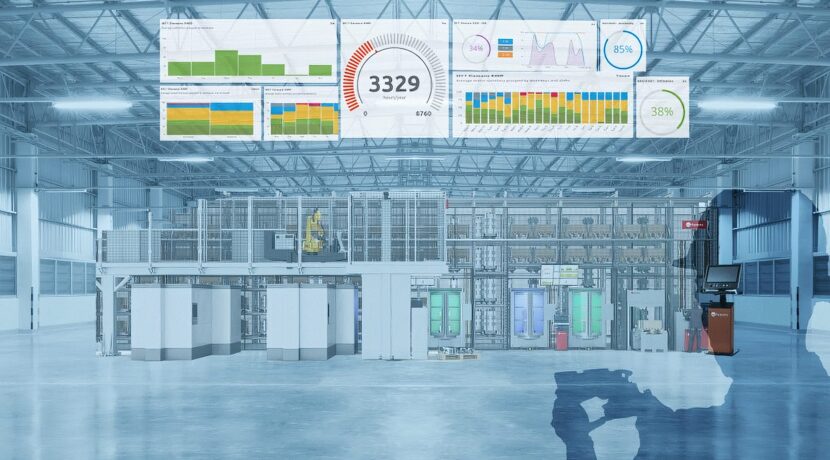
A notable part of the AMB presentation is Work Cell Operations, WCO. Fastems uses WCO to extend production planning beyond automated systems into manual or stand-alone operations such as sawing, washing, inspection, deburring and packaging. These steps are often still managed through spreadsheets, paper travelers or shift handovers, even in factories that already run automated machining cells. As a result, work in progress can become difficult to track, and the link between machine capacity and downstream operations can weaken.
WCO is positioned as an MES-type solution that can run as part of MMS or as an independent cloud solution. Its functions include paperless production, enhanced scheduling, resource management, material logistics task lists and clearer operator guidance. For managers, Fastems highlights capacity forecasting, KPI tracking and improved delivery planning. For operators, the emphasis is on knowing which task has priority and which resources are required next.
This matters because high spindle utilization depends on more than the machine queue. If parts wait for washing, inspection or packaging, the factory still carries work in progress and delivery risk. By including manual operations in the same planning logic, manufacturers gain a clearer view of constraints outside the machining cell. In high-mix production, that visibility can be as important as the automation hardware itself.
Analyzing bottlenecks before adding hardware
Fastems’ Productivity Lab at AMB fits into the same systems-based approach. The company invites visitors to analyze bottlenecks using system data and productivity assessments. That shifts the discussion from buying automation to identifying where utilization is actually being lost, whether through missing resources, waiting time, unclear priorities or work in progress between operations.
Fastems also mentions FMS Studio in its AMB newsletter as a tool for configuring an FMS and comparing layout scenarios. Public information in the newsletter is limited, but the function aligns with the broader message of the booth. Automation decisions are not only about selecting a pallet system or a robot. They also involve pallet capacity, machine access, loading station positions and possible expansion routes.
For machining companies working with variable orders and batch sizes, that planning step is practical. A compact pallet system may be enough for one shop, while another may need robotic loading or better control of manual work. By presenting pallet automation, robotics and software as connected elements, Fastems is framing high-mix automation as a production flow issue rather than a single-machine upgrade.