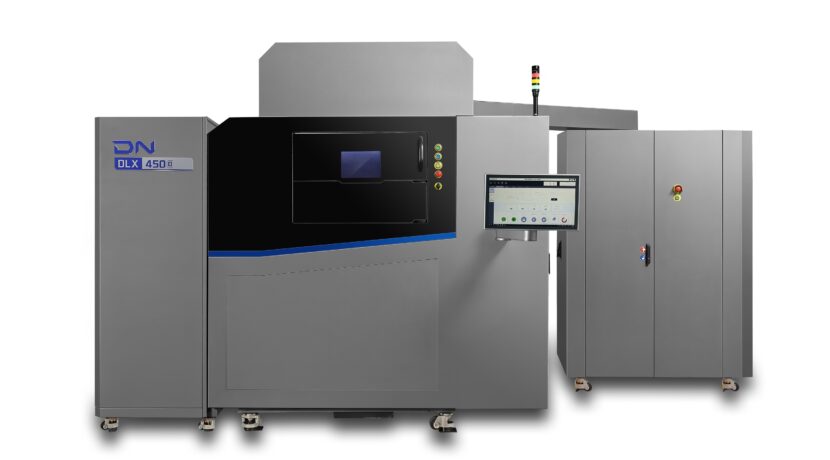

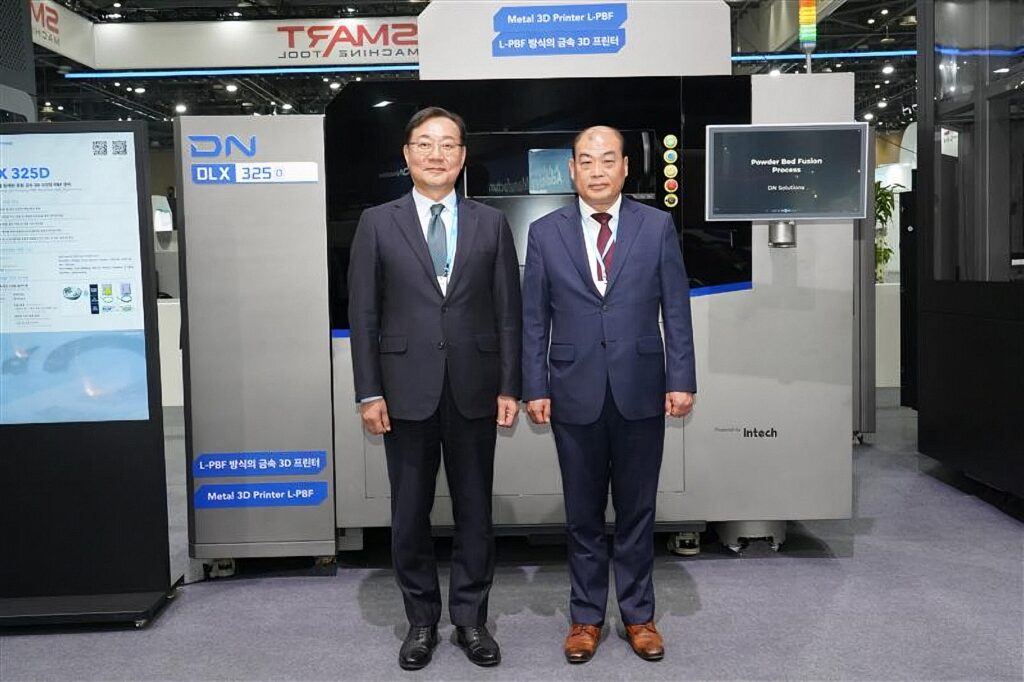
DN Solutions will supply additive manufacturing and post-processing systems to South Korean defense manufacturer LDAS. The agreement is relevant because it shows how metal additive manufacturing and CNC machining are being brought together for defense parts that require reliable quality, stable workflows, and faster development cycles from prototype to series production.
The contract is part of DN Solutions’ AM2CNC strategy, which connects additive manufacturing with CNC machining in one integrated production approach. Rather than treating 3D printing as a standalone step, the concept links design freedom with downstream machining and post-processing. For manufacturers working with complex components, this matters because printed parts often still require controlled finishing operations to meet functional and dimensional requirements.
LDAS develops and manufactures defense parts and systems, including silencers. With the new systems, the company aims to expand both prototyping and mass-production capacity. According to LDAS, the deployment of DN Solutions’ machines should help shorten product development lead times and further advance its manufacturing processes. For defense suppliers, that combination of faster iteration and consistent part quality is particularly important, as new designs must move from testing to repeatable production without losing control over the process.
Integrated additive manufacturing and machining workflows
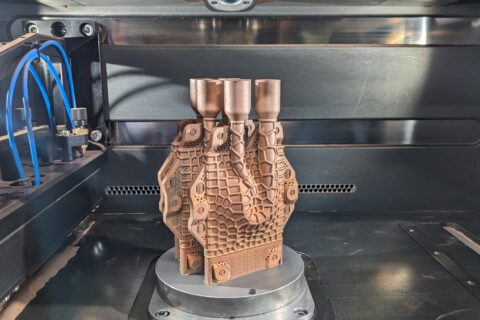
The technical focus of the partnership is the connection between additive manufacturing, CNC machining, and post-processing. Additive manufacturing offers design flexibility, especially for parts with complex internal or external geometries. CNC machining then provides the controlled finishing required when surfaces, interfaces, or functional features need tighter dimensional accuracy.
By linking these steps within a single manufacturing strategy, DN Solutions aims to reduce the gap between printed geometry and finished component. This is important in defense manufacturing, where part performance depends not only on the printed form, but also on the stability of the complete production route. A well-defined post-processing framework can help reduce variation between parts and support repeatable results when moving from prototype batches to larger production volumes.
For LDAS, the practical value lies in using additive systems for faster development while relying on machining and finishing operations to secure consistent output. That makes the workflow less dependent on isolated process steps and more focused on the full route from digital design to usable component.
AM2CNC moves beyond standalone 3D printing
DN Solutions presents the agreement as a real-world application of its AM2CNC strategy. The company has positioned the approach as a way to provide customized manufacturing solutions across multiple industries, with defense as one of the areas where process stability and productivity are central concerns.
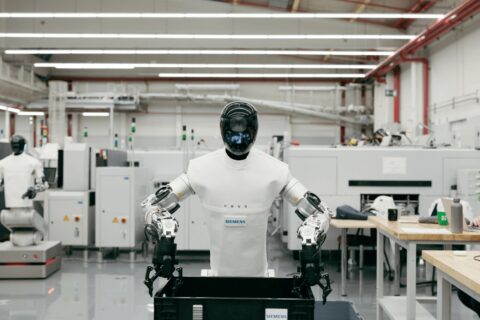
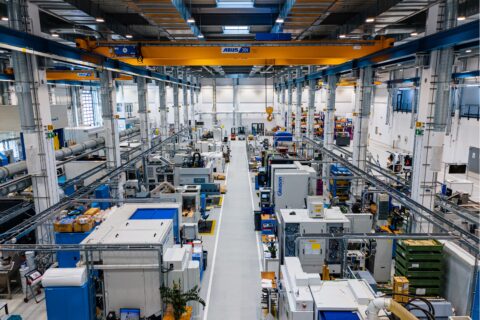
The relevance is not only the use of 3D printing itself, but the way it is embedded in the broader manufacturing environment. Many industrial users need additive manufacturing to fit into established production logic, including machining, inspection routines, automation concepts, and software-supported workflows. DN Solutions’ wider portfolio includes turning and milling machines, 5-axis systems, multi-tasking turning centers, automation solutions, and digital manufacturing software. In this context, AM2CNC reflects a move toward combined process chains rather than separate machine islands.
For production teams, that integration can make adoption more manageable. Additive manufacturing introduces design freedom, but the value is only realized when the printed part can be finished efficiently and repeatedly. The LDAS contract shows how suppliers are beginning to align additive capacity with conventional machining expertise to support demanding component production.