
Artificial intelligence is no longer only a test topic in metalworking. According to VDMA, many mechanical engineering companies have moved beyond early trials, while others are still using pilot projects to explore useful applications. At AMB 2026 in Stuttgart, AI will be discussed as a practical factor in production, services, development, and company processes.
AMB 2026 takes place from 15 to 19 September and will focus on automation, the circular economy, and artificial intelligence. For the metal cutting industry, the AI discussion is shifting from general interest to measurable use cases. Guido Reimann, Deputy CEO of VDMA Software and Digitalisation and coordinator of the VDMA Artificial Intelligence Competence Network, points to a clear change in the sector.
A VDMA survey from early 2026 shows that more than 80 percent of mechanical engineering companies now see AI technologies as more important. Around one third are already using AI in live environments. However, that does not mean the experimental phase has disappeared. Pilot projects still play a role, especially where companies want to understand the technology, test application limits, and identify where AI can bring real operational value.
AI Use Is Becoming Operational
Current AI use in industrial production is not limited to the machine itself. Reimann identifies software development, engineering and design, corporate governance, IT, marketing, and communication as important fields of application. Sales and product-related services are also seeing more AI solutions, particularly in the customer sectors of mechanical engineering.
For metal cutting companies, this broader view matters. AI is not only a production tool, but also a technology that can influence how products are developed, documented, sold, serviced, and supported. The practical benefit depends on where the bottleneck is. In some cases, AI may reduce manual work in documentation. In others, it may support service processes or help companies work faster across departments.
Reimann also stresses that companies need to keep control of their own digitalisation efforts. AI is not a stand-alone shortcut. Its potential depends on whether digital systems, data flows, and internal processes are sufficiently developed to support reliable use in daily operations.
Efficiency Gains Across the Value Chain
The efficiency expectations around AI are broad, but VDMA points to several concrete examples. AI can reduce costs when creating technical documentation and operating manuals. In procurement, it can save time and money by increasing the number of identical parts, which can improve purchasing conditions. In machine tool operation, AI-supported approaches may also help reduce unscheduled downtimes, with possible cost reductions of 10 to 20 percent.
These examples show why AI is attracting attention beyond IT departments. The gains are linked to familiar manufacturing concerns: fewer interruptions, faster workflows, lower avoidable costs, and better use of existing resources. In development, production, sales, and customer service, AI solutions can also help accelerate processes.
For decision-makers, the relevant question is therefore not whether AI is generally promising, but where it fits into the company’s own value chain. A useful application has to connect with a real process, available data, and a clear operational need. Without that connection, the technology remains a trial rather than a working improvement.
Implementation Remains an Organisational Challenge
According to Reimann, sustainable digitalisation is a prerequisite for AI and other digital technologies. This is where many companies still face obstacles. The barriers are often not purely technical. Change management, slow implementation, and a lack of personnel resources can hold projects back.
Other factors include decision-making structures, insufficient integration, and limited knowledge of what AI can and cannot do. These points are especially relevant in manufacturing environments, where systems, responsibilities, and process knowledge are closely linked. If an AI project is not embedded in daily workflows, it may fail to deliver value even when the technology itself works.
Reimann also notes that not every AI pilot will succeed. Recognising this early is important, because resources can then be redirected toward more effective digitalisation activities. For manufacturers, this is a practical management issue. Experimentation remains useful, but pilots need clear assessment points and a willingness to stop projects that do not support the business or production process.
AMB 2026 Puts Applications in Front of Users
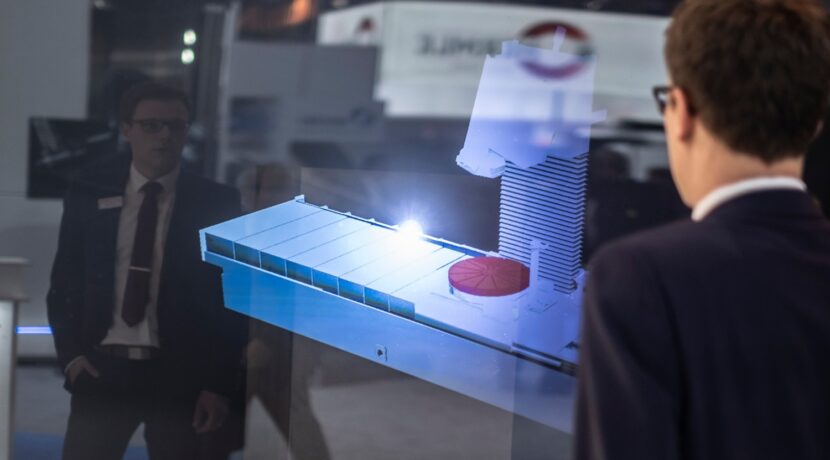
At AMB 2026, visitors can expect to see AI from several angles. Software providers are bringing solutions for product development, engineering, and software development. At the same time, mechanical engineering companies are integrating AI technologies into products and product-related services for metal cutting applications.
This mix is relevant because AI adoption in manufacturing rarely depends on one supplier category alone. Machinery manufacturers, production service suppliers, software companies, and service providers all play a role along the value chain. For visitors, the fair offers a way to compare how AI is being presented in machines, services, and supporting software, and to judge whether the applications fit their own production environment.
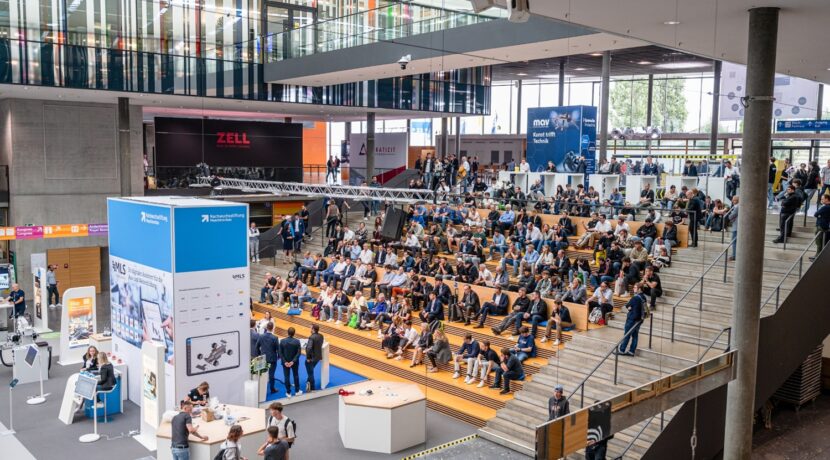
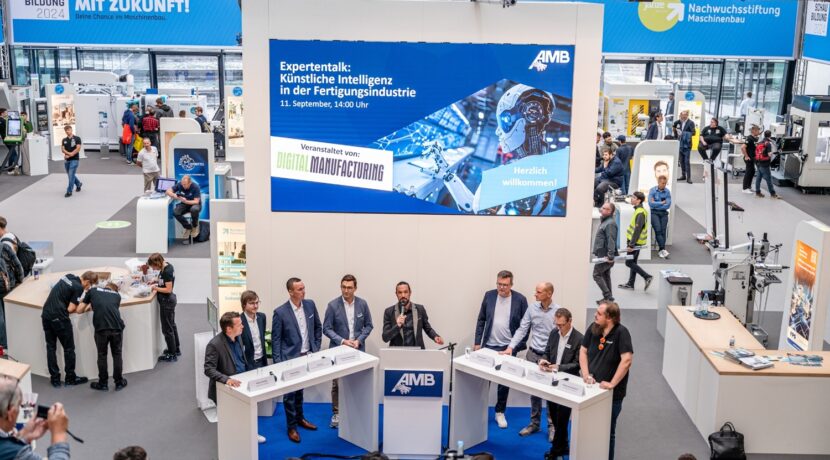
The topic will also be addressed on the AMB Stage on Wednesday, 16 September. VDMA Software and Digitalisation will host a podium discussion titled “Artificial Intelligence in Manufacturing, Practical Examples” from 12:00 to 13:30. An expert talk on “AI in Production, From Hype to Added Value” follows at 14:00, with representatives from industry and research discussing current developments, applications, and open questions.
Digital Technologies Will Shape Business Models
AI is only one part of a wider digital shift. Reimann points to industrial AI, the EU AI Act, humanoid robotics, and quantum computing as examples of developments that companies in the metal cutting industry should monitor over the next five years. Suppliers and users will need to deal not only with new technologies, but also with application scenarios and regulatory requirements.
The VDMA survey shows that mechanical engineering companies are currently prioritising three technologies in particular: artificial intelligence, digital twins, and open-source software. These technologies are becoming relevant not only for internal processes, but also for business models and customer industries.
For manufacturing companies, early recognition of these developments can help define where digital tools create value. That may be in engineering, production, service, procurement, or customer-facing processes. The common factor is that digital technologies are moving closer to the core of industrial work, where their value will be judged by reliability, integration, and measurable practical effect.