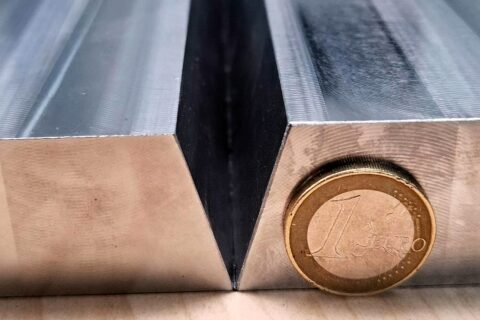

Fraunhofer IWS has developed a laser welding process for joining aluminum die-cast parts directly to one another. The approach could help automotive manufacturers build large structural components from smaller cast modules. This alternative could reduce reliance on a single large casting. By improving trapped-gas release during welding, the process aims to reduce defects in these difficult joints. Large aluminum die castings are increasingly used to produce vehicle body sections. These sections would otherwise consist of numerous joined components. Fraunhofer IWS is investigating a modular alternative. In this approach, two or more medium-sized castings are welded into a larger structure.
The institute developed the process, called REMOWELD DBO, for new vehicle body concepts. The work forms part of the Fraunhofer flagship project FutureCarProduction. Eight Fraunhofer institutes are examining casting, forming and joining processes. They are also studying the use of secondary materials. Their assessment covers material and product quality, repairability and crash safety. Fraunhofer IWS is focusing on laser welding for aluminum cast components and hybrid joints. The institute says the technology is available for further development and adaptation to specific applications. This includes changes to component geometries, material combinations and welding processes.
Controlling gas release during welding
Aluminum die-cast parts can contain pores and gas inclusions created during casting. In conventional laser beam welding, these defects can open as the material melts. Gas released into the weld can create new pores. It can also cause melt ejection, which compromises joint quality. REMOWELD DBO uses dynamic beam oscillation to widen the keyhole during welding. The keyhole is also known as the vapor capillary. Its wider opening allows trapped gases to escape more easily from the molten material. According to Fraunhofer IWS, this reduces porosity and uncontrolled melt ejection. As a result, the process produces denser welds with greater mechanical robustness. This distinction matters for structures subject to high loads. In these applications, joint quality forms part of the component design. Dr. Dirk Dittrich, group manager for laser welding at Fraunhofer IWS, says improved degassing enables cast-to-cast joints in highly stressed aluminum structures.
Designing large structures from modules
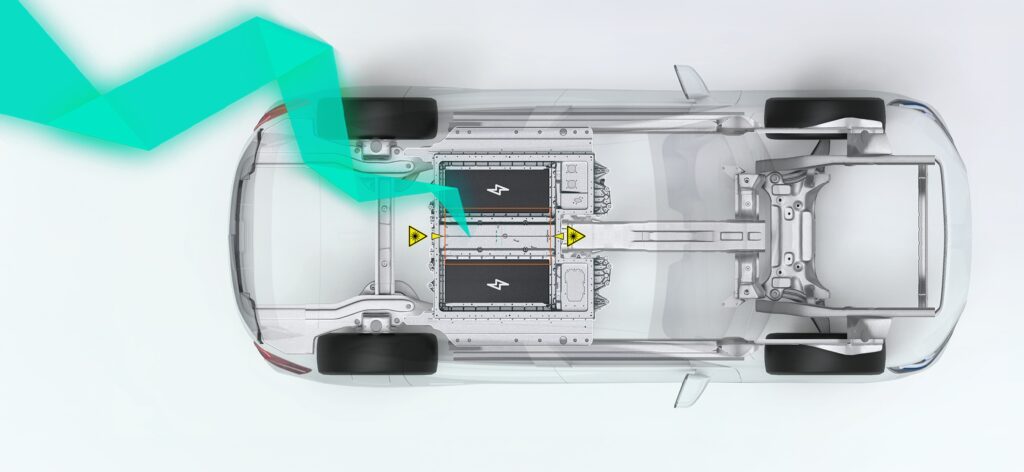
The process offers an alternative to producing a large component as a single casting. Fraunhofer IWS has identified battery trays, suspension strut towers, and front or rear vehicle structures as potential applications. A modular design allows individual cast parts to be adapted to their functions. This can involve changes to their geometry, wall thickness or material. Using smaller castings also reduces dependence on extremely large die-casting machines. Fraunhofer IWS says more controllable casting processes can reduce material losses. However, the parts must be joined reliably to create the finished assembly.
Material selection is another area of interest. A complex casting may require one alloy to meet every functional requirement. A modular structure could instead incorporate secondary aluminum alloys where their properties suit the application. The institute sees potential to increase recycled content and reduce the carbon footprint. The approach could also create additional options for lightweight component design. The researchers are working with automotive manufacturers, die-casting producers, engineering service providers and machine manufacturers. Their work focuses on adapting the joining process to specific components and material combinations.