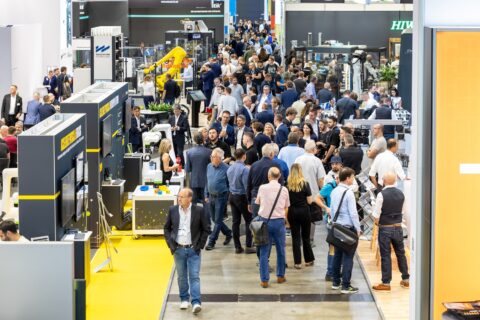

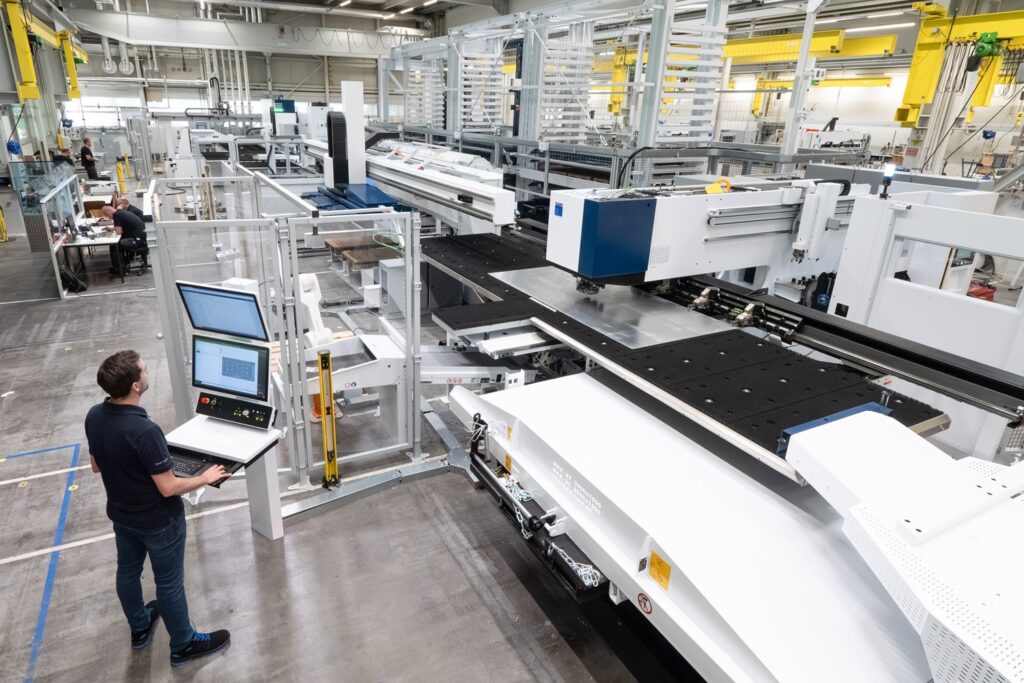
TRUMPF has introduced a new generation of its TruPunch 5000 punching machine. It adds digital monitoring, simplified setup and more flexible automation. The development responds to rising demand for punched sheet-metal parts. This demand is particularly strong in the energy and electronics sectors. At EuroBLECH, TRUMPF will show the machine as a standalone production resource. It will also present the machine within a directly linked punching and bending system.
The new TruPunch 5000 retains the performance figures of its predecessor. However, it expands the digital functions surrounding the machine. TRUMPF aims to reduce non-productive time and improve visibility of operating conditions. The system also supports unattended production. These functions benefit manufacturers handling high volumes and changing part ranges. Machine availability, setup work and material flow can directly affect throughput. The machine is intended for applications such as control cabinets, data-center components, delicate panels and functional sheet-metal parts.
Digital monitoring extends production visibility
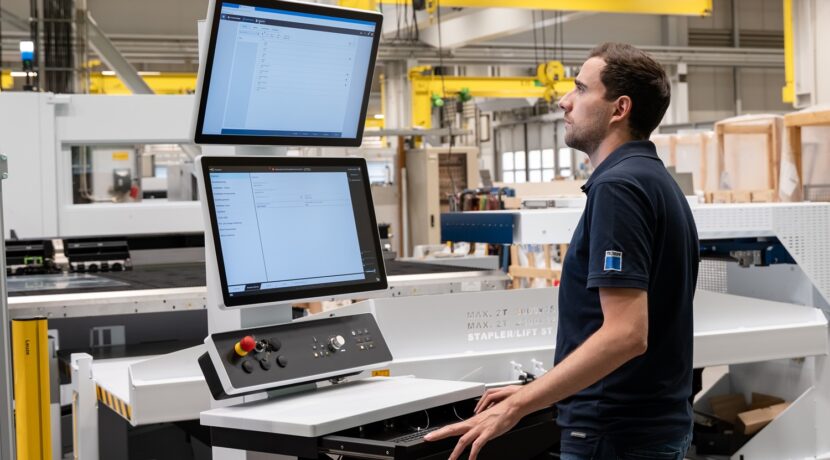
A new control system provides the basis for the added digital functions. It transfers process and status data to TRUMPF’s Smart View service. Operators can access this information through a dashboard from any location. The objective is to identify potential downtime early. Production staff can then intervene before the issue affects output. The system also includes Vision Equipment Pro. Up to ten cameras monitor the working area. Operators can view the camera images remotely, including from the setup station. A second monitor at the machine can display these images. It can also show production information from TRUMPF’s Oseon software. Staff therefore have access to machine status and visual information without remaining at the machine.
TRUMPF also plans to enable updates without requiring a service technician on site. Its Remote Operation Support service is planned for the TruPunch 5000. The service will allow TRUMPF to remotely diagnose faults at a customer’s site. According to TRUMPF, these functions can support overnight production without a continuous staff presence. Their practical value lies in combining machine data, visual monitoring and remote support. These functions operate within one environment rather than as separate tools.
Setup changes target non-productive time
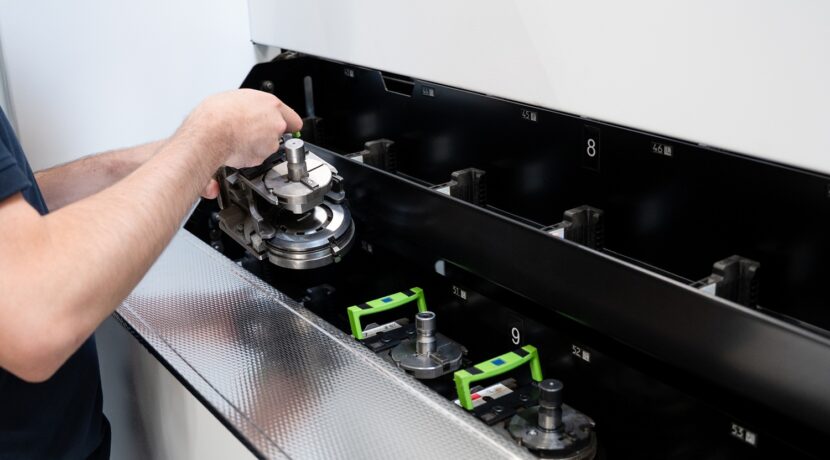
Alongside the digital additions, TRUMPF has revised machine operation and tool setup. An updated safety concept is intended to shorten operator walking distances. It also aims to reduce time spent away from productive work. This can be particularly relevant when frequent tool changes or varied job schedules make setup a significant part of processing time. The ToolMaster Linear tool changer now includes an additional display at the setup station. Operators can view the required tool information while preparing the tools. Locating this information at the station is intended to accelerate setup. It can also reduce handling errors.
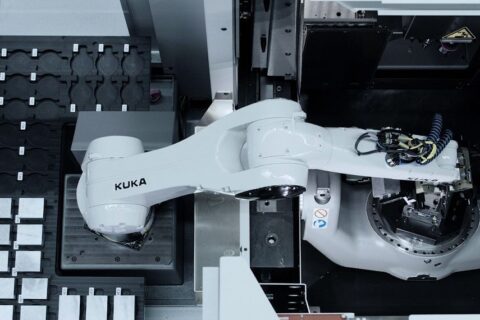
The control system is designed to support future automation functions. At EuroBLECH, TRUMPF is presenting an AI-supported solution for sorting small parts. Cameras detect the position of the parts. A robot can then pick and sort them without programming effort. The approach aims to reduce manual sorting work and waiting time when handling small punched components. The punching machine continues to provide a punching force of 22 tons. It processes sheets up to eight millimeters thick at rates of up to 1,600 strokes per minute. In addition to punching, the machine can create formed features. These include embossments and drawn forms. Its active die is intended to support low-scratch surfaces and greater forming heights. It also supports stable processing during demanding punching and forming work.
Flexible linking between punching and bending
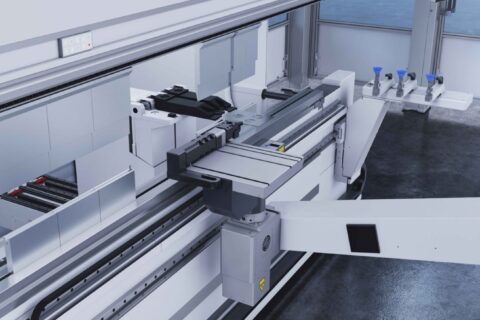
TRUMPF will also demonstrate the TruPunch 5000 in a directly linked production system. The system includes a TruBend Center 7030 bending cell. In this arrangement, a SheetMaster automation system places punched components on a buffer conveyor. The conveyor moves the components to the bending cell. There, a manipulator picks up the parts for bending. Unlike a fixed line configuration, the system allows alternative material routes. Components can return to storage or be transferred to a mobile robot for further transport. The linked system can therefore handle different component types without sending every part through the same sequence.
The buffer storage system is intended to balance different processing speeds between punching and bending. If one machine has a higher workload, the buffer can hold components until the next process becomes available. Leftover sheets can also be used in parallel for other processes. As a result, the punching machine and bending cell can continue operating at their respective capacities. This remains possible even when their cycle times do not match. For sheet-metal fabricators, the arrangement addresses a recurring issue in linked production. It maintains automation without making material flow too rigid. The system allows users to define the route for each part. At the same time, it keeps both machines supplied with work.