
Indonesia’s rapidly expanding primary aluminium capacity is increasing demand for casting, thermal processing and downstream manufacturing. GIFA and METEC Indonesia will take place from 9 to 12 September 2026 in Jakarta. The event will introduce a new Aluminium Pavilion. It reflects a market where rising smelting output is creating demand for equipment and process technology across the metallurgical value chain. According to Shanghai Metal Markets, Indonesia’s operational primary aluminium capacity is expected to increase from about 870,000 tonnes in 2025 to approximately 2.51 million tonnes in 2026. This represents a 188 per cent increase in one year. A further rise to 3.56 million tonnes is forecast for 2027.
Indonesia has already become a net exporter of primary aluminium, according to CRU analysis. Shipments go to markets including China, Vietnam and South Korea. Exports reached their highest level in 28 months at the beginning of 2026. New volumes are also being sent to the United States and Europe. At the same time, Indonesia still imports substantial quantities of processed aluminium. These products include unwrought material, plates, foil, structures and automotive components. This gap between primary output and domestic processing capacity is creating new opportunities for technology suppliers.
Aluminium Pavilion targets downstream investment
The Aluminium Pavilion will debut during the third edition of GIFA and METEC Indonesia. It will bring together technologies, materials and services for an aluminium sector moving beyond primary production. This development supports Indonesia’s policy of increasing domestic value creation from raw materials. Since the export ban on unprocessed bauxite was introduced in 2023, more raw material has been directed towards domestic refining and smelting. The next question is how this metal will be processed into industrial products. Foundry equipment, thermal process systems, simulation software, quality control systems, material handling and downstream processing machinery will all become relevant as new capacity comes on stream. For producers, these investments affect process stability, energy use, product quality and the ability to serve demanding application sectors.
Automotive production is one key area of demand. The Asia-Pacific region accounts for almost half of global die casting demand. Indonesian die casters and processors must also have access to aluminium grades that meet international automotive requirements. Electrification and renewable energy generate further demand. The International Aluminium Institute identifies electric vehicles and solar module production as important drivers of aluminium consumption up to 2030. Aluminium is used in lightweight vehicle construction, photovoltaic frames and cabling.
Thermal efficiency and casting control in focus
The technology range at GIFA and METEC Indonesia covers foundry and continuous casting systems, furnace and thermal process technology, simulation and automation. It also covers metal analysis, machining and raw material processing. These areas become more important as production moves from smelting to complex downstream operations. Energy is a major factor in aluminium production costs. According to the event information, it accounts for 30 to 35 per cent of costs. Furnace efficiency therefore has a direct effect on margins. EBNER Industrial Furnaces will present thermal process solutions. KALFRISA focuses on combustion and thermal process optimisation. Cunova specialises in continuous casting systems for copper and aluminium. Meanwhile, MAGMA Engineering Asia Pacific will show simulation tools for modelling and optimising casting processes.
The wider market environment increases the urgency of investments in production capacity and processing capability. S&P Global forecasts a global aluminium supply deficit of around 764,000 tonnes in 2026. Disruptions at Middle Eastern smelters and supply chain volatility have also increased aluminium prices and regional premiums. For Indonesian producers, expanding primary output creates an opportunity to supply more than export metal. However, downstream capacity must develop alongside it.
A platform across the metallurgical chain
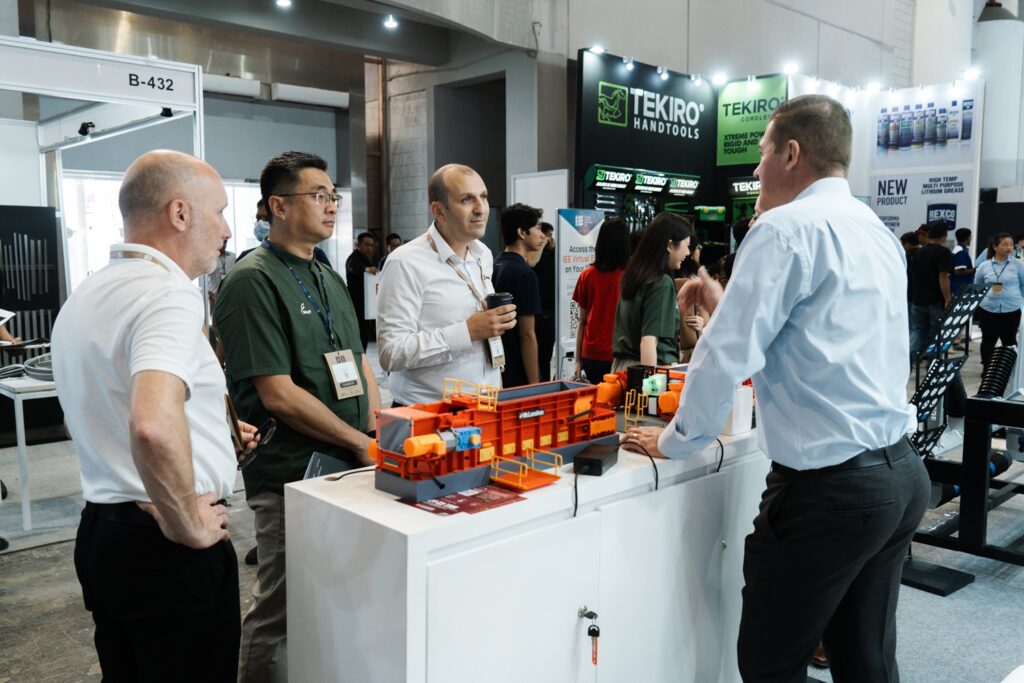
Around 200 exhibitors and 6,000 trade visitors are expected at Jakarta International Expo Kemayoran. Participating companies will come from Indonesia, Austria, China, Germany, India, Italy, Singapore and Spain. GIFA and METEC Indonesia will take place alongside the 20th edition of MINING Indonesia. Together, the events will bring mining, raw material processing, metallurgy and foundry technology into the Indonesia Energy and Engineering Series. The events address different positions in the aluminium value chain. Smelter operators and primary producers can assess technologies for thermal processes, efficiency and quality assurance. Foundries, die casters and processing companies will find systems for simulation, digital quality control and automation.
Automotive, infrastructure and energy sector companies can gain insight into Indonesia’s developing production capabilities. For international equipment suppliers, the relevance lies in the combination of expanding smelting capacity and continued reliance on imported processed aluminium products. As Indonesia increases domestic processing, technical requirements will move beyond volume alone. Reliable casting, controlled thermal processing and industrial-scale downstream production will therefore become increasingly important.