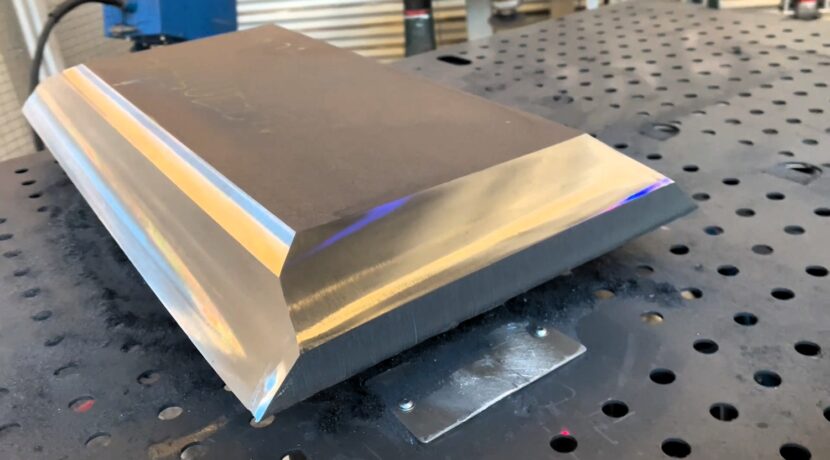

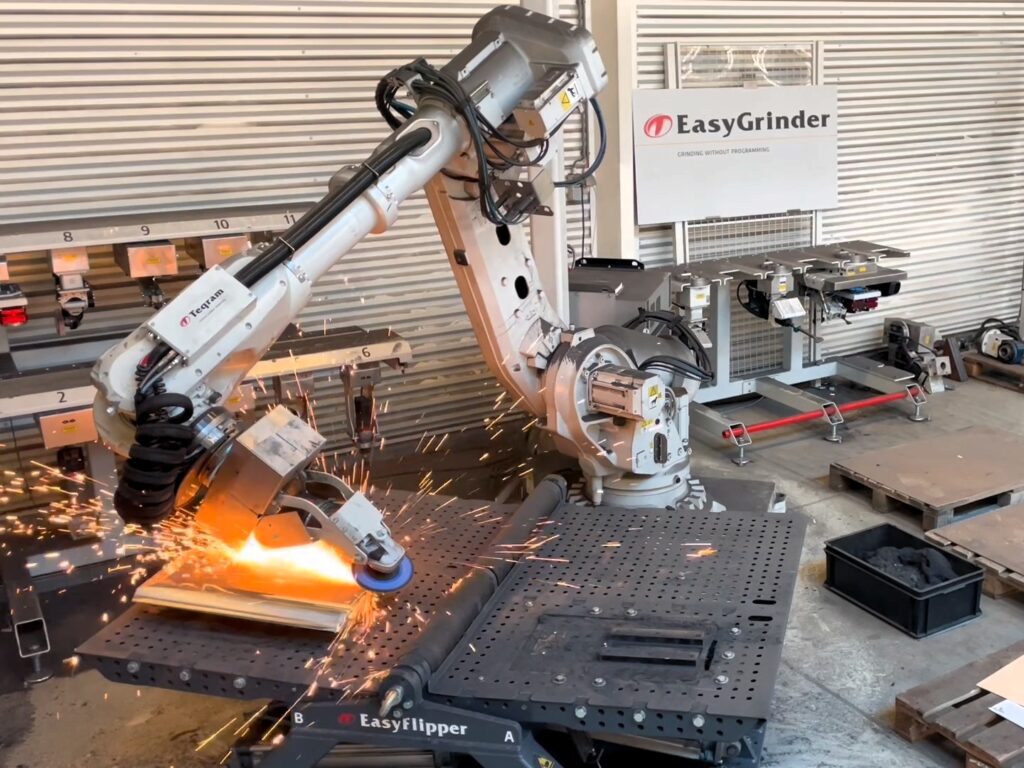
Teqram will present an extended version of its EasyGrinder at EuroBLECH 2026 in Hanover. The AI-driven grinding robot can now produce and finish weld bevels. It can also deburr and grind cut sheet metal parts. This development brings weld seam preparation into a single automated process. It is aimed particularly at manufacturers working with medium-gauge and heavy plate.
The EasyGrinder performs autonomous finishing operations. These include burr removal, lead-in point removal, edge rounding to R3 and surface cleaning. Its new beveling capability extends this role from finishing cut parts to preparing them for welding. The robot can remove oxide scale, heat-affected zones and other residues. It can then produce the required weld bevel without separate machining operations. This is relevant when parts must move quickly from thermal cutting to welding. Conventional weld preparation can involve several handling stages. It may also require manual grinding or separate milling operations. Combining these tasks in one system can reduce intermediate handling and work-in-process inventory. It can also make the process more consistent. Teqram positions the new functionality for companies seeking automation despite a growing product mix, small batch sizes and one-off orders.
Automatic programming from geometry data
The extended system generates its machining program from a geometry file containing weld seam information. Therefore, no manual programming or teach-in is required for each product. This can reduce programming and setup work in production environments with frequent part changes. Before machining begins, the EasyGrinder uses 3D vision to detect the part’s actual geometry and position. AI-based control then uses this information to correct deviations during processing. According to Teqram, the system can recognise and follow complex contours without additional programming. The approach is intended to maintain consistent machining results when part position or geometry varies.
This is particularly important in weld preparation. Oxide scale, slag, burrs, lead-in points and heat-affected material can affect the edge condition before welding. The system can combine residue removal with grinding, edge rounding and beveling. As a result, the grinding cell can take on a broader role in the production process. Rather than operating as a separate finishing station, it can form an automated link between cutting and welding. Skilled personnel can then focus on tasks that are less suitable for robotic processing.
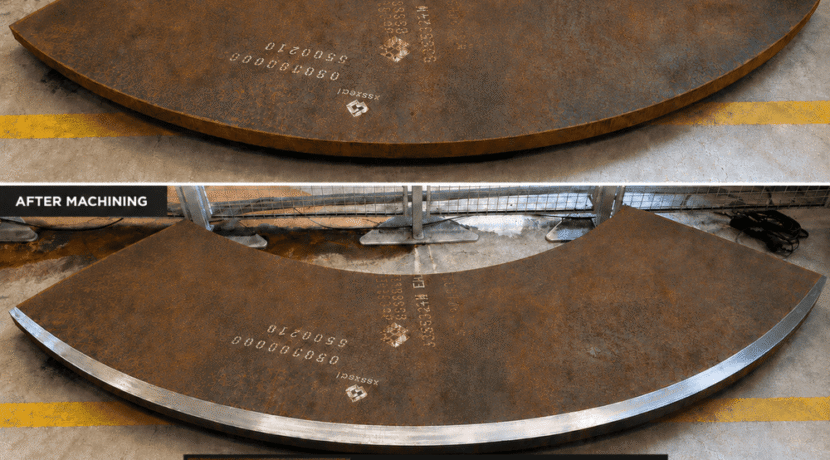
A single process for cutting post-processing
Manual grinding, nibbling and milling are commonly used to produce weld bevels. Their suitability, however, depends on the contour and process route. Nibbling is mainly used for straight contours. It can leave a relatively rough surface. Milling can deliver a high degree of accuracy, but it may require additional process steps and NC programming. Parts must also be cleaned and deburred beforehand.
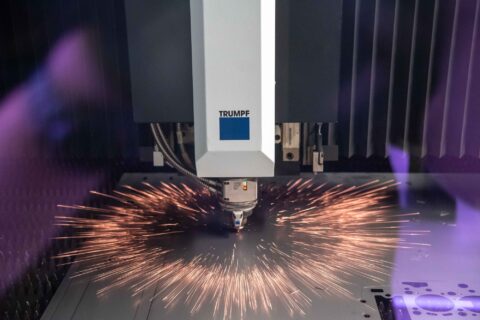
Teqram’s system is designed to perform several of these preparatory operations in one automated sequence. The company states that its machining speed also supports efficient production of larger bevels. This can reduce the need for additional operations in many cases. For thicker plate, laser, plasma and oxyfuel cutting remain efficient methods for producing large weld bevels. These methods are fast and economical for larger bevels. However, they require post-processing before welding. Oxide scale, slag, burrs, lead-in points and heat-affected zones must be removed. This creates suitable conditions for a reliable welded joint.
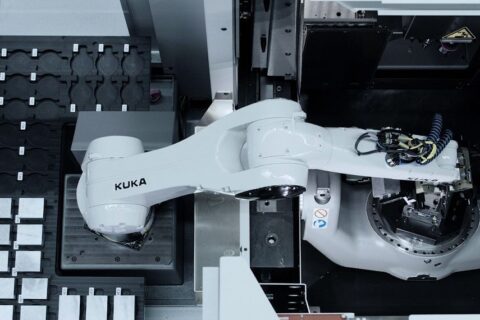
The EasyGrinder is positioned as an automated post-processing solution for this stage. For plates up to 30 mm thick, or thicker plates with a small bevel, Teqram describes the system as an alternative to a milling machine. The robot can pick up parts, position them for machining and stack them after processing. It handles parts weighing up to 600 kg. The maximum part dimensions are 4 × 1 metres or 1.6 × 1.6 metres. Automated handling removes the need for crane movements and manual intermediate steps. This can shorten throughput times while reducing physically demanding grinding work. Teqram will demonstrate the new EasyGrinder functionality at EuroBLECH in Hanover from 20 to 23 October 2026. The system will be shown in Hall 13, Stand F182.