About YAMAZAKI MAZAK

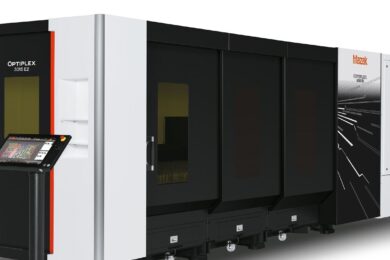
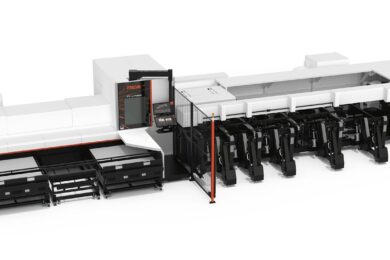
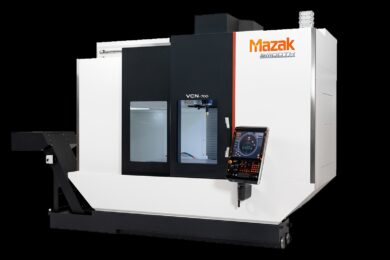
Yamazaki Mazak is a global manufacturer of advanced machine tools and manufacturing solutions. Founded in Japan in 1919, the company has grown into one of the world’s leading suppliers of technology for the metalworking industry. Its portfolio includes multi-tasking machines, 5-axis machining centres, CNC turning centres, vertical and horizontal machining centres, laser processing machines, automation systems, CNC systems, CAD/CAM solutions and production support software.

Complete manufacturing solutions

Mazak focuses on helping manufacturers improve productivity, accuracy and process reliability. The company is known for combining machining performance with process integration, automation and digital manufacturing technology. Its machines are used for a wide range of applications, from turning, milling and 5-axis machining to laser cutting, flexible manufacturing and complete production systems.

Broad technology portfolio

Mazak’s strength lies in the breadth of its product range. The company supplies machine tools for individual operations as well as integrated solutions for complete part production. Multi-tasking machines make it possible to combine turning, milling and other operations in one setup, while 5-axis machining centres support the production of complex, high-precision components. Mazak also offers laser processing machines, automation systems, smart factory solutions, monitoring tools, production planning software and tool management solutions.

Global manufacturing network

Yamazaki Mazak has a strong international manufacturing footprint. The company operates 11 manufacturing plants worldwide, including five in Japan, two in China, and one each in the United Kingdom, the United States, Singapore and India. This global production network allows Mazak to serve manufacturers in different regions with machines, technology and support tailored to local market needs.

Worldwide support and application knowledge

In addition to its manufacturing plants, Mazak supports customers through a worldwide network of technology centres and technical centres. These facilities give customers access to machine demonstrations, application engineering, process advice, training and technical support. According to the company, Mazak has 84 support bases worldwide, including 37 Technology Centres and 47 Technical Centres.

Industries served

Mazak technology is used across a wide range of industries, including general machining, subcontracting, aerospace, automotive, energy, medical, construction equipment and other high-value manufacturing sectors. Its solutions are particularly relevant for companies that need to improve throughput, reduce setup times, machine complex parts and maintain high levels of accuracy and repeatability.

Innovation and sustainability

Innovation is central to Mazak’s development strategy. The company continues to invest in automation, digital production, machine efficiency and technologies that support more sustainable manufacturing. Its focus is not only on machine performance, but also on reducing downtime, improving energy efficiency and supporting customers throughout the full lifecycle of their production equipment.

Company profile

With more than a century of experience, a broad machine portfolio and a global network of manufacturing and support locations, Yamazaki Mazak is a key technology partner for modern manufacturing companies. The company combines machine tool expertise, automation, software, application support and service into integrated solutions that help manufacturers produce more efficiently, accurately and reliably.

YAMAZAKI MAZAK History

In 1919, in Nagoya, Japan, Sadakichi Yamazaki opened a small business called Yamazaki Machinery. At first, it did not build the advanced machine tools for which Mazak would later become known. It made straw mat weaving machinery, practical equipment for a country still shaped by traditional manufacturing. But Yamazaki was looking ahead. By 1927, the company had begun producing machine tools, including lathes and milling machines. A year later, it developed its first commercial machine tool.

The first steps abroad

The company grew through the difficult decades that followed. In 1934 it developed its first motor-drive roll lathe. After the war, Teruyuki Yamazaki joined the company in 1946, bringing the next generation into the business. By 1959, Yamazaki Machinery was building high-speed, high-accuracy lathes. Two years later, its machines left Japan for Indonesia. In 1962 came a decisive step, a large export contract for 200 lathes to the United States.

The Mazak name goes global

The name Mazak appeared in 1963, when the company announced the brand and began mass production of Mazak lathes. International expansion followed quickly. A U.S. company was established in New York in 1968, the same year Mazak developed its first NC lathe, the MTC series. In 1970, Mazak introduced its first machining centre and opened an office in Düsseldorf, giving the company a stronger base in Europe.

CNC changes the factory

The 1970s and 1980s turned Mazak from an exporter into a global manufacturer. Its Greater Cincinnati facility was completed in 1974, making Mazak one of the first Japanese machine tool builders to start overseas production. In 1981, the company introduced the MAZATROL T1, described by Mazak as the world’s first conversational CNC system for lathes. That same period also brought unmanned night-time production at Oguchi, early flexible manufacturing systems, multi-tasking machines and, in 1984, a CO₂ laser processing machine.

Building flexible production

By the 1990s, Mazak was building not only machines, but production concepts. The UK operation gained recognition, including the Queen’s Award for Export Achievement. The company introduced expandable pallet systems, the INTEGREX 200Y multi-tasking machine, the Oguchi Cyber Factory, MAZATROL FUSION 640 and the VARIAXIS 200 five-axis machine. These developments pointed toward connected, flexible and automated manufacturing.

Towards smart factories

In the new century, Mazak continued to combine machine design with digital control. It launched the INTEGREX e series, the NEXUS series and MAZATROL MATRIX, then opened major technology and research centres in Japan and Europe. From 2014 onward, the focus shifted further toward intelligent production, with MAZATROL Smooth controls, hybrid multi-tasking machines, the iSMART Factory concept and SMARTBOX for industrial connectivity.

More recent milestones include the Inabe plant, blue laser additive manufacturing, AI-assisted spindle technology, MAZATROL SmoothAi, the Yamazaki Mazak Museum of Machine Tools, NEO series machines, iCONNECT web services, cobot loading systems, new fibre laser machines, friction stir welding and the start of production at Mazak’s India manufacturing plant in 2023. From straw mat machinery to smart factories, Mazak’s history is the story of a workshop that kept learning from industry, and kept building what came next.

View the full Mazak timeline here.

Mazak’s manufacturing network reflects how the company expanded from a Japanese machine tool builder into a global producer of advanced manufacturing technology. The company states that it currently operates 11 manufacturing plants worldwide, with five in Japan, two in China, and one each in the United Kingdom, the United States, Singapore and India. That footprint gives Mazak production capacity in Asia, Europe and North America, close to several of the world’s major manufacturing regions.

Japan remains the centre

Japan remains the core of Mazak’s production structure. The World Headquarters and Oguchi Plant are located in Aichi Prefecture, while the Minokamo Plant 1 and Minokamo Plant 2 are based in Gifu Prefecture. The Inabe Plant and Seiko Plant are both located in Mie Prefecture. Together, these sites form the backbone of Mazak’s manufacturing base, combining headquarters functions, machine production and specialist manufacturing capabilities within a relatively concentrated industrial region.

This Japanese base is important because it connects product development, engineering knowledge and production experience. For machine tool builders, that link is critical. CNC turning centres, machining centres, multi-tasking machines and laser processing systems require a high level of process control, repeatability and assembly quality. Keeping a strong manufacturing base close to engineering and headquarters functions helps maintain consistency across product generations and supports the transfer of know-how to overseas plants.

Production close to key markets

Mazak’s overseas manufacturing network shows a deliberate shift toward regional production. In North America, Mazak Corporation operates from Florence, Kentucky, which also serves as the North American headquarters. In Europe, Yamazaki Mazak U.K. Ltd. is based in Worcester and functions as the company’s European headquarters. These plants place production closer to customers in two mature machine tool markets, where delivery times, service support and local application knowledge are important purchasing factors.

The UK site is particularly relevant for European manufacturers. A regional production base can support shorter communication lines between machine builders, distributors, service teams and end users. For customers in sectors such as aerospace, subcontract machining, automotive supply and general engineering, that proximity can matter as much as the machine itself. It supports application engineering, training, spare parts availability and long-term service.

Strong presence in Asia

Mazak’s Asian footprint extends beyond Japan. The company lists two manufacturing plants in China, Ningxia Little Giant Machine Tool Co., Ltd. in Yinchuan and Yamazaki Mazak Machine Tool Liaoning Co., Ltd. in Dalian. It also operates a plant in Singapore and a manufacturing facility in Pune, India. These locations position Mazak close to fast-developing industrial markets where demand for CNC machining, automation and higher productivity continues to grow.

For the machine tool sector, this type of distributed manufacturing is not only about volume. It also reflects the need to respond to different market conditions. Manufacturers in China, India and Southeast Asia vary widely in scale, automation level and technical requirements. A global plant network gives Mazak a stronger platform to serve both high-end users and companies moving from conventional equipment to more advanced CNC production.

Global scale with regional support

Mazak’s 11-plant structure shows how machine tool production has become both global and regional. Core technology, process knowledge and brand standards remain tied to the company’s Japanese roots, while production in the US, UK, China, Singapore and India brings the company closer to customers and supply chains. For manufacturers investing in capital equipment, that combination of global scale and regional support is a practical advantage.

View Mazak’s full manufacturing plant overview here.

Mazak’s global support structure is built around Technology Centres and Technical Centres located across Europe, Japan, Asia and the Americas. These sites are not only sales offices. According to Mazak, they are intended to provide prompt support to customers worldwide, with access to technology solutions, application advice, equipment consulting and training. For manufacturers investing in CNC turning, milling, laser processing or automation, that local support network is a practical part of the machine investment.

Technology Centres as application hubs

Mazak describes its Technology Centres as support bases where customers can see the latest applications, receive advice on parts machining and discuss equipment requirements. That makes them important for manufacturers that need to assess more than machine specifications. In practice, cycle time, workholding, tool strategy, automation options and operator training often determine whether a new machine reaches its expected output. A regional technology centre can support that process before and after installation.

The network is broad. In Europe, Mazak lists Technology Centres in the United Kingdom, Germany, France, Italy, the Czech Republic, Poland, Denmark, the Netherlands, Turkey, Belgium and Hungary. Japan has several centres, including the World Technology Centre in Minokamo City, while Asia is covered through sites in Singapore, China, Taiwan, India, Thailand and Korea. In the Americas, Mazak lists centres in the United States, Canada, Mexico and Brazil.

Regional access matters

For machine tool users, support location has direct operational value. A five-axis machining centre, multi-tasking machine or fibre laser is often part of a larger production cell. When a manufacturer changes materials, introduces a new component or adds automation, it may need application engineering rather than only spare parts. Local centres can shorten the distance between the customer, the machine builder and the technical specialists who understand the process.

Mazak’s European network is especially relevant for manufacturers working across different industrial regions. The page lists a European Technology Centre in Worcester, several German sites, and centres in countries including France, Italy, Poland, the Netherlands and Belgium. This distributed setup gives Mazak a platform for demonstrations, training and service coordination close to established manufacturing clusters.

Technical Centres extend the network

Alongside the Technology Centres, Mazak also lists Technical Centres. These include locations in Europe, Japan, Asia and the Americas, with additional coverage in countries and regions such as Austria, Portugal, Romania, China, India, Indonesia, Vietnam, Malaysia and several U.S. regions. The structure suggests a layered support model: larger Technology Centres for demonstrations and application development, supported by Technical Centres that bring service and technical contact points closer to users.

That model reflects the reality of modern machining. Machine availability, operator knowledge and process stability are central to productivity. A strong support network can help customers move from machine purchase to stable production more quickly, particularly when introducing complex technologies such as multi-tasking, five-axis machining, laser cutting, additive manufacturing or automation.

View the full overview of Mazak’s Technology Centres here.

Mazak presents decarbonisation not as a separate corporate programme, but as part of machine development and factory performance. The company has set a target to reduce its carbon footprint by 50% by 2030 compared with 2010 levels. To support that goal, it is promoting its “Mazak Go GREEN” activity, aimed at reducing CO₂ emissions across the full product life cycle, from development and customer use to disposal.

For machine tool users, that approach is relevant because most environmental impact is not limited to the manufacturing of the machine itself. Mazak states that CO₂ emissions over a machine tool’s life cycle are largest during use at the customer’s factory. In metalworking, that makes energy consumption, process integration, coolant control and machine utilisation central factors in reducing emissions.

Data from the factory

Mazak links its environmental strategy to data from products installed in its iSMART Factory. The company says this data is used to develop energy-saving technology and more energy-efficient products. That reflects a wider direction in machine tool engineering, where improvements increasingly come from monitoring real production behaviour rather than only improving individual components in isolation.

The company visualises CO₂ emissions across five stages: procurement, production, sales, usage and disposal. This life-cycle view is important because it shifts attention from a single machine specification to the full operating context. A highly productive machine can have a lower environmental impact when it reduces idle time, combines several operations, cuts scrap, lowers coolant demand or shortens the total machining process.

MAZATROL and process integration

Mazak places its MAZATROL CNC systems at the centre of its environmental approach. According to the company, its machine tools can combine high productivity with lower environmental impact through process integration, energy-saving equipment, optimised control of coolant equipment, AI, digital technology and automation systems.

This is an important point for machining companies. In practice, sustainability in metalworking is often achieved through fewer setups, shorter cycle times, reduced auxiliary consumption and more stable processes. A multi-tasking machine, for example, can reduce transport between machines and limit work-in-progress. Automated loading can improve spindle utilisation. Digital monitoring can reveal energy peaks, inefficient standby periods or unstable processes that lead to rework.

NEO series and energy reduction

Mazak highlights the NEO series as a concrete example of its environmental development. The company states that the series reduces power consumption by 46% compared with conventional models, while maintaining high productivity and high-accuracy machining performance.

For manufacturers, that kind of reduction has both environmental and operational relevance. Energy costs have become a more visible factor in production planning, particularly for companies running multiple shifts or energy-intensive equipment such as laser processing machines and large machining centres. Lower power consumption can also support customers with carbon reporting requirements in supply chains, especially in sectors where OEMs increasingly ask suppliers to document emissions.

Productivity without trade-offs

Mazak’s environmental strategy is based on the idea that decarbonisation should not come at the expense of productivity. The company names four main routes: energy-saving technology, resource saving and waste reduction, use of AI and digital technology, and process integration. Together, these measures target both direct machine energy use and the broader efficiency of the production process.

That position fits the reality of modern manufacturing. Most machining companies cannot reduce emissions by simply slowing production or accepting lower output. They need machines and processes that cut energy use per part, reduce scrap and make better use of available capacity. Mazak’s strategy therefore connects environmental performance with the same issues that already drive investment decisions in metalworking: uptime, process stability, automation, accuracy and total cost per component.

View Mazak’s full environmental strategy here.

YAMAZAKI MAZAK CONTACT

Yamazaki Mazak Logo

Visit websiteContact Yamazaki Mazak

Latest News

YAMAZAKI MAZAK Products & Services