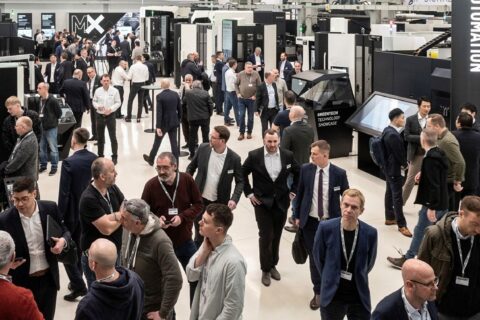
GrindingHub 2026 is fully booked, with around 460 exhibitors from 28 countries set to present their technologies in Stuttgart from May 5 to 8. In a market shaped by cost pressure, uncertainty, and the need for efficiency gains, that level of participation underlines the continued importance of grinding as a production technology and of the trade fair as a meeting point for practical solutions.
The exhibitor level is comparable to that of 2024, according to organizer VDW. That matters because the current environment for grinding technology is anything but straightforward. Rising energy and material costs, volatile markets, geopolitical tensions, and constant pressure to improve processes are all affecting investment decisions and production strategies. Against that backdrop, a fully booked event suggests that suppliers, users, and development partners still see clear value in direct exchange around machines, processes, automation, and digital tools.
The Stuttgart event is positioning itself not only as an exhibition, but also as a place where current manufacturing problems are addressed in a more application-oriented way. That becomes visible in the updated forum concept and in the joint booths, which are designed to connect industrial users with startups, research institutes, and technology initiatives. Together, these elements broaden the scope beyond a conventional machine display and put more emphasis on process-related know-how and implementation.
A revised forum with a practical focus
A key new element at GrindingHub 2026 is the redesigned Grinding Solution Forum. Rather than following a conventional lecture format, the forum is built around practical industrial challenges, specific solution approaches, and the lessons that can be drawn from them. The stated structure, challenge, solution, insight, is intended to keep the content closely tied to real manufacturing issues.
The range of topics reflects the pressure points currently facing grinding operations. Sessions will address process stability, quality, automation, data use, digitalization, AI, as well as the economic viability and future prospects of grinding technology. For production professionals, that combination is relevant because these subjects increasingly overlap on the shop floor. A discussion about quality, for example, often leads directly to questions about data capture, machine connectivity, or process monitoring.
The format also includes co-creation workshops in which exhibitors work with visitors on solution development. That shifts the emphasis from one-way presentation to direct exchange. Participating speakers and companies include Anca, Cemecon, FDPW, GMN, Hirt-Line, Dr. Kaiser, Meister Abrasives, Neuron Soundware, NPiTec, Rimon Technologies, Quaker Houghton, Vibrocut, and Wirth. According to VDW, the intention is to create a program that is more closely aligned with user needs and day-to-day industrial practice.
Joint booths bring different parts of the sector together
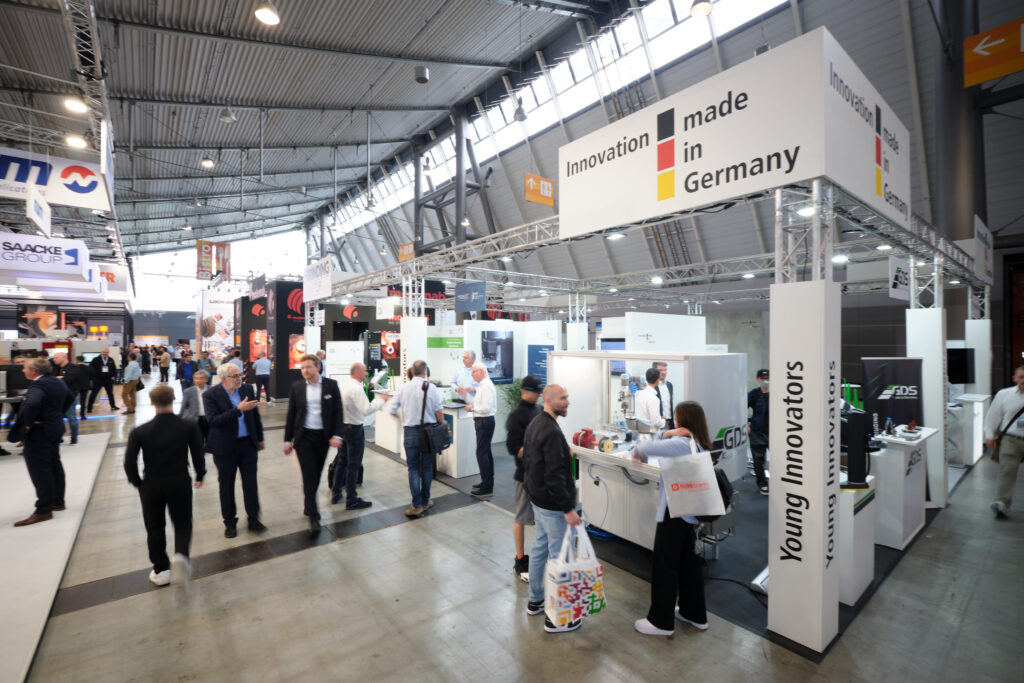
The joint booth concept is another prominent part of the 2026 edition. The Startup Hub, the Grinding Solution Park Industry, the Grinding Solution Park Science, and the Grinding Pavilion Switzerland are all fully booked. Their role is to create focused spaces where different perspectives on grinding technology can be brought together in a compact format.
For visitors, that can make orientation easier. Instead of navigating only through individual company stands, they can also use these themed areas to compare approaches from established suppliers, research organizations, and younger technology companies. The division between the industrial and scientific parts of the Grinding Solution Park is particularly relevant here. While the industry section concentrates on practical applications, five research institutions in the science section will present current scientific developments and opportunities for technology transfer.
That link between research and implementation is important in grinding, where improvements often depend on the interaction between tooling, machine behaviour, process control, cooling strategy, and measurement. A dedicated format for industry and science can help translate technical findings into production relevance more effectively than isolated presentations. The strong demand for these shared platforms suggests that exhibitors see value in that kind of structured exchange.
Connectivity and startups add another layer to the event
Within the Grinding Solution Park Industry, the umati connectivity initiative will show live applications based on OPC UA. The focus is on cross-vendor communication between machines and production systems. VDW highlights examples such as standardized energy monitoring and the networking of machines and equipment. For manufacturing companies, this is a concrete topic rather than a conceptual one. If machine and process data can be exchanged in a standardized way, that affects transparency, integration effort, and the ability to monitor performance across mixed equipment environments.
The Startup Hub adds a different perspective. Seven young companies from Germany, the Czech Republic, and Switzerland will present their ideas and technologies there. The concept is built around direct conversation with founders, with the aim of making new approaches to grinding technology easier to assess in practical terms. That matters because startups often work on narrow but relevant challenges, for example in process monitoring, software, or specialised subsystems, that can complement existing production setups.
The international profile of the event is also visible in the Grinding Pavilion Switzerland, where five Swiss companies will exhibit together. Alongside the co-located events SurfaceTechnology Germany and MedtecLIVE, and with one ticket covering all three shows, GrindingHub 2026 is also expanding the opportunities for cross-sector exchange on the Stuttgart fairgrounds.