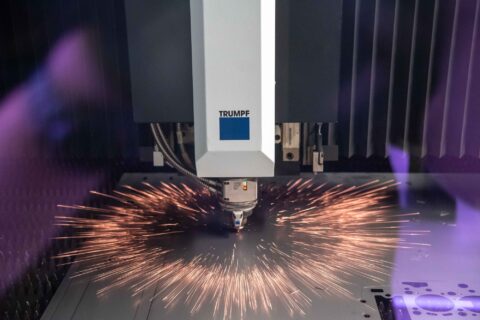

TRUMPF has introduced a laser cutting solution for hot formed automotive components aimed at two persistent cost drivers, cutting gas consumption and unplanned downtime. For manufacturers producing safety critical body parts, the development is relevant because it combines lower operating costs with more stable 24/7 production.
Hot formed components are widely used in automotive body structures, where part geometry and material properties place high demands on downstream trimming and cutting. In this stage of the process, gas costs, energy use and machine interruptions have a direct effect on part cost. TRUMPF’s new approach combines a redesigned cutting nozzle, a new generation of fibre lasers and the company’s BrightLine Speed beam shaping technology. According to the company, the package can reduce component costs by up to 20 per cent. The practical significance lies less in any single hardware change than in the way the elements support one another, especially when compressed air is used instead of nitrogen in continuous production.
A nozzle design aimed at process stability
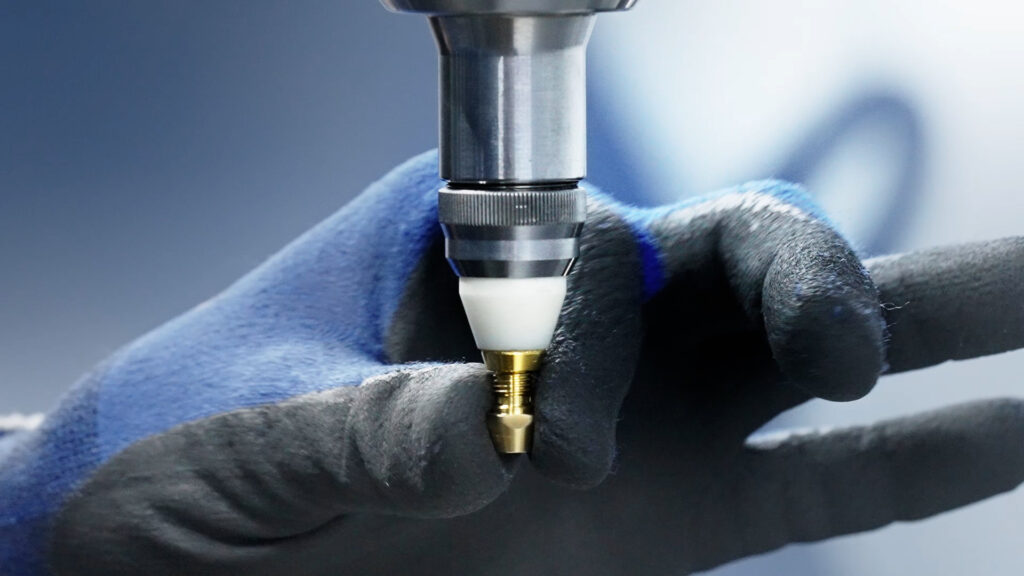
At the centre of the new setup is a redesigned cutting nozzle. TRUMPF says the geometry allows the distance between nozzle and sheet to be increased to several millimetres. That may sound like a small change, but in 3D laser cutting of hot formed parts it addresses a common source of disruption. Collisions between the nozzle and component can damage the nozzle, affect cut quality and stop production unexpectedly.
The issue has been especially relevant when cutting with compressed air, where process robustness has traditionally been a concern. TRUMPF states that nozzle collisions were previously a frequent cause of downtime in this type of application. The company’s tests suggest a clear improvement in service life. The new nozzles reportedly remained in use for more than three months without replacement, whereas the already improved X-Blast standard nozzles typically lasted only a few days.
That longer service interval matters beyond the cost of consumables alone. Fewer nozzle changes mean less interruption of the machine, fewer service interventions and less sensitivity to less than ideal programming or fluctuating production conditions. In practice, that makes the cutting process more stable under real factory conditions, not only under controlled test parameters.
Compressed air instead of nitrogen
The second major lever is the cutting gas itself. TRUMPF says users can reduce cutting gas costs by 75 per cent by switching from nitrogen to compressed air. In hot forming applications, that cost difference is significant because gas consumption can weigh heavily in the economics of high volume production.
The difficulty has not been the price of compressed air, but its suitability for reliable industrial use in demanding production environments. Many manufacturers have continued to use nitrogen because of concerns about stability, particularly in high productivity systems running around the clock. TRUMPF’s new process combination is intended to remove that barrier. According to the company, the X-Blast 2.0 nozzle in combination with BrightLine Speed enables the industrial use of compressed air even in 24/7 operation of 3D laser cutting machines for hot formed automotive parts.
For production managers, that shifts the discussion from theoretical savings to practical implementation. A cheaper cutting gas only delivers value if the process remains stable over long runs and if quality does not deteriorate through nozzle wear or machine interruptions. TRUMPF is positioning the new setup as a way to achieve that balance, with lower gas costs without sacrificing continuous operation.
Beam shaping and laser efficiency
BrightLine Speed is the third element in the package. TRUMPF describes it as a beam shaping technology that allows higher cutting speeds with lower laser power. The practical implication is that throughput can increase without relying on a more powerful beam source. The company states that users can cut faster with 3 kW of laser power than competing systems using 4 kW.
That affects both productivity and energy use. If the same or higher cutting performance can be achieved at lower power, the beam source consumes less energy and the overall energy demand per component falls. TRUMPF adds that the high brilliance of the laser also reduces cutting gas consumption compared with a standard process without BrightLine Speed.
The new generation of fibre lasers is intended to reinforce that effect. According to the company, the beam source operates with higher energy efficiency while requiring lower laser power overall. In a cost sensitive production step such as trimming hot formed parts, that combination matters because it addresses several cost elements at once, gas, electricity and machine availability. Rather than treating these as separate optimisation projects, TRUMPF is presenting them as parts of one integrated cutting process for automotive hot forming.