

Sodick, manufacturer of wire and zinc EDMs, gave our editor a glimpse into the machine builder’s production facilities in Thailand. What is interesting is the modern machinery, the craftsmanship and the fact that they produce the complete machine in-house – from the machine bed, the hand-scraping of the guides to the electronics.
Anyone walking into Sodick’s production plants in Thailand for the first time will notice that it consists of very modern machinery. This is partly because all machinery was replaced after a major flood in 2011. “You have to imagine that the water was 2 metres high. It was a disastrous sight to see the entire factory underwater. So all machines needed to be replaced,” says Peter Capp, CEO of Sodick Europe. The flooding was also the reason for constructing a second factory on a site that lies 4 metres higher than factory number 1.” Sodick equipped both factories with high-quality machining centres. To make high-quality machines, you have to work with high-quality equipment.” Sodick has now split production between the two factories. In the first plant, the wire EDMs are produced and in the newest plant, the zinc EDMs.
Ceramic components
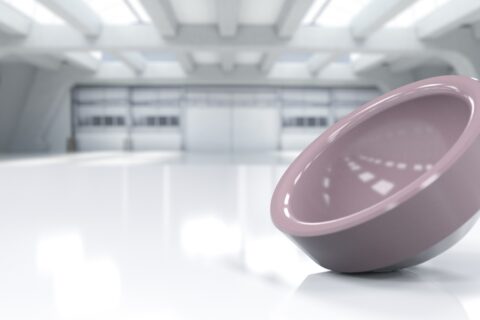
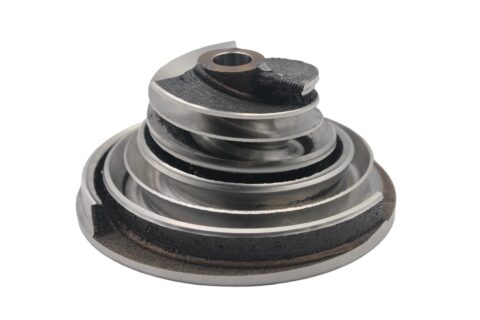
The wire and zinc EDM machines are available in various types and sizes with which Sodick covers a wide range. In doing so, Sodick adheres to a selection of distinctive features to ensure the quality and accuracy of the EDM machines. Thus, all models are equipped with ceramic components, such as bearings, work tables, table pedestals and upper and lower arms. Due to the hardness of the ceramic, the parts must have the desired dimensions even before curing because post-machining is only possible with diamond tools. This is an expensive process and requires a lot of tools and machine tools. Post-machining is therefore kept to a minimum. The manufacturing process of the ceramic parts is as follows: The production of the ceramic parts is done in an in-house workshop where ‘clay’ is moulded into a shape using a mould. This mould is then briefly heated to partially harden the ceramic already. From then on, it can still be easily machined. After machining, the ceramic part goes into a furnace at a temperature of 1,400 oC for another four to five days. During this process, the material acquires its extreme hardness. For the hardening process, Sodick has three kilns in operation. After the hardening process, small operations such as tap holes still need to be done. Due to the hardness of the ceramic, the holes cannot be tapped, so they glue in threaded bushings. Making the ceramic parts is a time-consuming and expensive process compared to cast parts.
The reason Sodick chose this material anyway has to do with its low coefficient of thermal expansion. In addition, ceramics conduct electricity little to no at all. Due to its poor electrical conductivity, all energy is converted into the spark. This allows for more precise and efficient cutting, which are advantages that outweigh the costs.