
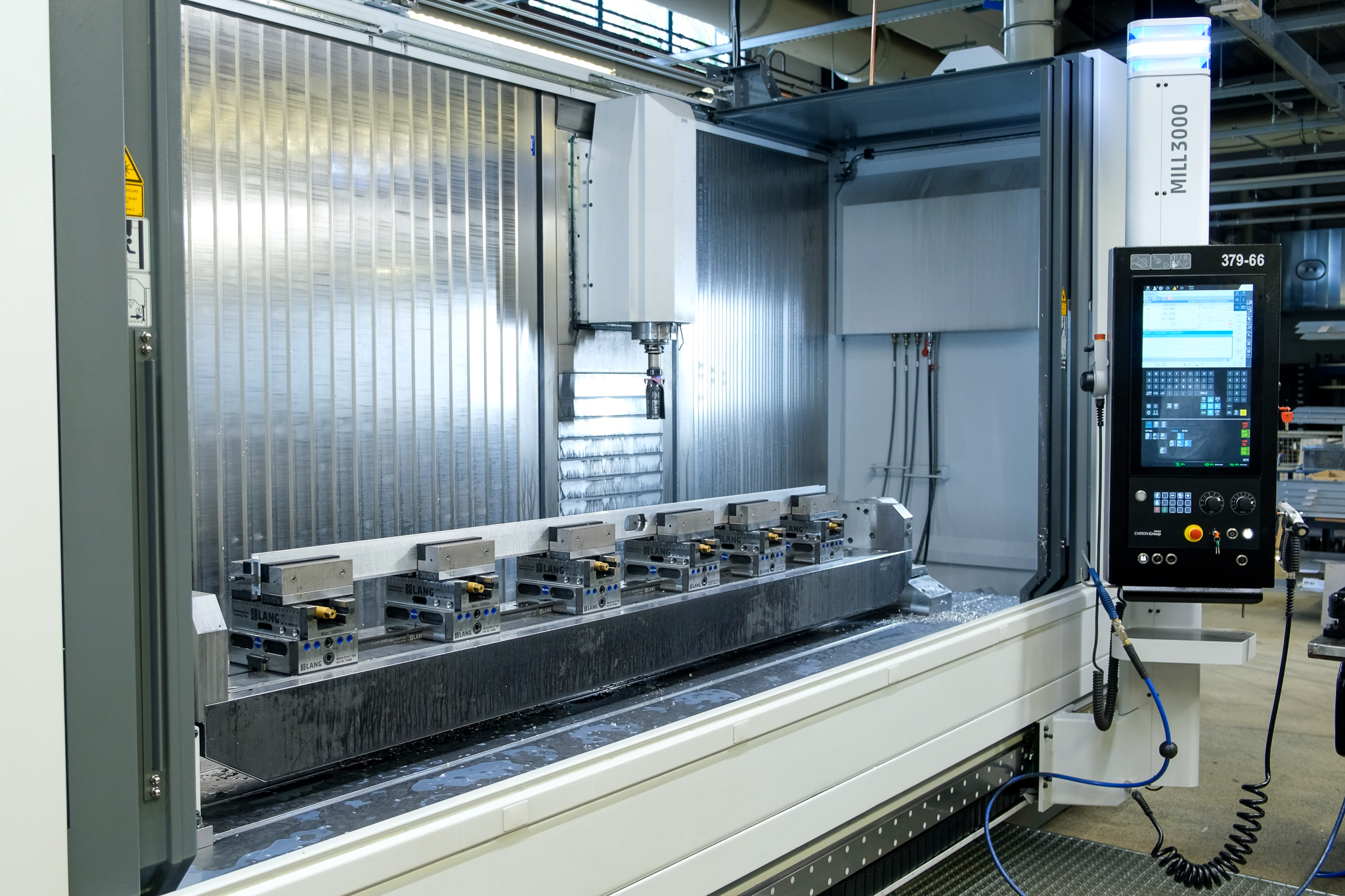
Dowaldwerke machines long aluminium profiles in one clamping with Chiron
READ FULL ARTICLE
Many hollow aluminium sections for railway applications exceed two metres in length. On the existing MILL 2000, these parts required additional clamping, repositioning and manual handling. As a result, throughput times increased, while personnel and machine capacity remained occupied. Dowaldwerke also decided to bring more profile machining in-house. External suppliers could not provide the required travel ranges or meet the company’s accuracy requirements. Therefore, the task was to establish an economical process for various long profile geometries. The process also needed to maintain quality and productivity.
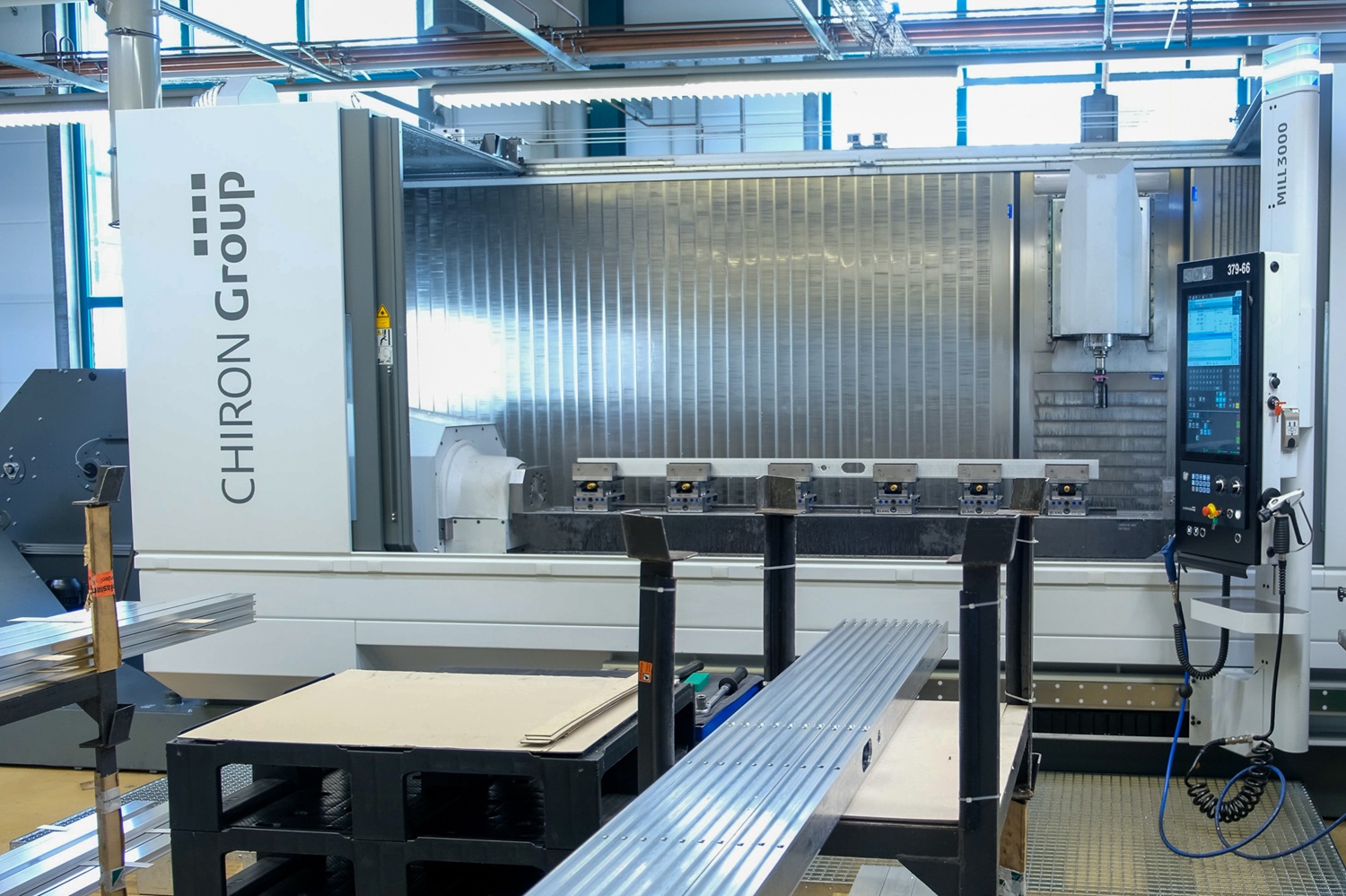
One clamping for more machining operations
The new concept centres on the MILL 3000. The machining center provides an X-axis travel of 3,000 mm. CHIRON Group developed the configuration with Dowaldwerke for the company’s range of profiles. The objective was to complete as many machining operations as possible in one clamping. A common production platform was also required for different profile types. The machining operations include drilling, contour milling, edge milling and lateral machining. A key feature is the individually designed swivel bridge. It is fitted as a fourth axis and can rotate the workpiece by 90 degrees. This allows the machine to process lateral surfaces directly. The workpiece does not need to be removed, repositioned and clamped again.
For Dowaldwerke, fewer clamping operations also reduce the number of reference points required in the process. According to the company, one clamping jaw is now sufficient for complete profile machining. Machining between the clamping devices is also possible. This simplifies the setup of long workpieces. It also reduces handling during repeated repositioning. Fewer position changes are intended to improve process reliability. This is particularly relevant for profiles that would otherwise require several setups.
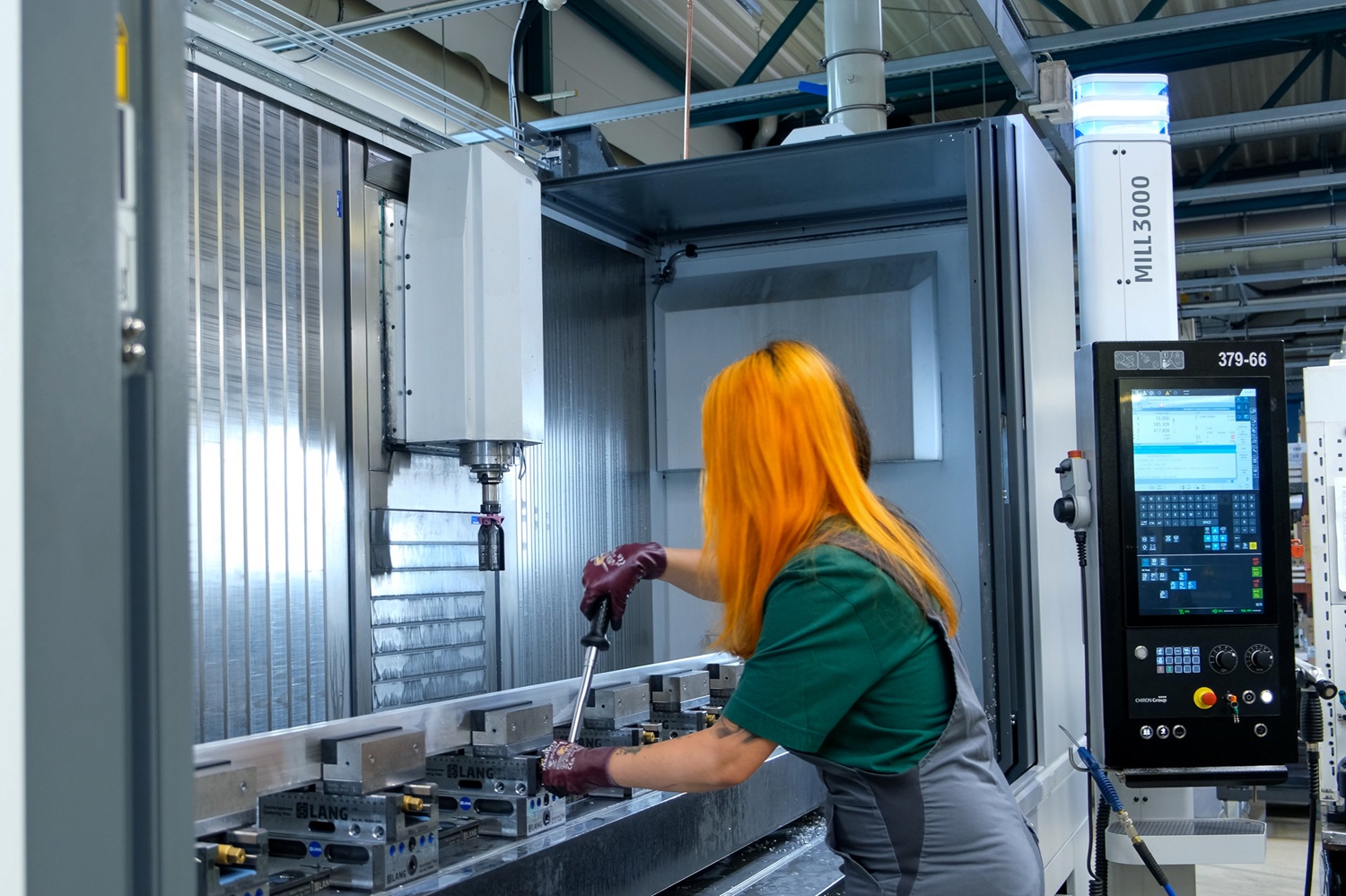
Reducing setup and non-productive time
The production concept is designed for changing variants and geometries. It is not limited to a single profile. This flexibility is important because the machining department handles various railway components. Each component may have different machining requirements. A uniform clamping concept is intended to reduce setup work when changing between parts. Short tool-change times are another relevant factor in the application. Dowaldwerke carries out numerous tool changes within its machining programmes. The company expects the machine’s tool-changing performance to limit the time required for these changes. This should support a more efficient programme sequence. Together with reduced clamping and handling, the concept can shorten throughput times. It can also lower non-productive time.
Operator involvement also influenced the investment decision. At Dowaldwerke, milling specialists largely programme, set up and machine workpieces independently. Employees were already familiar with the MILL-series concept through the existing MILL 2000. This familiarity was considered relevant to the daily operation of the new machine. It also supports the introduction of a production process for long aluminium profiles. The project included technical coordination and adjustments after installation. Requirements identified during operation were addressed through cooperation between Dowaldwerke, CHIRON Group personnel in Tuttlingen and local service staff. For the manufacturer, the new machining center extends an established production setup. It addresses a specific operational issue: machining long aluminium profiles efficiently with fewer clamping steps.[vc_video link=”https://www.youtube.com/watch?v=aANIJ9oGqAQ” align=”center” css=””][vc_separator color=”white”]
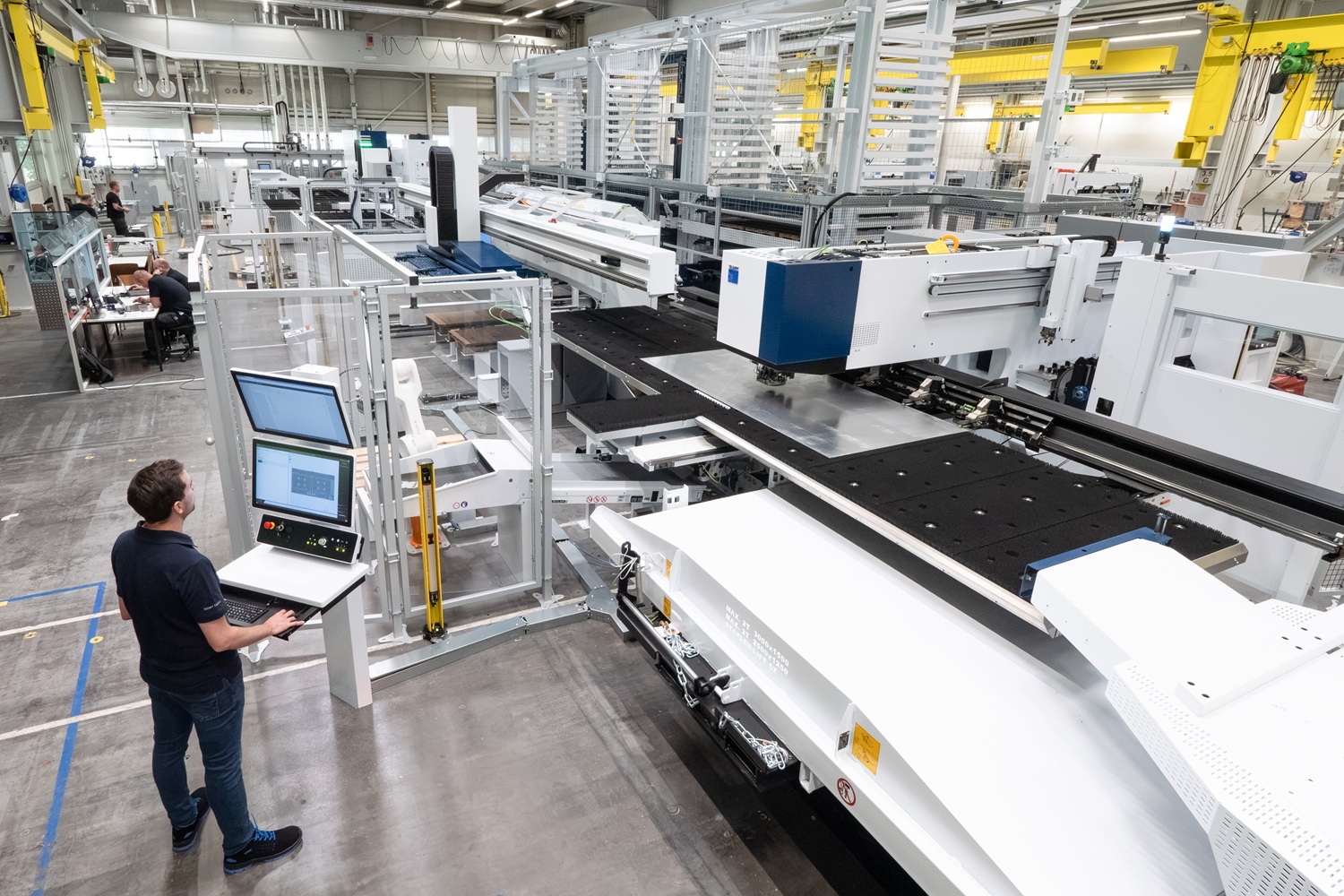
TRUMPF TruPunch 5000 combines digital control with flexible automation
READ FULL ARTICLE
The new TruPunch 5000 retains the performance figures of its predecessor. However, it expands the digital functions surrounding the machine. TRUMPF aims to reduce non-productive time and improve visibility of operating conditions. The system also supports unattended production. These functions benefit manufacturers handling high volumes and changing part ranges. Machine availability, setup work and material flow can directly affect throughput. The machine is intended for applications such as control cabinets, data-center components, delicate panels and functional sheet-metal parts.
Digital monitoring extends production visibility
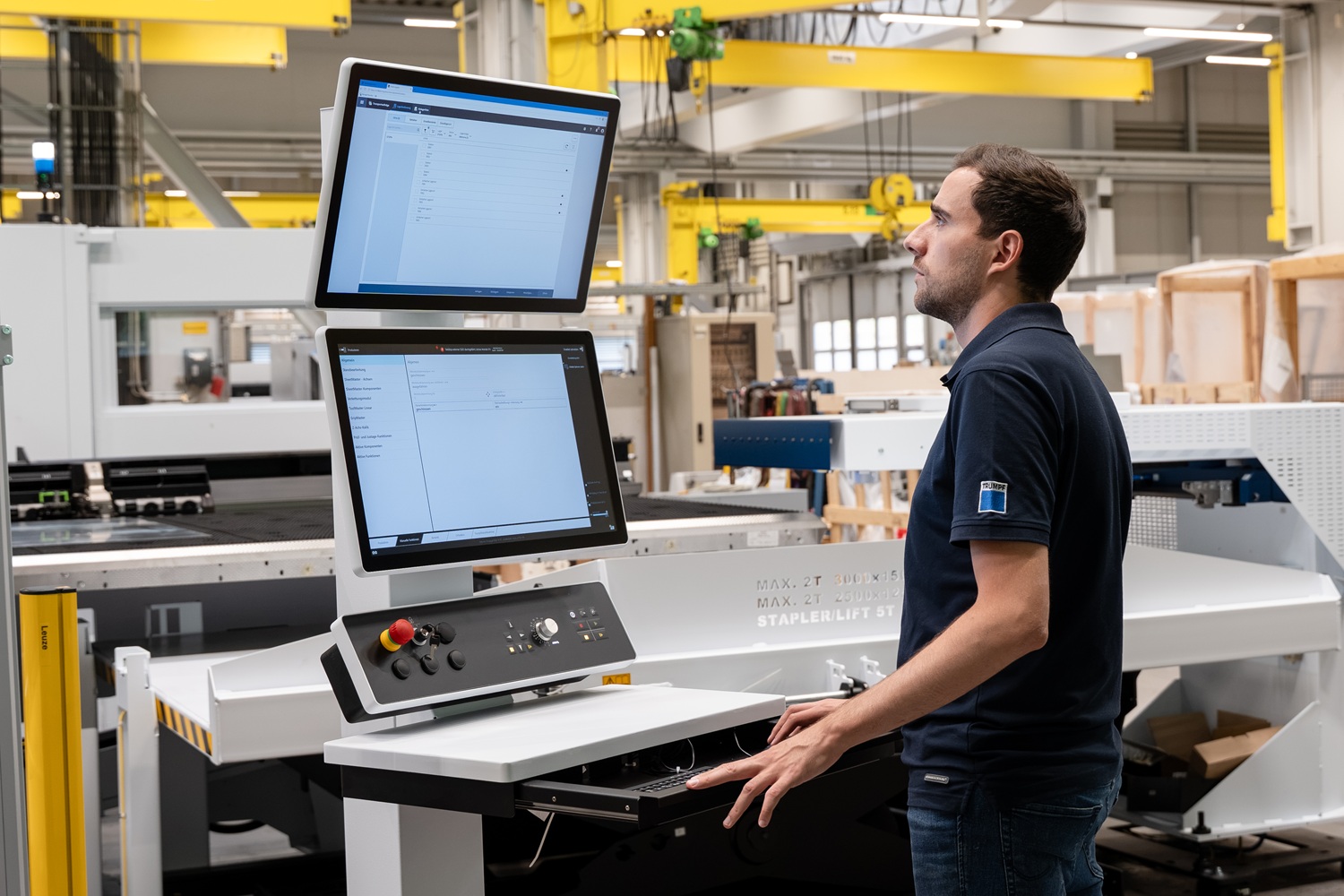
A new control system provides the basis for the added digital functions. It transfers process and status data to TRUMPF’s Smart View service. Operators can access this information through a dashboard from any location. The objective is to identify potential downtime early. Production staff can then intervene before the issue affects output. The system also includes Vision Equipment Pro. Up to ten cameras monitor the working area. Operators can view the camera images remotely, including from the setup station. A second monitor at the machine can display these images. It can also show production information from TRUMPF’s Oseon software. Staff therefore have access to machine status and visual information without remaining at the machine.
TRUMPF also plans to enable updates without requiring a service technician on site. Its Remote Operation Support service is planned for the TruPunch 5000. The service will allow TRUMPF to remotely diagnose faults at a customer’s site. According to TRUMPF, these functions can support overnight production without a continuous staff presence. Their practical value lies in combining machine data, visual monitoring and remote support. These functions operate within one environment rather than as separate tools.
Setup changes target non-productive time
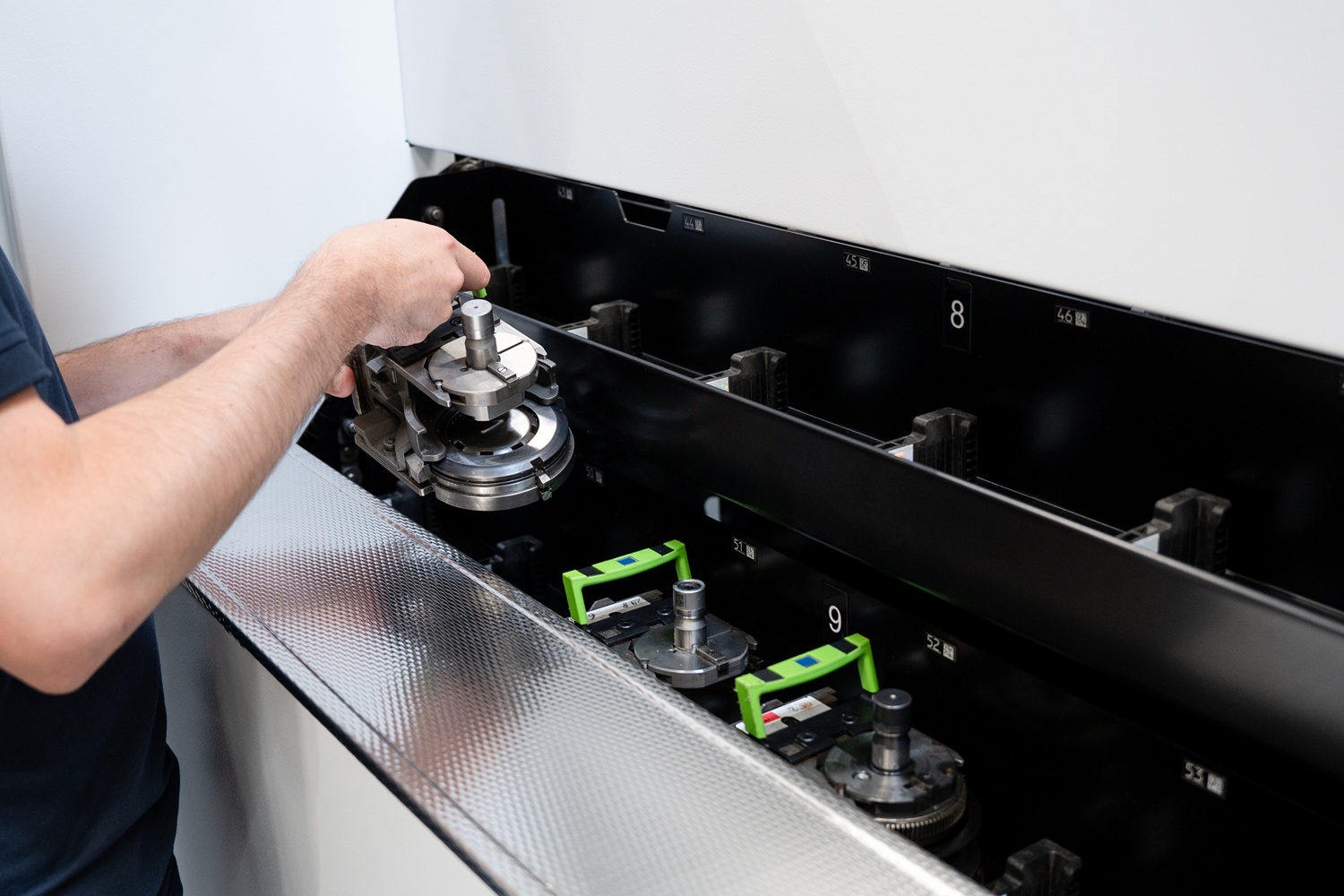
Alongside the digital additions, TRUMPF has revised machine operation and tool setup. An updated safety concept is intended to shorten operator walking distances. It also aims to reduce time spent away from productive work. This can be particularly relevant when frequent tool changes or varied job schedules make setup a significant part of processing time. The ToolMaster Linear tool changer now includes an additional display at the setup station. Operators can view the required tool information while preparing the tools. Locating this information at the station is intended to accelerate setup. It can also reduce handling errors.
The control system is designed to support future automation functions. At EuroBLECH, TRUMPF is presenting an AI-supported solution for sorting small parts. Cameras detect the position of the parts. A robot can then pick and sort them without programming effort. The approach aims to reduce manual sorting work and waiting time when handling small punched components. The punching machine continues to provide a punching force of 22 tons. It processes sheets up to eight millimeters thick at rates of up to 1,600 strokes per minute. In addition to punching, the machine can create formed features. These include embossments and drawn forms. Its active die is intended to support low-scratch surfaces and greater forming heights. It also supports stable processing during demanding punching and forming work.
Flexible linking between punching and bending
TRUMPF will also demonstrate the TruPunch 5000 in a directly linked production system. The system includes a TruBend Center 7030 bending cell. In this arrangement, a SheetMaster automation system places punched components on a buffer conveyor. The conveyor moves the components to the bending cell. There, a manipulator picks up the parts for bending. Unlike a fixed line configuration, the system allows alternative material routes. Components can return to storage or be transferred to a mobile robot for further transport. The linked system can therefore handle different component types without sending every part through the same sequence.
The buffer storage system is intended to balance different processing speeds between punching and bending. If one machine has a higher workload, the buffer can hold components until the next process becomes available. Leftover sheets can also be used in parallel for other processes. As a result, the punching machine and bending cell can continue operating at their respective capacities. This remains possible even when their cycle times do not match. For sheet-metal fabricators, the arrangement addresses a recurring issue in linked production. It maintains automation without making material flow too rigid. The system allows users to define the route for each part. At the same time, it keeps both machines supplied with work.
CLASCO project develops laser process chain for complex metal surfaces
READ FULL ARTICLE
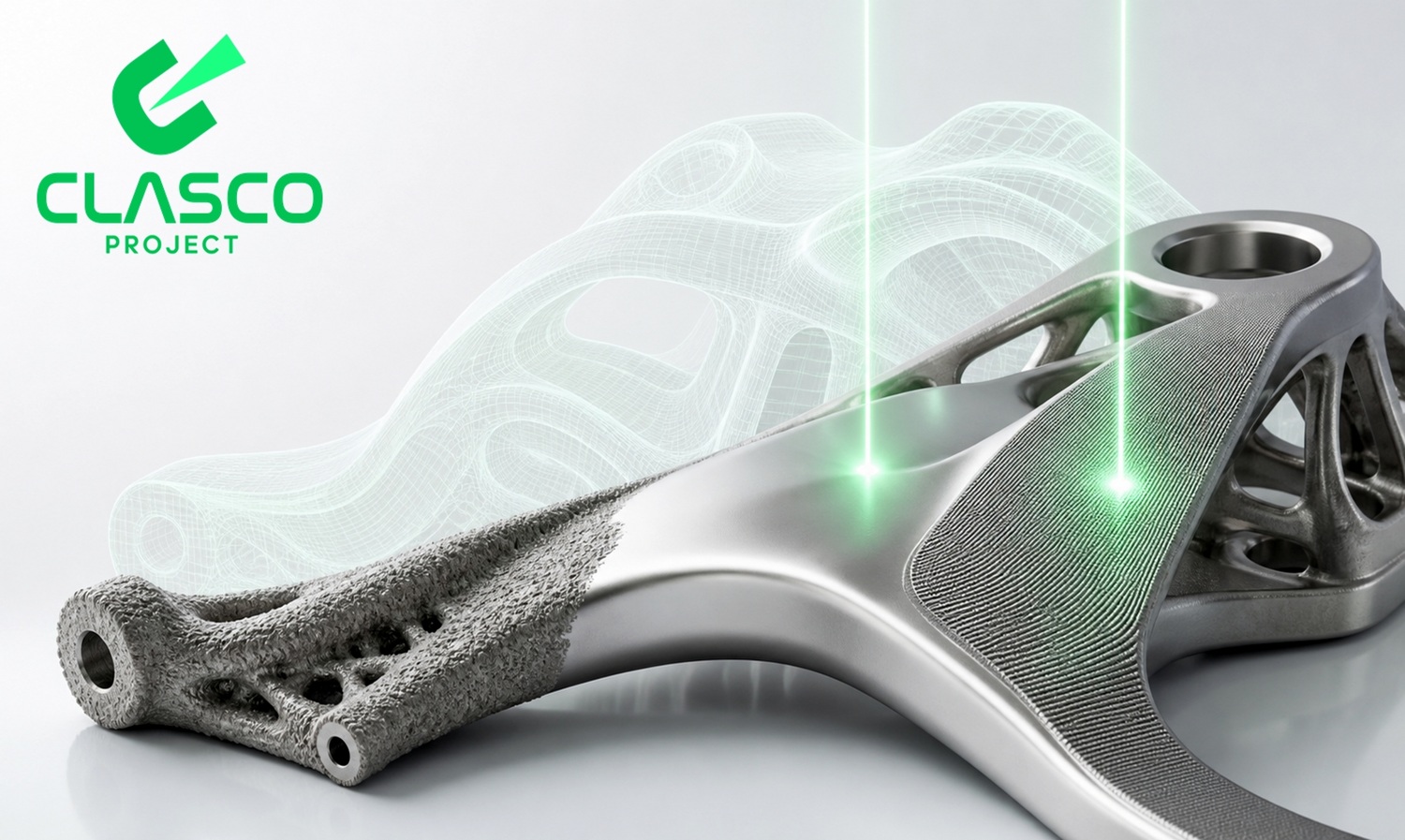
Metal additive manufacturing provides considerable freedom in lightweight design and component geometry. It can produce shapes that are difficult or impossible to manufacture conventionally. In suitable applications, it can also reduce material use. However, printed metal parts commonly have comparatively rough surfaces after production. This can limit their suitability where defined surface behaviour is required. Examples include corrosion resistance, wettability and interaction with biological materials.
CLASCO stands for Climate Neutral and Digitalised Laser Based Surface Functionalisation of Parts with Complex Geometry. The project examined how to address post-processing requirements through a connected manufacturing chain. Over three and a half years, it combined laser polishing, Direct Laser Interference Patterning, process monitoring, digital twins and artificial intelligence. The consortium tested the technologies on aerospace and medical demonstrators.
Laser polishing reduces roughness without contact
The first stage of the CLASCO process chain was laser polishing. This contact-free method smoothed complex printed metal components before further functionalisation. According to the project results, it reduced the typical roughness after 3D printing from around 10 to 30 micrometres to less than one micrometre. This result is particularly relevant for components with intricate shapes. Conventional mechanical finishing can be difficult to apply consistently across all surfaces. Laser polishing provides a route for treating surfaces without direct tool contact. It can also reach areas where the geometry complicates other finishing methods.
The project then processed selected areas using Direct Laser Interference Patterning, or DLIP. This method generated regular structures in the micrometre range. It did more than improve surface finish. Instead, it enabled the research team to modify surface properties for the intended application. The project identified wettability, corrosion behaviour and the interaction between implant surfaces and biological materials as properties that such structures can influence. By combining polishing and microstructuring, the process chain addresses two separate post-processing tasks. The first is reducing roughness created during printing. The second is creating defined surface functions where they are required on the component. Moreover, the researchers integrated process monitoring, digital twins and artificial intelligence. These tools enabled digital monitoring during processing.
Lightweight design included from the component stage
CLASCO did not focus solely on post-processing. The project also examined how additive manufacturing can reduce material use and component weight during design. Researchers combined the design freedom of additive manufacturing with topology optimisation for two aerospace demonstrators. For an A350 mounting bracket, the project reported a weight reduction of approximately 53 percent. A corresponding lever was designed to be around 38 percent lighter. These results show that the production route begins before surface treatment. Component geometry, material use and surface requirements all influence the overall manufacturing concept.
The laser-based processing route was applied after additive manufacturing. This process prepared and functionalised the resulting surfaces. In this way, the project linked lightweight design with the requirements of high-value applications. Components can use less material, but they must still meet the surface-related demands of their intended use. Weight reduction was a key design objective for the aerospace demonstrators. The medical demonstrators, however, highlighted the importance of controlled interactions between surfaces and biological materials. The project used the same underlying process chain for both cases. It adapted the surface microstructures to the required function.
Sustainability depends on the entire process chain
Another CLASCO finding is that additive manufacturing should not automatically be considered more sustainable because a component uses less material. The project assessed the full process chain. It identified several factors that influence the overall balance. These factors include metal powder production, powder recovery and reuse, processing time, energy demand and inert gas use. Therefore, savings from lightweight design or reduced component material cannot be considered separately from the resources needed to produce, process and finish the part. The investigations identified metal powder reuse and efficient post-processing as particularly important for improving resource efficiency in additive metal manufacturing. This places the laser treatment route within a wider manufacturing context. Its relevance concerns more than smoother or functionally structured surfaces. It also involves the efficiency of achieving the required result.
The formal project period is now complete. However, the partners intend to continue transferring the developed methods into industrial systems, processing services, technology licences, contract research and follow-up projects. Future work will focus on making the processes more robust and efficient. It will also address further industrial uses involving complex, high-value metal components with defined surface requirements.
Positive mood sets the tone at AMB 2026
READ FULL ARTICLE
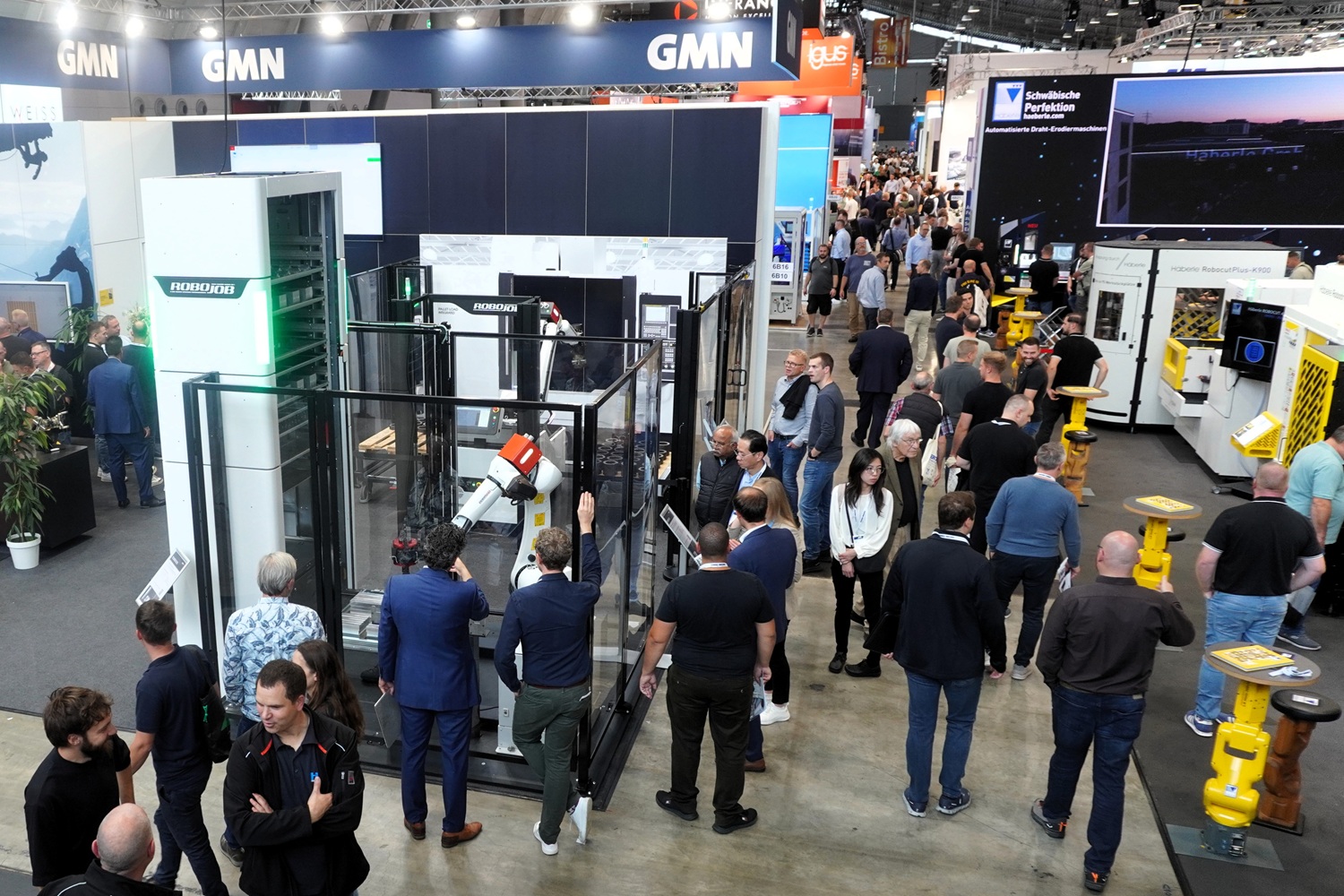
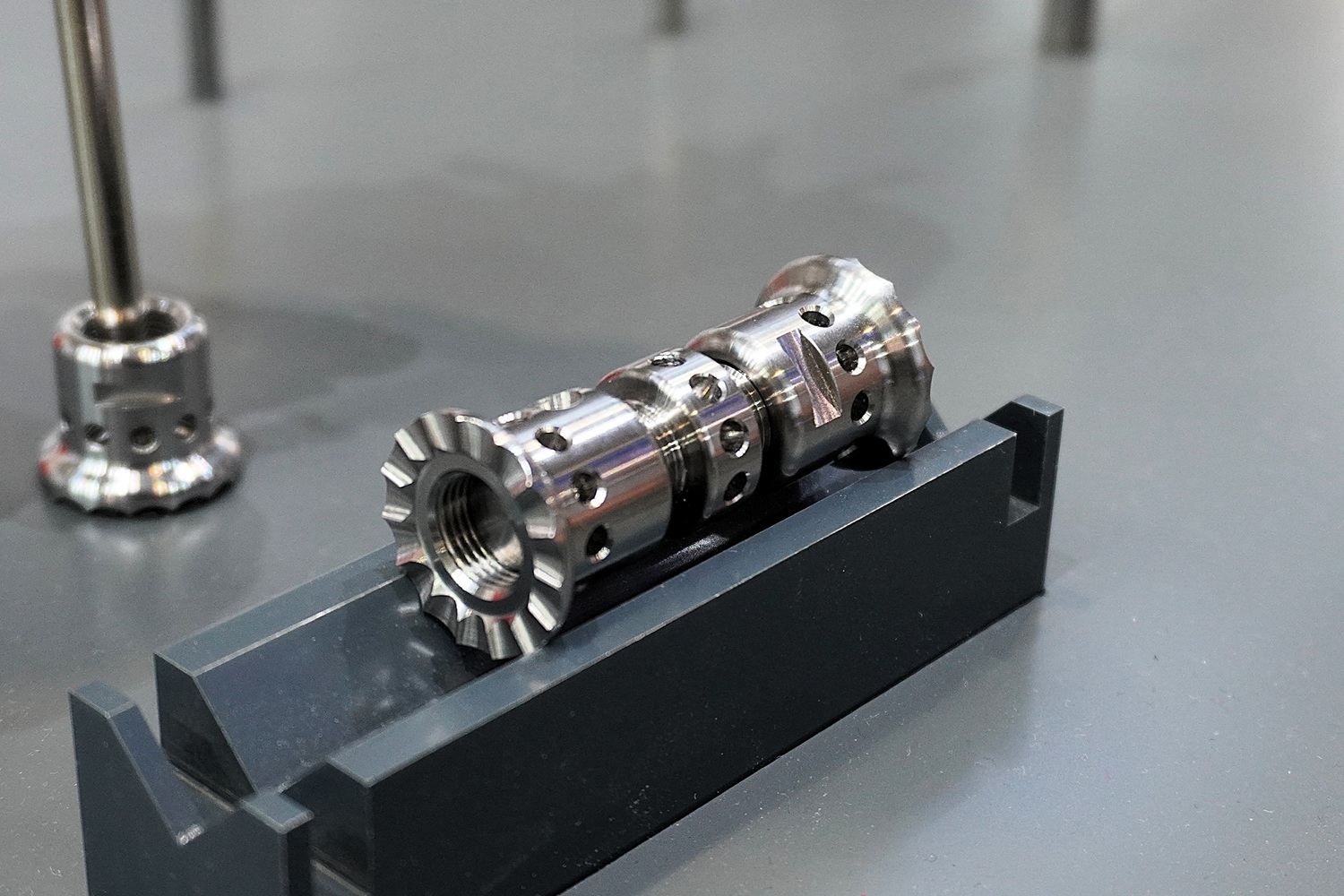
There was a noticeable sense of momentum at AMB 2026 in Stuttgart. Across ten exhibition halls, machines were running, automation systems were operating live and suppliers presented developments in tooling, software and production technology. The overall impression was one of an industry preparing for the next phase of investment. That confidence comes at a time when the German manufacturing landscape is changing. Automotive remains important, although its dominant position is becoming less certain. At the same time, sectors such as semiconductors, aerospace, energy, medical technology and defence are gaining relevance. This shift is also influencing the type of production technology manufacturers are looking for.
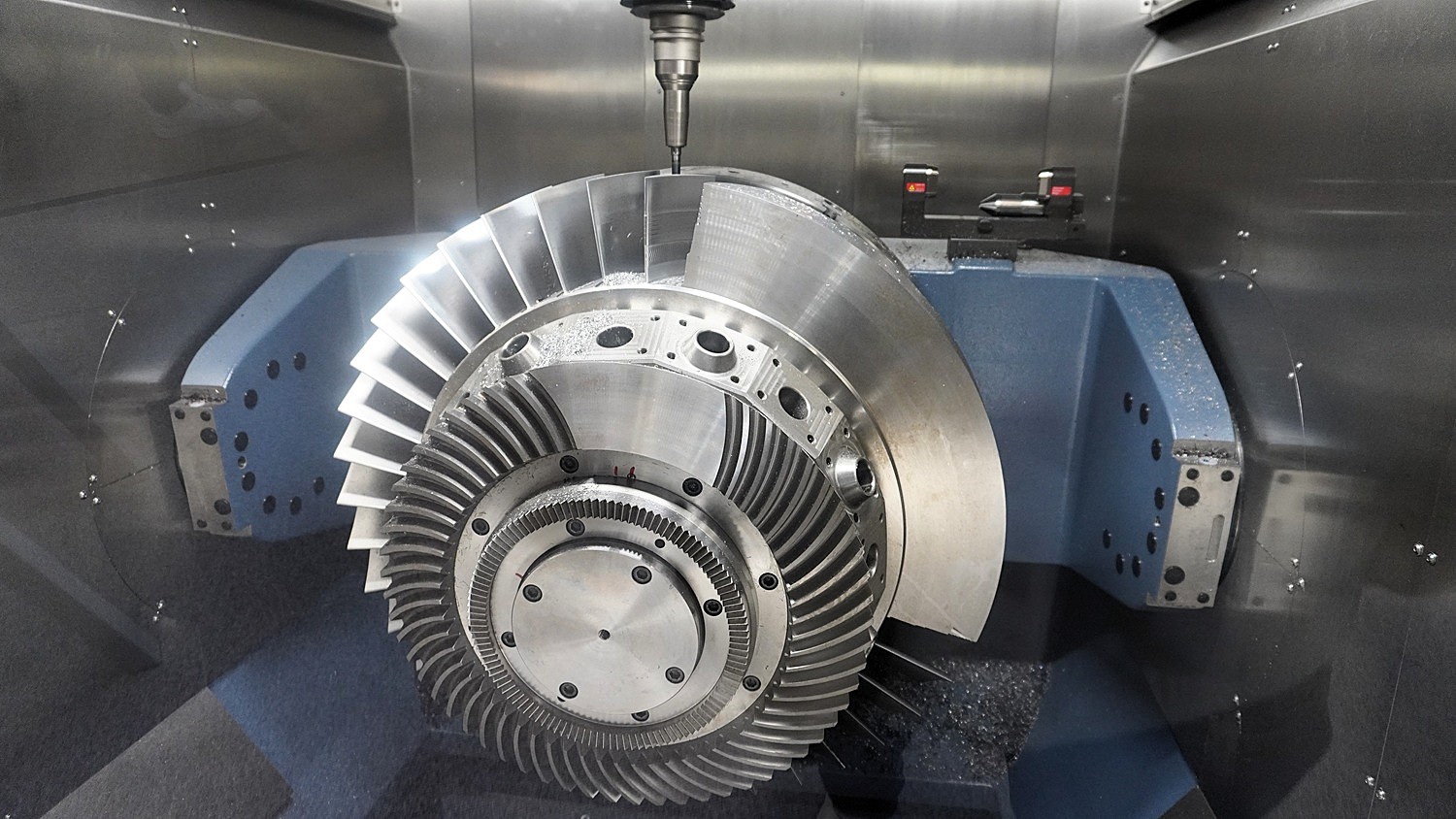
With 1,195 exhibitors from 34 countries, AMB once again offered a broad overview of developments in metalworking and machining. Some stands were more compact than at previous editions, yet the show itself felt substantial. Technology was demonstrated rather than simply displayed. Machines were cutting, automation cells were producing and visitors could see complete manufacturing processes in operation. Much of what was shown represented further refinement of existing technology. Improvements focused on accuracy, productivity, ease of use, connectivity and automation. Alongside these developments, several solutions pointed towards a broader change in how machining systems are being designed and used.
German manufacturers broaden their focus
For Germany’s machine tool sector, the changing automotive market remains one of the most important developments. Automotive production has traditionally generated large volumes and long-running series, making it a key customer segment for machine builders and suppliers. Growing competition from China and structural changes within the automotive sector are altering that relationship. At AMB, this was reflected in the discussions around new applications and alternative growth markets.
Semiconductor manufacturing featured prominently, while aerospace, energy and medical technology also received considerable attention. Defence was another sector that appeared more frequently than in previous years, both in conversations and in the applications presented on stands. This broader market focus has technical consequences. Manufacturers serving these industries often deal with lower volumes, greater product variation and increasingly complex components. Production systems therefore need to offer more flexibility. Fast changeovers, adaptable automation and efficient handling of different workpieces are becoming more important than production concepts optimised around a single high-volume part.
Automation becomes more flexible
Automation was present throughout AMB 2026. Robot loading, pallet systems, tool management and autonomous production concepts were a familiar sight across the halls. The main development lies in the way these technologies are being combined. A robot next to a machine is no longer enough to define an automated production cell. Increasing attention is being given to the entire process around the machine. Modern systems are expected to identify workpieces, select the correct program, manage fixtures and tools and adapt to different production jobs with minimal operator input. Vision systems, digital twins and more advanced software are becoming increasingly important in achieving that flexibility.
This is especially relevant for manufacturers working with small batches and changing product mixes. The ability to switch quickly between different parts can be more valuable than optimising a cell around one fixed product. Automation is therefore becoming less rigid and more closely linked to production planning, software and data.
AI is becoming practical, although its impact remains limited
Artificial intelligence had been positioned as one of the major topics ahead of AMB 2026. On the show floor, AI was certainly present, although its role was more evolutionary than disruptive. Applications included image recognition, process monitoring, programming support and the analysis of production data. AI was also linked to digital twins and robot control, where software can help systems react more intelligently to changing production conditions.
These developments show clear potential, particularly where large amounts of process data are available. AI can help detect deviations, support decision-making and reduce manual analysis. At the same time, most applications seen at AMB were extensions of existing production technologies rather than entirely new manufacturing concepts. For machining companies, the immediate value of AI therefore lies mainly in optimisation, monitoring and easier operation. A fundamental change in the way machining is carried out is still some distance away.
Industry looks ahead again
Perhaps the clearest message from Stuttgart was the atmosphere itself. German industry continues to face challenges ranging from energy costs and labour shortages to geopolitical uncertainty and pressure on traditional markets. Those concerns remain part of the background. At AMB, however, discussions centred strongly on investment, productivity, automation and new business opportunities. That gave the exhibition a more forward-looking character than might have been expected after several difficult years for German manufacturing.
The format of the show also continues to play an important role. Visitors can see machines cutting real components, automation systems operating under realistic conditions and complete production concepts in action. For a technical audience, that practical element remains one of AMB’s strongest features. AMB 2026 therefore showed an industry in transition. Automotive is becoming less dominant, new markets are gaining importance and production requirements are becoming more varied. In response, machine builders and technology suppliers are placing greater emphasis on flexibility, automation and software. The technologies themselves are evolving step by step, while the market around them is changing more fundamentally.
Claus Queck standardises robotic grinding with Teqram EasyGrinder
READ FULL ARTICLE
At Stahlbau Queck, grinding had become a production bottleneck. Grinding and deburring often remain heavily dependent on manual work in steel construction. Skilled employees spent considerable time on a task that produced variable results. Quality could differ between operators and over the course of the working day. Fatigue, physical strain and concentration affected manual grinding results, particularly when processing large or heavy components.
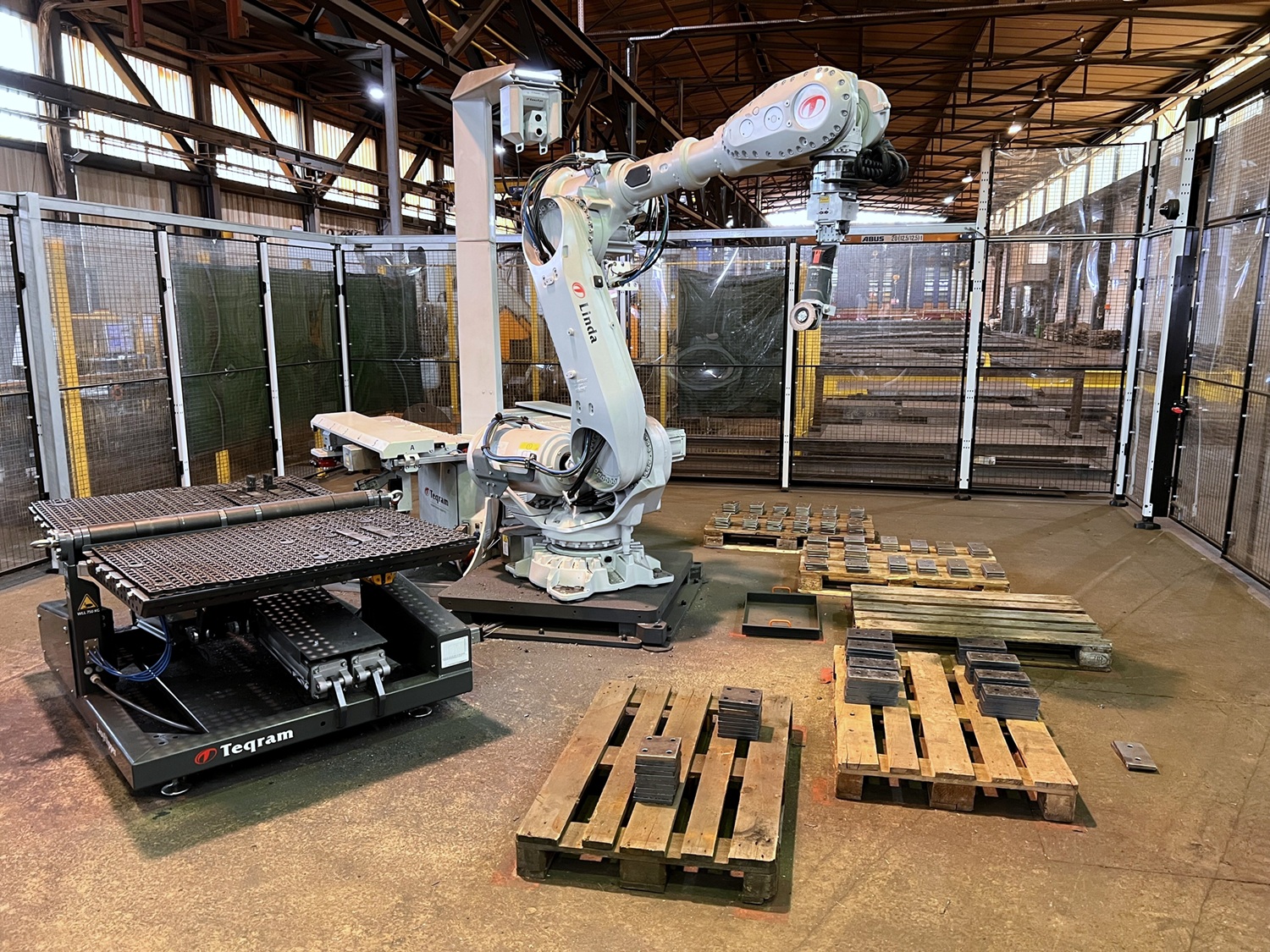
The company therefore sought a system that could provide consistent processing quality and improve working conditions. It selected Teqram’s EasyGrinder, an autonomous robotic system that combines 3D vision technology with artificial intelligence. Alongside economic considerations, a key requirement was reliable compliance with the P3 preparation grade for Deutsche Bahn projects. The aim was not simply to automate one operation. Instead, the company wanted to make a variable post-processing step more predictable and easier to document.
Consistent grinding and deburring parameters
The EasyGrinder now deburrs and grinds demanding flame-cut and plasma-cut parts at Stahlbau Queck. The operator selects the required preparation quality. The robot then processes each component autonomously using the same parameters. This approach is designed to limit variation between manually processed components. According to Thomas Nehring, head of the cutting department at Stahlbau Queck, manual processing inevitably produces different results. “Two employees will always deliver different levels of quality. With the EasyGrinder, those variations are a thing of the past,” he says.
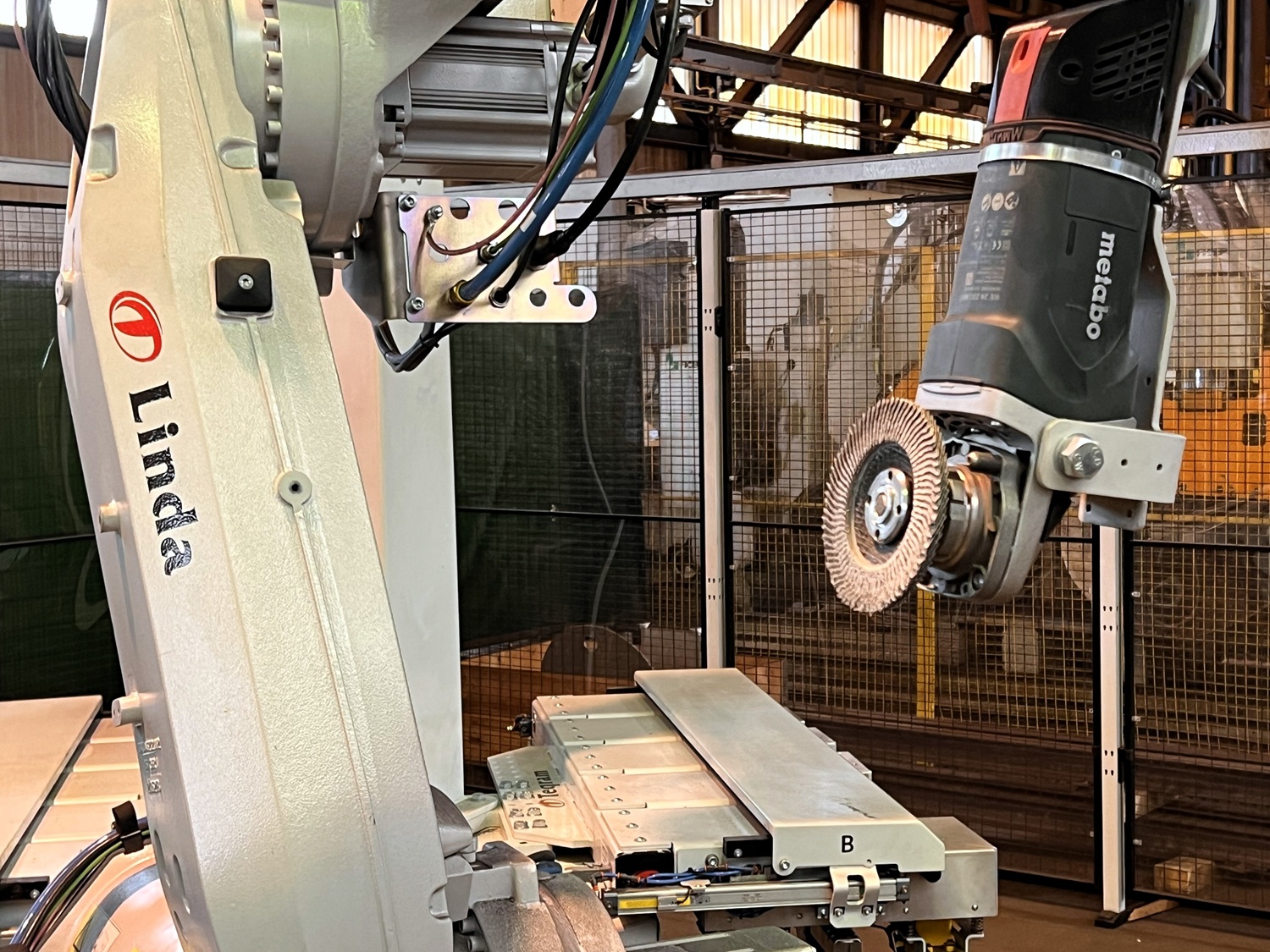
For components with complex geometries, the system uses vision technology to identify the workpiece. It then processes the component with consistent contact pressure. Heavy parts can also be handled without exposing employees to the same physical load as manual grinding. The company reports fully reproducible and documented surface quality. It also reports a reduction in rework. This is particularly relevant to projects with defined surface preparation requirements. If grinding becomes a production bottleneck, variations in finish quality can create additional handling and corrective work. They can also cause uncertainty in subsequent operations. Automating the process therefore provides a repeatable method for an operation that previously depended heavily on individual operator performance.
A different role for skilled employees
Ergonomics and the availability of skilled labour also influenced the investment decision. Manual grinding and deburring combine repetitive work with physical effort. This is especially demanding when employees process large steel components. By assigning these tasks to the robot, Stahlbau Queck intends to reduce the burden on employees. It also aims to free skilled workers from work that is demanding and difficult to standardise. Initial reservations about the technology reportedly disappeared quickly. The system was integrated into daily production without complex programming. Employees have named the robot “Linda”, reflecting its acceptance on the shop floor.
Nehring describes the practical difference between manual and automated work: “Linda doesn’t call in sick, and heavy components don’t give her back problems either.” For the company, the robot is not positioned as a replacement for its workforce. Instead, it shifts demanding, repetitive work away from employees. The system also supports the company when bidding for international contracts with strict quality requirements. At the same time, Stahlbau Queck considers modern, ergonomic production technology relevant to attracting younger skilled professionals.
OPEN MIND Technologies to present Hummingbird MES at AMB 2026
READ FULL ARTICLE
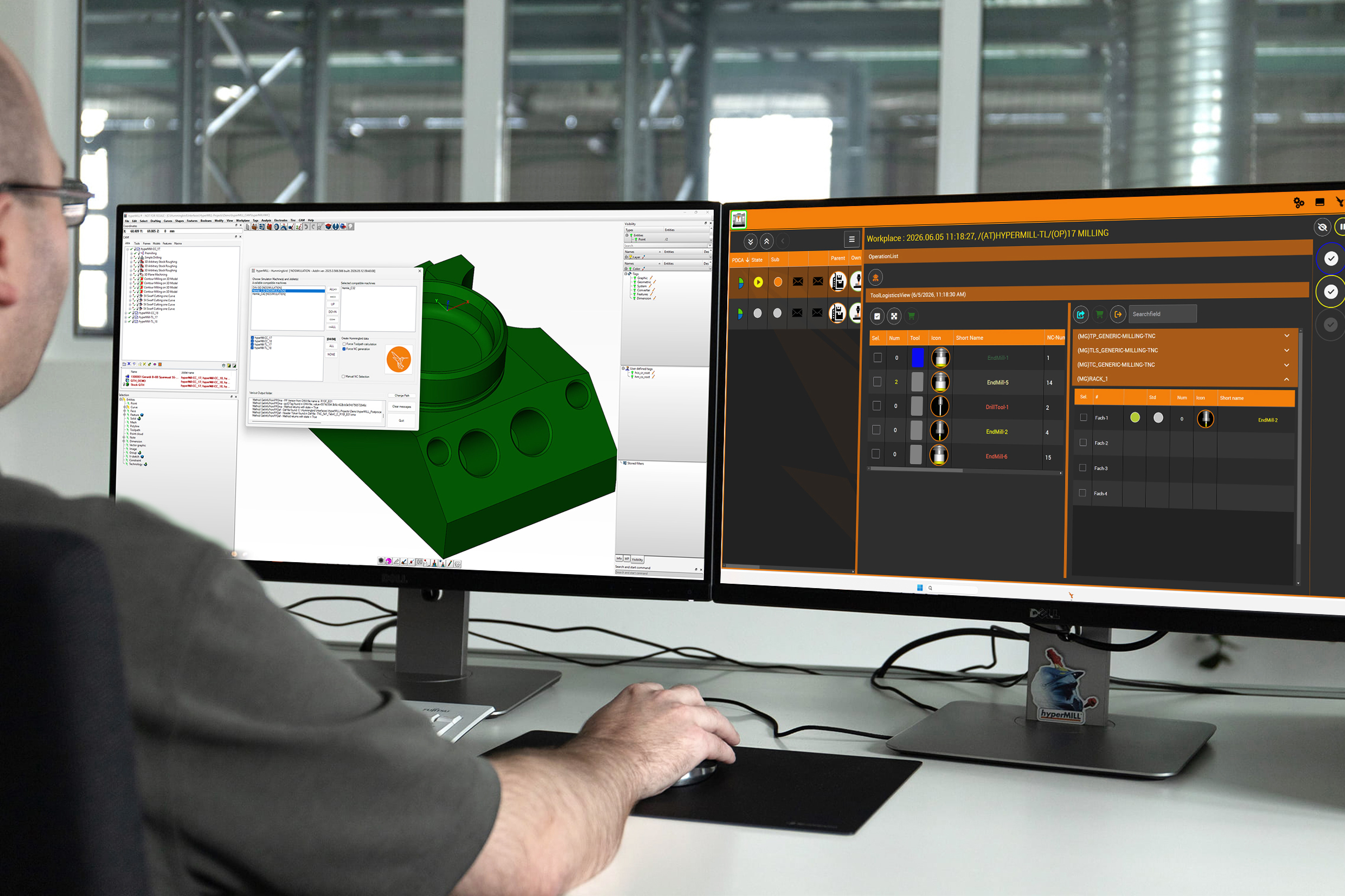
Hummingbird MES uses a modular structure. This allows manufacturers to begin with one area of digitization while retaining a connection to a wider digital process chain. Its control concept is event-driven. Each time a part is manufactured, the production status is updated in real time for all users. Therefore, planners and operators receive current information for production planning, shop floor execution and operational decisions. OPEN MIND identifies four possible entry points: planning and control, CAM/CNC integration, tool logistics and machine data collection. Each addresses a different source of lost time, incomplete information or limited process visibility.
Planning linked directly to the shop floor
In dynamic manufacturing environments, planning can quickly become outdated. Jobs change, machines become unavailable and delivery dates shift. Hummingbird connects planning and shop floor activities in one digital system. Deviations are detected in real time and can be addressed through an agile planning board. This gives production planners visibility into the current situation. It also supports immediate adjustments when conditions change. For example, available machine capacity can be allocated differently to help maintain delivery dates.
Rather than treating planning as a separate, static process, the system links it to events in production. The event-driven approach also affects the status of individual parts. As parts are produced, their information is updated for all users. In single-part and small-batch production, routings, priorities and capacity requirements can vary between orders. As a result, planning decisions can be based on current production data rather than manually updated records. Companies can adopt this planning and control function independently. They can also connect it with additional MES functions later.
Digital transfer of CAM and CNC information
A second entry point connects CAM programming with machine execution. Hummingbird MES is integrated with hyperMILL. This integration enables the central management and versioning of CAM projects, NC programs, process data and tool data. The system transfers the required information from the CAM project to production without data loss. NC programs can be sent directly to production from the CAM project. At the machine workstation, operators receive the current NC program, setup information and job data. This creates a digital information package for the machining task. Operators do not need to obtain program, setup and process details from separate sources.
Version management is especially relevant when programs or process data change before production. The stated aim is to ensure that operators work with current information. They can therefore focus on executing the job. The MES extends beyond the transfer of an NC file. It connects programming data with the practical information required at the machine. This includes the relevant tool and process context.
Tool data and machine status in one system
Tool logistics is another area addressed by Hummingbird MES. OPEN MIND identifies tool searches, excess stock and premature tool changes as avoidable cost factors. The tool management function covers remaining tool life, tool measurement, and the storage and logistics of tools and holders. Machine operators can also record feedback when actual cutting parameters or tool life differ from planned values. This provides a way to capture deviations during machining. The information can then be made available within the digital process chain. Tool-related information is therefore not limited to planning data. It can also be linked to operational experience from the shop floor.
The fourth building block is machine data collection. It automatically gathers available data from connected machines and displays it in dashboards. The function analyzes machine and operational status, runtime and downtime in real time. It also generates and monitors key performance indicators. In addition, it supports the integration of different machine types. Within the broader MES structure, these data support the evaluation of machine utilization. They can also help identify opportunities for process adjustments.
Spinner expands TTS series with simultaneous turning machines
READ FULL ARTICLE
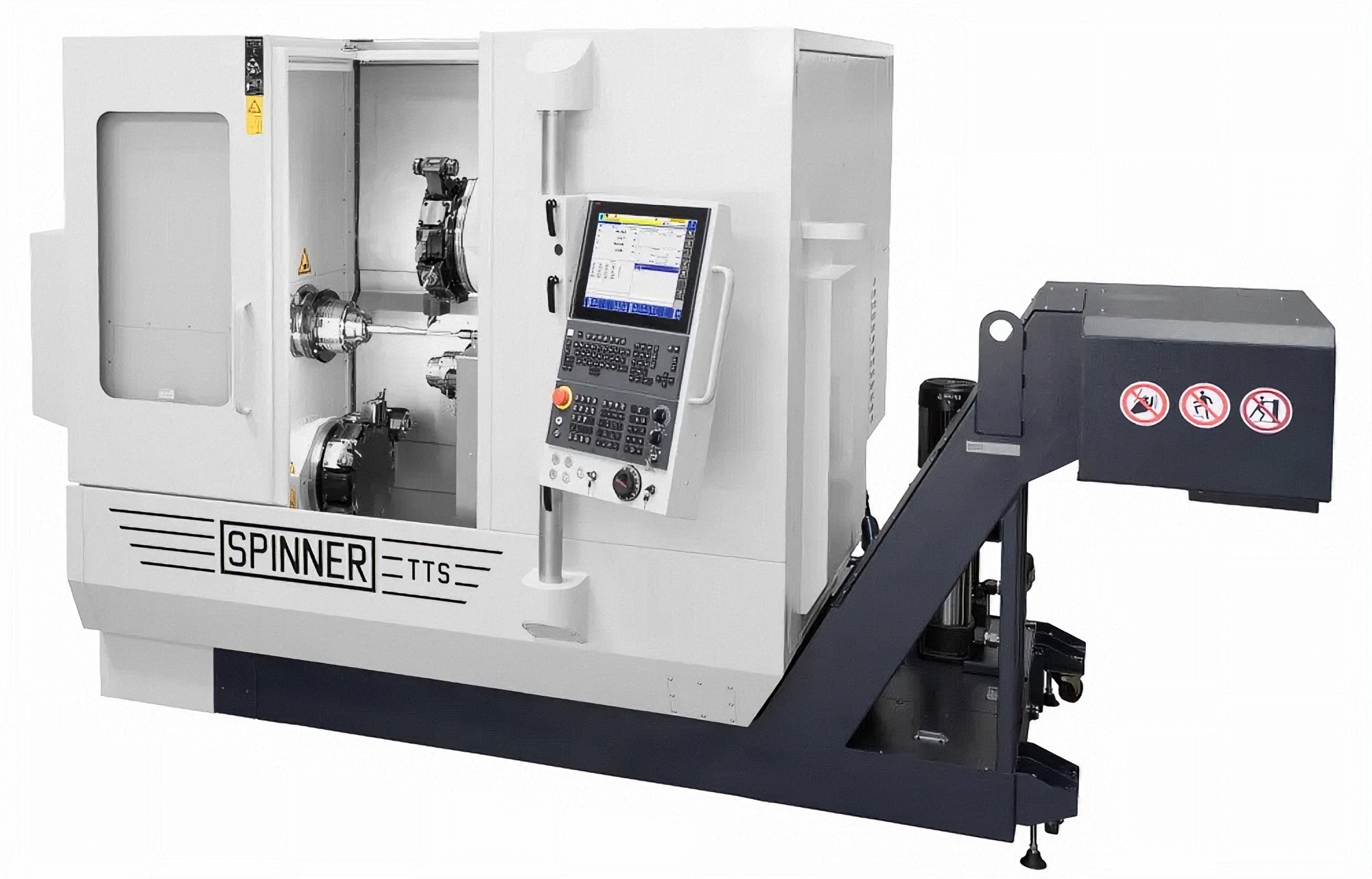
The new machines are intended for manufacturers combining turning and milling operations in one setup. Their configuration allows operations on the main spindle and sub-spindle to overlap. As a result, less of the cycle must be completed sequentially. Alongside bar work, the machines can also machine chucking components with diameters of approximately 200 mm.
Two turrets for parallel operations
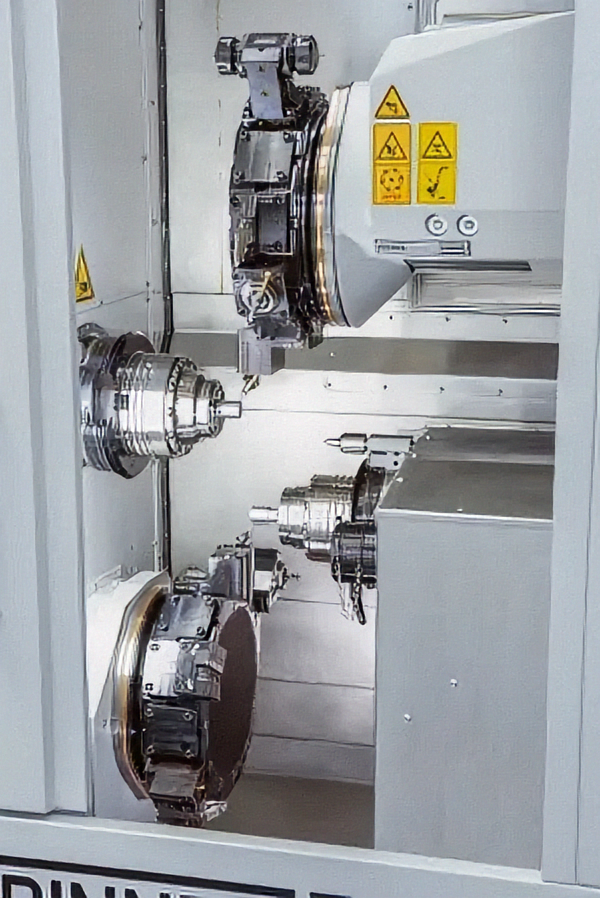
The TTS36 and TTS52 each have two turrets with twelve BMT45 tool stations. A dual-channel control system enables the turrets to operate independently. Therefore, different machining operations can run simultaneously on the main spindle and sub-spindle. For example, the sub-spindle can perform subsequent operations while machining continues on the main spindle. This is particularly relevant to series production and components requiring several turning and milling operations.
By running more process steps in parallel, the machine concept is designed to reduce cycle times. It also avoids transferring the workpiece between machines. The main spindle, sub-spindle and driven tools reach speeds of up to 10,000 min⁻¹. Both models include a Y-axis as standard. This extends the range of operations to eccentric milling and drilling. Moreover, the combination of turning, driven tooling and Y-axis machining supports the complete machining of parts with more complex geometries.
Compact layout with movable sub-spindle
Spinner has designed the TTS36 and TTS52 around a limited footprint. At approximately 2.4 metres long, the machines are relatively compact for their two-turret configuration. The machine bed is positioned at a 90-degree angle. This layout is intended to support chip evacuation while keeping the working area accessible for process monitoring and tool changes. The sub-spindle can move in the transverse direction. Its role is therefore not limited to taking over workpieces from the main spindle. This transverse movement also allows the machining of eccentric geometries.
In addition, the sub-spindle can be used as a tailstock. The main difference between the models is bar capacity. The TTS36 is designed for bar stock up to 36 mm. The TTS52 handles bar stock up to 52 mm. Both machines can also machine chucking components with diameters of approximately 200 mm. This broadens their application beyond bar-fed production.
Robot automation within the machine concept
The TTS36 and TTS52 can be fitted with a six-axis robot integrated directly into the machine. The robot handles loading and unloading. This avoids the need for a separate automation cell next to the machine. This arrangement follows the compact approach of the series. Combining the machine and workpiece handling in one system limits the required floor space. It also supports repetitive production with a continuous workpiece supply. The automation is intended to minimise downtime between cycles. Loading and unloading would otherwise interrupt production. Spinner will offer the new models with either Siemens or Fanuc controls. The TTS36 and TTS52 will make their first public appearance at AMB 2026 in Stuttgart.
Fraunhofer IWS develops thick ta-C coatings for improved wear protection
READ FULL ARTICLE
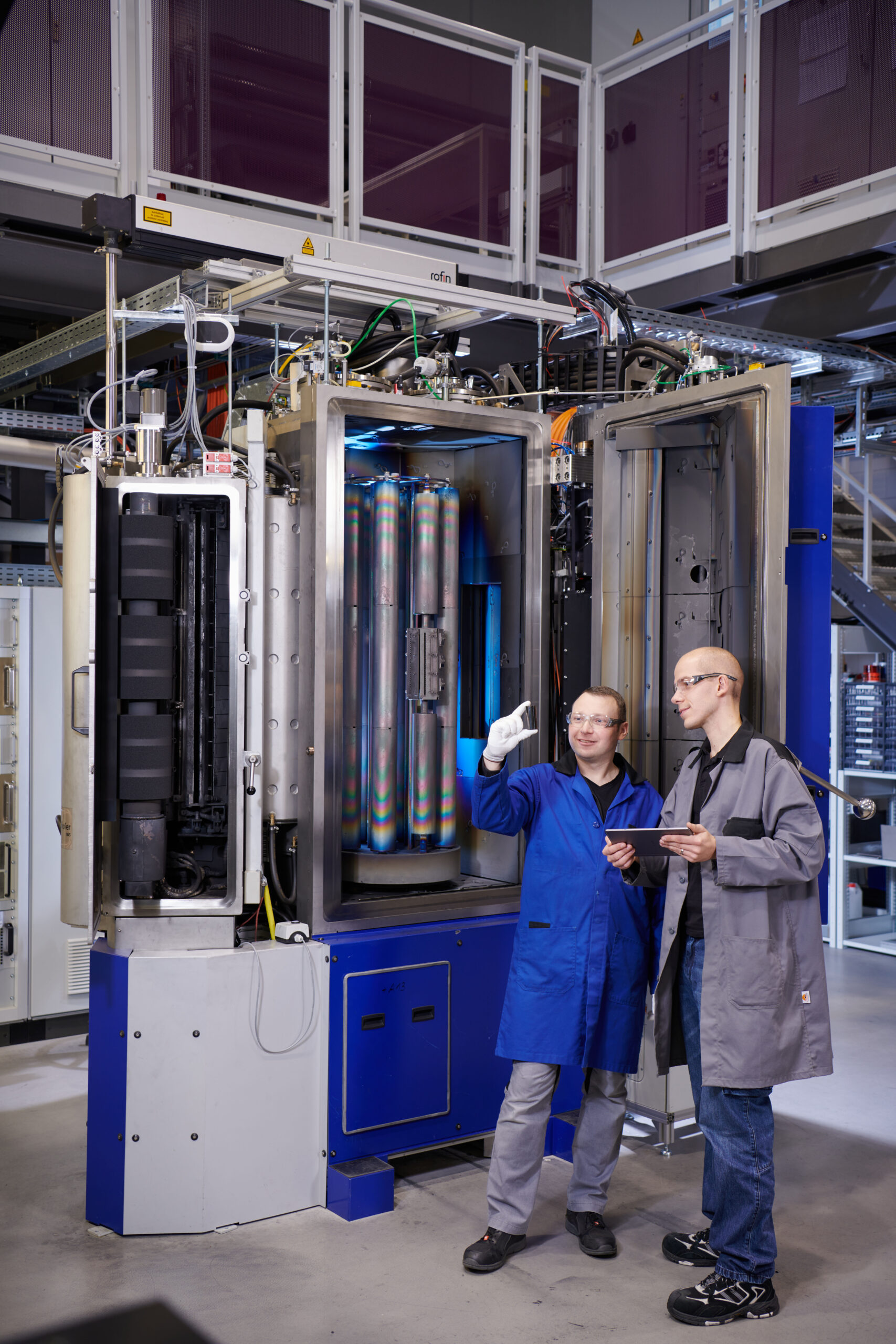
The coatings are already used on engine and machine components, as well as machining and forming tools. However, conventional vacuum-arc deposition presents practical challenges. Particle-like droplets from the cathode can become embedded in the coating. This increases surface roughness and the need for post-processing. Compressive residual stresses can also limit coating thickness. In addition, they can increase the risk of coating failure under load. Fraunhofer IWS has therefore focused its process development on both issues.
Ultrathick coatings for highly loaded components
Researchers in Dresden have developed coating systems that deposit ta-C layers more than 20 micrometres thick. The layers have reduced residual stress. According to Fraunhofer IWS, the process can now reliably produce coatings up to 100 micrometres thick. The process is suitable for engineering substrates such as rolling bearing steel, cemented carbide, cast materials and selected polymers. The development combines adapted pulsed power supply technology with a revised coating architecture. This reduces compressive residual stresses below the critical level without reducing coating hardness. The institute has also developed adhesion layer systems for different substrate materials. These layers are designed to provide reliable bonding between the substrate and the thick ta-C coating.
Long-term process stability was another requirement. High deposition rates are among the stated strengths of the Laser-Arc process. However, thick coatings require stable operation over extended periods. The updated technology can operate stably for more than 24 hours. This enables reproducible deposition of thicker layers. For components exposed to severe abrasive or erosive wear, the increased thickness allows the coating to provide load-bearing capacity. As a result, it is intended to prevent the so-called eggshell effect. This effect occurs when local overload causes a thin coating to fail because the substrate cannot support it sufficiently.
Plasma filter reduces droplets and surface defects
Fraunhofer IWS has also integrated plasma filter technology into the Laser-Arc process. The aim is to improve coating surface quality. In vacuum-arc deposition, droplets detached from the cathode can travel with the plasma beam. They may then become incorporated into the growing coating. These inclusions increase surface roughness and can affect coated contact surfaces. The new system uses a 90-degree deflection filter to separate the ion flow from the particles. Therefore, the coating can grow with a lower defect density while retaining the process’s high deposition rate. This approach is particularly relevant when a smooth ta-C surface is more important than a thick, load-bearing layer.
For hard substrate materials, coating thicknesses between one and five micrometres may be sufficient. In these applications, the filtered process is designed to produce homogeneous, smooth coatings with low defect levels. Fraunhofer IWS identifies plain bearings, shafts, guides, and machining and forming tools as typical applications. A smoother coating can improve component surface quality and support more stable tribological operation. The coating system can therefore be adapted to the substrate material, load level and functional requirement. It does not rely on a single layer design for every application.
Low friction across different lubricating media
Alongside wear protection, ta-C is used for its low-friction behaviour. According to Fraunhofer IWS, the coatings can maintain friction coefficients between 0.1 and 0.2 across various lubricating media. These media include engine and machine oils, greases, waxes, water-based media, acids and bases. Stable friction behaviour can also be achieved when only one surface of a friction pair is coated. This characteristic is relevant where lubrication is insufficient or temporarily lost. The coating can help prevent immediate damage to contact surfaces. As a result, ta-C coatings may be suitable for environments such as food processing, drinking-water systems, medical technology and implant coatings.
The institute also reports progress in transferring superlubricity to practical machine components. Within the CHEPHREN research project, funded by the Federal Ministry for Economic Affairs and Climate Action, smooth ta-C coatings produced with plasma filter technology reached superlubricity under application-oriented conditions for the first time. Superlubricity refers to friction coefficients that approach the limits of measurement. If this friction-reducing effect remains stable over time, it could improve the energy efficiency of drive and machine elements. Fraunhofer IWS states that the energy consumption of engines, pumps and systems could be reduced by up to ten percent. The combination of thick, load-bearing layers and smooth, filtered coatings provides two routes for adapting ta-C surfaces to demanding industrial applications.
Aetina integrates AI inference and motion control for robotics
READ FULL ARTICLE
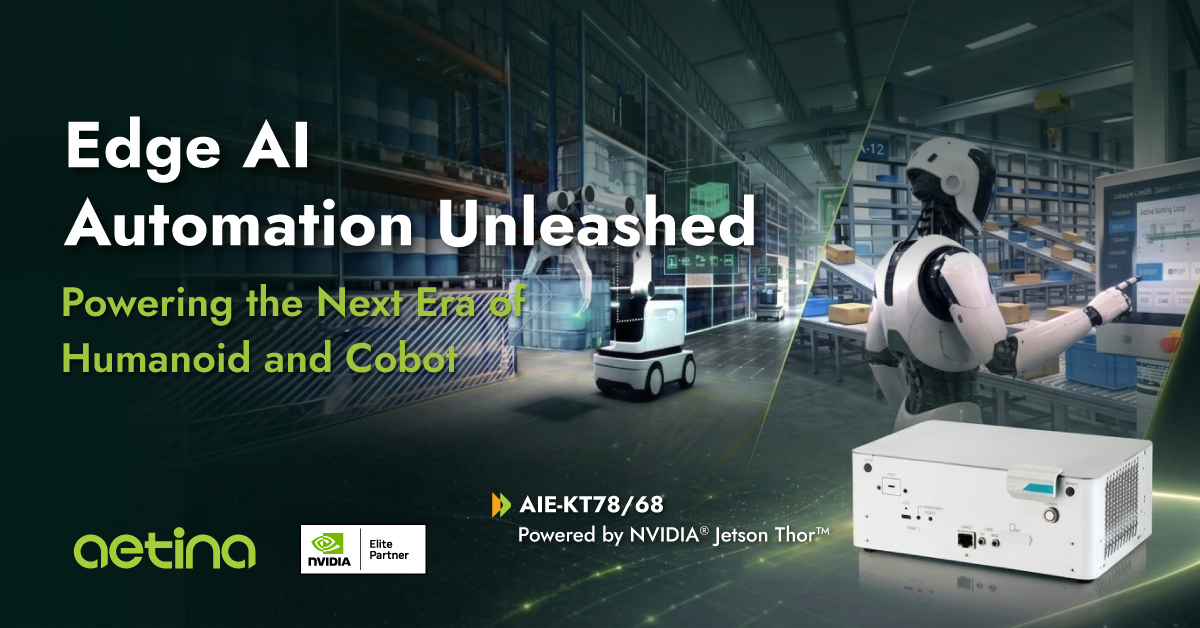
At the same time, motors, joints and actuators require predictable control timing. Aetina’s new systems combine these functions in a compact edge computer. As a result, they can reduce the number of separate controllers and interfaces needed in a robotic installation. Both platforms support local execution of multimodal generative AI, large language models, vision-language models and vision-language-action models. Running these workloads on the device is intended to limit cloud latency. It also keeps data under local control.
Local AI computing for multimodal robotics
The AIE-KT78 uses the NVIDIA Jetson T5000 module. It provides 128 GB of 256-bit LPDDR5X memory and AI performance of up to 2,070 FP4 TFLOPS. The AIE-KT68 is based on the Jetson T4000 module. It provides 64 GB of 256-bit LPDDR5X memory and up to 1,200 FP4 TFLOPS. According to Aetina, the two variants offer different balances of compute capability, power consumption and system cost. Their purpose is to run sensor-intensive AI workloads at the edge. Vision-language-action models, for example, combine visual input, language understanding and action generation in one pipeline. In robotics, this allows the system to connect environmental observations with a generated response. The full workload does not need to move to an external server.
The systems provide several high-bandwidth interfaces for this task. QSFP28 connectivity supports up to four 25 Gbps links, depending on the configuration. The platforms also include two RJ45 10GbE ports and support up to eight GMSL2 camera inputs. This interface combination accommodates simultaneous streams from high-resolution cameras and other sensors. Therefore, it provides the data throughput needed for multi-view perception and spatial awareness.
EtherCAT connects AI inference with motion control
A separate RJ45 1GbE port operates as an EtherCAT master. Aetina states that it provides microsecond-level synchronisation between AI inference and motors, joints, sensors and external actuators. Separating this control connection from the high-bandwidth sensor interfaces is relevant for systems that process large data volumes. It also supports deterministic motion control. For cobots, the architecture is intended to support faster changes between tasks and operation alongside people. In humanoid robots, the combination of sensor processing and actuator control supports continuous motion decisions based on spatial awareness.
The same approach can also be applied to industrial robot arms and other autonomous machines. Moreover, it connects perception, decision-making and control within one system. Aetina positions the platform as a way to consolidate these functions. In practice, this can reduce the need for additional control hardware and cross-platform integration. For developers and system integrators, the main implication is a more contained system architecture. This is particularly relevant where sensor fusion, local AI models and EtherCAT-based control must operate together.
Compact format with industrial interfaces
Both systems are 80 mm thick and accept a 9 to 48 VDC input. Their specified operating temperature range extends from minus 25°C to plus 55°C. The hardware includes USB 3.2, isolated digital I/O and M.2 expansion slots. These features allow interfaces and storage to be adapted to the application. The AIE-KT78 and AIE-KT68 run Linux. They support NVIDIA JetPack 7, CUDA, TensorRT, DeepStream, Holoscan and Isaac ROS. These software components support the deployment and optimisation of multimodal inference, computer vision, sensor fusion and robotics workloads.
The systems are available in two compute configurations. However, they share the same basic approach to high-bandwidth sensor data acquisition and local AI model execution. They also provide an EtherCAT connection for deterministic control. This addresses a growing integration challenge in advanced robotics. The performance of an AI model alone is insufficient when sensing, inference and physical motion depend on disconnected hardware layers.
TRUMPF develops laser cooling structures for AI chip stacks
READ FULL ARTICLE
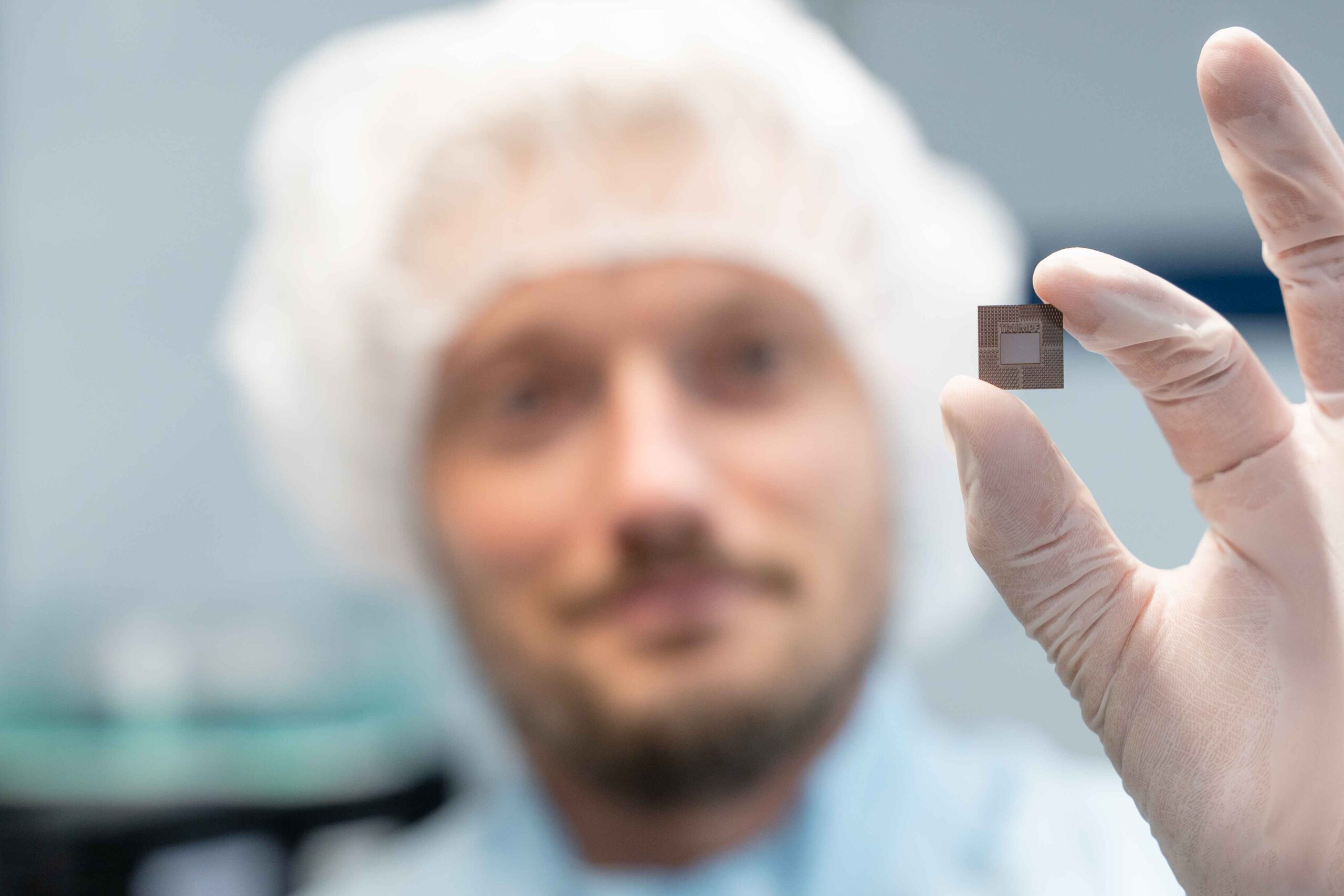
The increasing computing density of AI processors is raising the thermal load inside semiconductor packages. Therefore, manufacturers are moving beyond cooling systems for server racks and data centers. Advanced packaging stacks chips or connects them closely. This approach concentrates more computing power in a smaller space. However, it also brings heat generation closer to critical components. Cooling must therefore be integrated closer to the heat source. Microfluidic cooling and heat spreaders are among the concepts in semiconductor development road maps. Both require extremely fine structures within the chip package. Producing these structures economically and reliably is challenging. This is especially true for hard materials such as silicon carbide.
Integrated cooling moves into the chip stack
Advanced packaging is changing the thermal requirements of semiconductor production. When chips are stacked or positioned close together, conventional external cooling has limited effectiveness. Heat generated inside the package can only be dissipated to a limited extent. As a result, local cooling functions within the chip stack are becoming increasingly relevant. Microfluidic cooling and heat spreaders use fine channels and other structures. These features guide heat away from the areas where it is generated. Their effectiveness depends on the cooling concept and the manufacturing process. Suitable processes must create the required geometries in package materials. Silicon carbide is one suitable material for demanding semiconductor applications. It can also dissipate heat efficiently. However, its hardness makes it difficult to machine using established processes.
The dimensions of the required structures create another challenge. Semiconductor manufacturers need processes that produce small, accurately defined cooling geometries. These processes must also maintain suitable throughput. Surface quality and geometry control must therefore be combined with industrial productivity. TRUMPF’s application is designed to create these structures directly within the chip stack. This allows cooling features to be incorporated into the package.
Ultrashort pulses machine hard materials
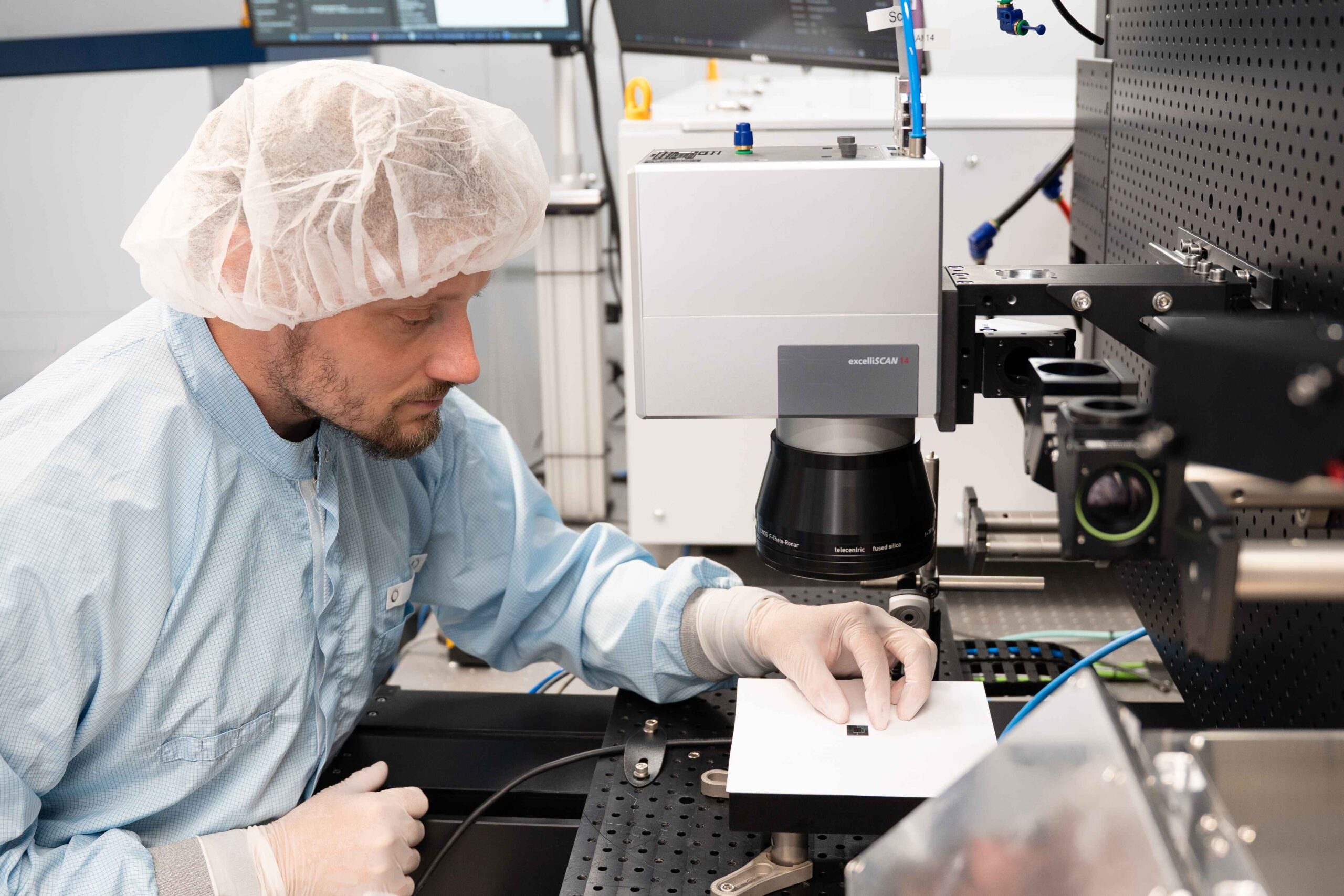
The TRUMPF process uses ultrashort pulse lasers to remove silicon carbide. It forms cooling structures with micrometer-level accuracy. According to the company, industrial suitability depends on several factors. These include high laser power, beam-shaping technology and application expertise. The process can also machine other materials, including diamond. Compared with etching, TRUMPF states that its ultrashort pulse laser process can achieve processing speeds at least five times higher. It can maintain surface quality and accurately defined cooling geometries. This is significant because integrated cooling depends on the geometry of the channels and other microstructures.
Deviations can affect how reliably heat is dissipated within the chip stack. Therefore, manufacturers must assess more than whether integrated cooling structures can be produced. The structures must also meet the quality and cost requirements of industrial production. The laser application presented at Semicon Taiwan addresses this manufacturing challenge. It provides a route for machining fine cooling features in difficult-to-process materials. Moreover, it supports the growing role of thermal management in advanced packaging for future AI chips.
Tungaloy and NTK Cutting Tools plan merger and new Nagoya facility
READ FULL ARTICLE
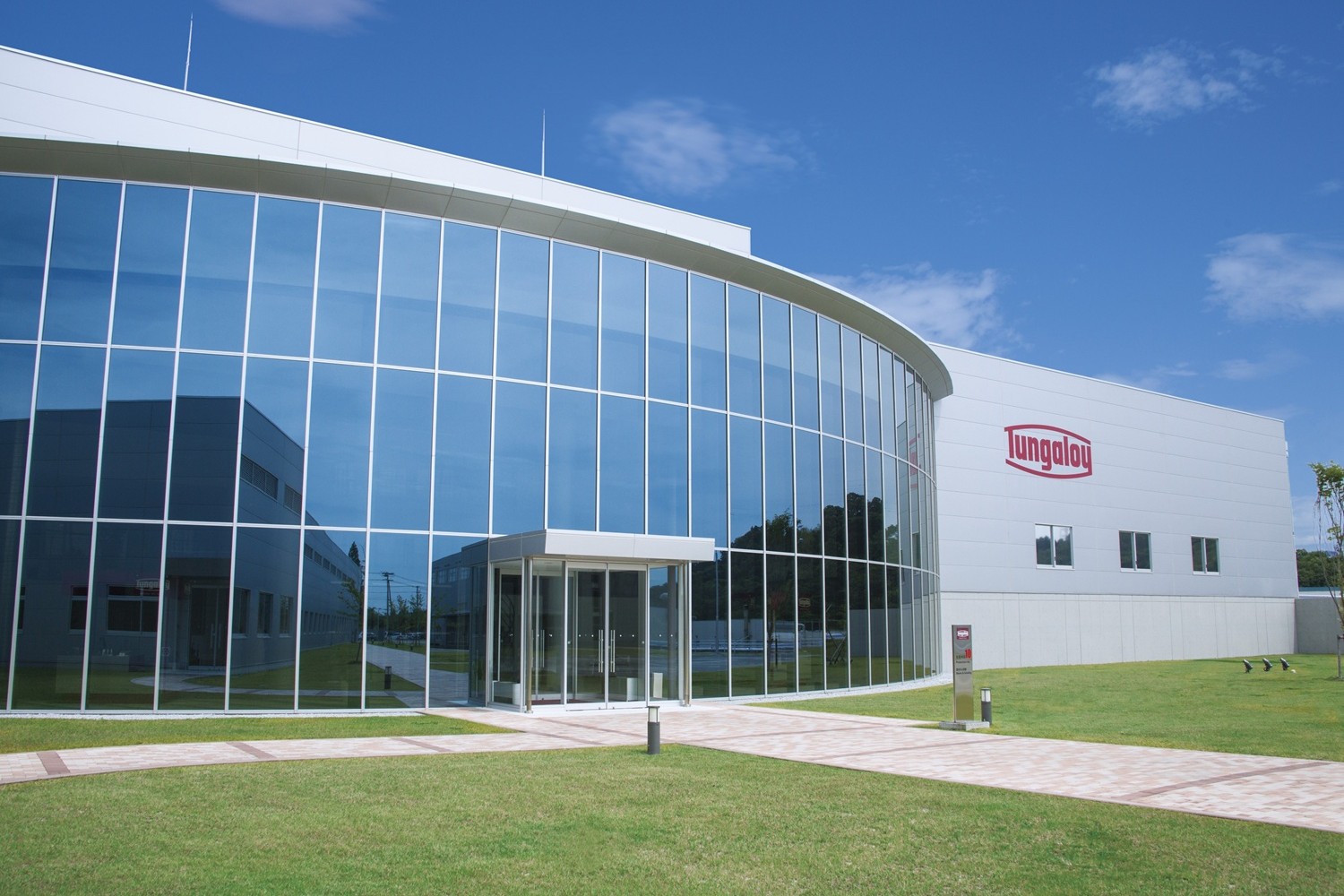
The planned merger also includes investment in a new NTK Cutting Tools headquarters and manufacturing facility in the Nagoya area of Japan. The facility is intended to expand production capacity and introduce advanced manufacturing technologies. It will also bring manufacturing, engineering, marketing and corporate functions into a modern working environment. For customers and distribution partners, the companies expect the integration to expand access to technologies, application expertise and industry knowledge.
Complementary tool technologies
Tungaloy and NTK Cutting Tools describe the merger as a combination of complementary capabilities. It is not intended to absorb the NTK brand. After completion, NTK Cutting Tools will continue as a dedicated division within Tungaloy. It will retain its established name in the cutting tool market. Tungaloy contributes a broad cutting tool portfolio, along with expertise in grade development and product innovation. The company serves industries including automotive, aerospace, energy and general engineering.
Founded in 1934 as Japan’s pioneer in cemented carbide, Tungaloy is part of the IMC Group. It combines materials technology, product development and engineering support. NTK Cutting Tools brings specialist expertise in ceramic cutting tool technology and miniature product lines. Ceramic tooling can require specific application knowledge. This is particularly relevant when selecting suitable processes and operating conditions. Therefore, retaining NTK as a dedicated division indicates that this specialised technology and its related expertise will remain identifiable within the larger organisation.
New Nagoya facility supports capacity plans
Alongside the organisational integration, the companies have finalised plans for a new NTK Cutting Tools headquarters and manufacturing site in the Nagoya area. The multimillion investment is intended to increase production capacity and introduce advanced manufacturing technology. The new site will also provide facilities for engineering, marketing and corporate functions. These will operate alongside manufacturing activities. Bringing these functions together can support closer links between production, technical development and market-facing teams. For a tool manufacturer with a specialist product range, this connection is relevant when application requirements must be translated into manufacturing and engineering decisions.
The announcement does not provide details on the facility’s size, timing or technical specifications. However, it places the investment alongside the planned merger. This links expanded manufacturing capability with the wider integration of Tungaloy and NTK Cutting Tools. The companies state that the combined organisation will offer manufacturers and distribution partners a broader range of technologies and application support worldwide.
Precision Fair 2026 brings high-tech precision ecosystem together
READ FULL ARTICLE
Over the past 25 years, the Precision Fair has developed into a meeting point for organisations throughout the high-tech supply chain. The anniversary edition reflects that broad ecosystem. Technologies including mechatronics, metrology, motion, laser and photonics, materials, vacuum and clean technologies and big science applications will all be represented on the exhibition floor and in the conference programme.
The connection between these disciplines is an important theme of the Precision Fair. Increasingly complex systems require optics, mechanics, electronics, software and control technology to work together with extremely high accuracy and reliability. In many applications, this performance must also be maintained under demanding environmental, production or measurement conditions. The fair therefore focuses not only on individual technologies, but also on the engineering expertise, collaboration and supply chains required to turn them into functioning high-tech systems.
Ultra-Air demonstrates optical link from aircraft
One of the three keynote presentations at the Precision Fair will focus on Ultra-Air. TNO developed this technology to establish a highly accurate laser connection between a moving aircraft and a geostationary satellite. Sjoerd van Kuijk, project manager at TNO, will explain how optics, mechatronics and control engineering come together in the system.
The application illustrates the type of multidisciplinary engineering that features prominently at the Precision Fair. Establishing and maintaining an optical connection while one end of the link is moving requires close coordination between multiple subsystems. Optical components must support the required signal path, while mechatronic and control systems compensate for aircraft movement and maintain the alignment required for the laser connection.
The demonstration is positioned as a world first. During the keynote, Van Kuijk will also provide insight into the engineering decisions behind the technology and the interaction between the different technical disciplines.
Another keynote will place precision engineering in a broader European context. Rick Jongen, business developer at VDL ETG, will discuss the role that high-precision technology can play in strengthening Europe’s technological resilience. His presentation will address the collaboration, investment and robust supply chains required for Europe to continue developing and producing strategic high-tech technologies.
Measurement technology for future space research
The third keynote takes the Precision Fair into the field of fundamental space research. Gabby Aitink-Kroes of SRON will present The Eyes of LISA, focusing on the technology behind ESA’s planned space-based gravitational-wave observatory.
The system is being developed to measure exceptionally small variations caused by gravitational waves and requires measurement capabilities at the picometre scale. This places metrology in an environment where minute changes form the basis of the scientific observation itself.
The application demonstrates how technologies also found in industrial precision engineering can be pushed towards entirely different performance levels for scientific instruments. Aitink-Kroes will discuss the measurement system at the heart of the future observatory and the engineering challenges involved in detecting changes at an almost unimaginable scale.
More than 400 exhibitors across the high-tech supply chain
While the keynote programme provides a view of several advanced applications, the exhibition remains at the heart of the Precision Fair. More than 400 exhibitors will present technologies, components and engineering capabilities for high-tech and ultra-precision applications at the Brabanthallen in ’s-Hertogenbosch, the Netherlands.
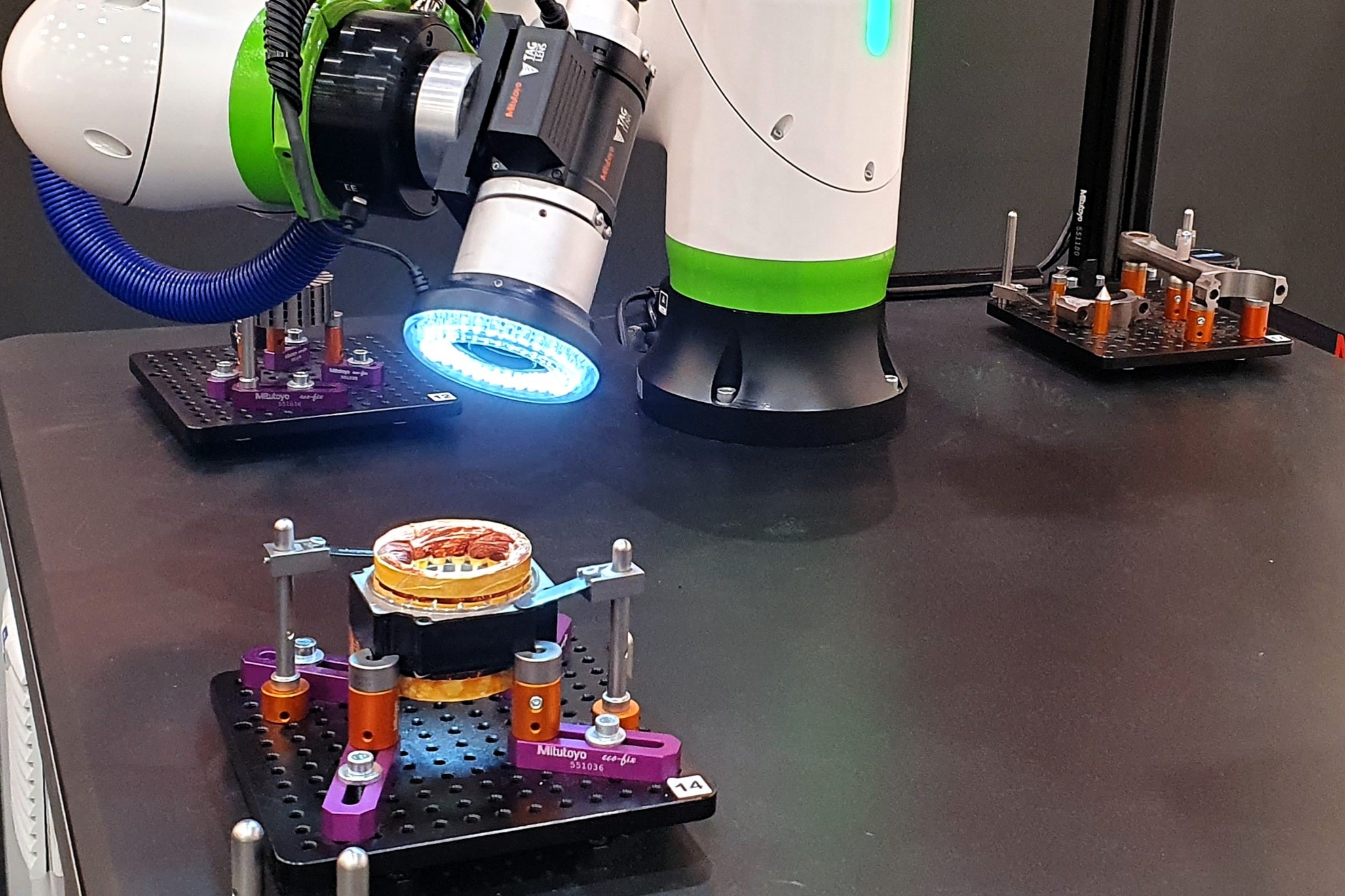
The exhibition floor brings together OEMs, system suppliers, specialist suppliers, engineering companies, knowledge institutes and technology partners. Participating organisations include Rexroth, Mitutoyo, Zeiss, Renishaw, Festo, IKO Nippon, Heidenhain, MTA, Werth, ATB Automation, Panasonic, Bosch, Dumaco, Etchform, HQ Pack, Witzenmann and Röhm.
Together, the exhibition and conference programme illustrate why precision engineering increasingly depends on cooperation across disciplines and organisations. From industrial motion and metrology to satellite communication and future space observatories, the 25th Precision Fair will provide an overview of the technologies and expertise behind the next generation of high-tech systems.
The Precision Fair takes place on 18 and 19 November 2026 at the Brabanthallen in ’s-Hertogenbosch, the Netherlands, and is open from 10:00 to 17:00 on both days.